Guides · Luxury Clothing
How to Tell if Your Loewe Is Real or Fake (2026)
Loewe is a Spanish luxury house founded in 1846 and now part of LVMH; the Jonathan Anderson era turned its Anagram tees, hoodies, and knitwear into one of the most coveted — and most counterfeited — corners of the luxury wardrobe. The Anagram is a figure of four mirrored L’s, and on clothing it’s most often embroidered rather than printed. The real thing rests on three pillars: exact Anagram geometry, dense embroidery with a clean reverse side, and quality fabric carrying the LOEWE neck label.
Real vs fake Loewe: comparison table
Data current as of July 2026. Replicas evolve, so judge by the combination of signs — never a single one.
| Sign | Authentic | Fake |
|---|---|---|
| Anagram geometry | Four mirrored L’s form a symmetrical figure with exact proportions: equal element weight, identical gaps, mirroring on both axes. | The figure reads squashed or stretched, elements vary in weight, gaps drift, mirroring breaks — a monogram that’s “almost right” but doesn’t match reference. |
| Embroidery quality | Dense, even stitches running in one direction and fully covering the base; the Anagram outline stays crisp even on soft fleece and knitwear. | Sparse embroidery with the fabric showing through, bristling threads, a rippling outline — or the embroidery swapped for a print or heat transfer altogether. |
| Reverse side under the embroidery | The back of the embroidery is tidy: even stitches, no knots or clumps; the fabric around the figure isn’t puckered. | Chaotic thread runs, knots, a crude backing patch or stiff glue film; on knitwear the embroidery wrinkles and distorts the loops. |
| LOEWE neck label | A woven label in the house typeface: the correct wide W, even letter weight, sewn in straight with no skew. | A simplified or narrowed W, drifting letter weight, blurry weaving, a crooked seam, or signs of re-stitching. |
| Composition and fabric quality | Dense cotton, quality wool or cashmere; the composition tag prints cleanly and the country of origin is correct (often Spain, Portugal, or Italy). | Thin, loose fabric or coarse yarn with a synthetic sheen, pilling on a new piece, smudged tag printing, an implausible composition. |
| Seams, fit, and hardware | Even, dense stitching, tidy hems and linked seams on knitwear; springy ribbing and quality buttons on cardigans; the fit matches the release. | Wandering stitch length, a rippling hem, ribbing that stretches out, cheap mismatched buttons; a silhouette that differs from reference photos. |
The difference is in the details — drag the slider
Typical differences in workmanship: stitching consistency, edge finishing, detail quality. Left — factory quality, right — common replica flaws.
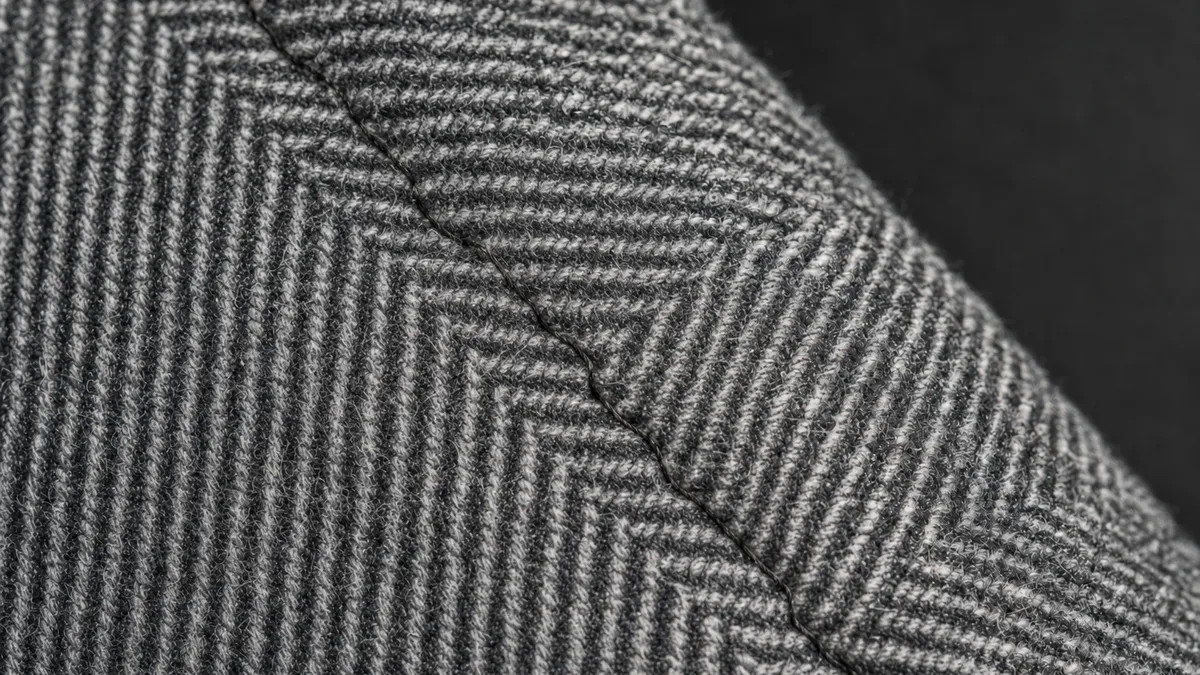 Replica
 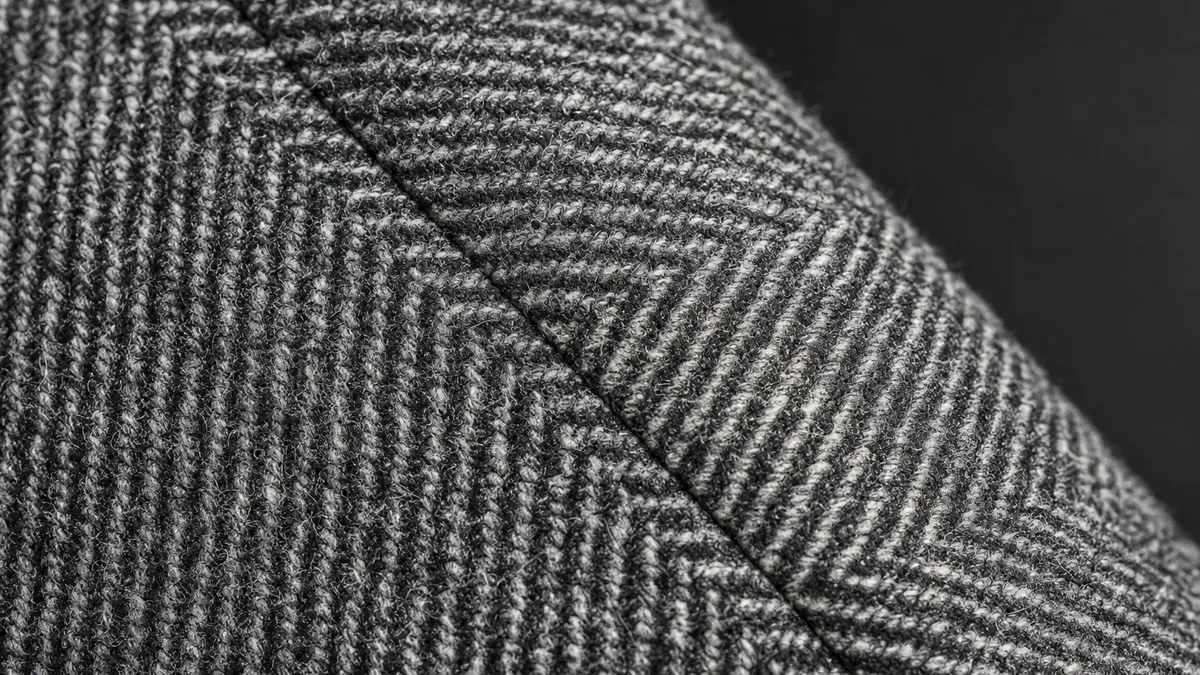 Authentic
 1. Anagram geometry
Authentic: Four mirrored L’s form a symmetrical figure with exact proportions: equal element weight, identical gaps, mirroring on both axes.
Fake: The figure reads squashed or stretched, elements vary in weight, gaps drift, mirroring breaks — a monogram that’s “almost right” but doesn’t match reference.
2. Embroidery quality
Authentic: Dense, even stitches running in one direction and fully covering the base; the Anagram outline stays crisp even on soft fleece and knitwear.
Fake: Sparse embroidery with the fabric showing through, bristling threads, a rippling outline — or the embroidery swapped for a print or heat transfer altogether.
3. Reverse side under the embroidery
Authentic: The back of the embroidery is tidy: even stitches, no knots or clumps; the fabric around the figure isn’t puckered.
Fake: Chaotic thread runs, knots, a crude backing patch or stiff glue film; on knitwear the embroidery wrinkles and distorts the loops.
4. LOEWE neck label
Authentic: A woven label in the house typeface: the correct wide W, even letter weight, sewn in straight with no skew.
Fake: A simplified or narrowed W, drifting letter weight, blurry weaving, a crooked seam, or signs of re-stitching.
5. Composition and fabric quality
Authentic: Dense cotton, quality wool or cashmere; the composition tag prints cleanly and the country of origin is correct (often Spain, Portugal, or Italy).
Fake: Thin, loose fabric or coarse yarn with a synthetic sheen, pilling on a new piece, smudged tag printing, an implausible composition.
6. Seams, fit, and hardware
Authentic: Even, dense stitching, tidy hems and linked seams on knitwear; springy ribbing and quality buttons on cardigans; the fit matches the release.
Fake: Wandering stitch length, a rippling hem, ribbing that stretches out, cheap mismatched buttons; a silhouette that differs from reference photos.
Popular Loewe models
Model-by-model checks — what to look at on each:
Where to inspect
The key zones to photograph and check on this type of item — a schematic, not a product photo.
- 1Neck label and tags
- 2Print and its printing
- 3Stitching and hem
- 4Shoulder and sleeve seam
- 5Fabric and weight
How to photograph your Loewe for a check
Shoot in daylight, avoid glare, keep focus sharp. You need 5 angles:
- 1 Full item (front with the Anagram)
- 2 Embroidered Anagram close-up
- 3 Reverse side under the embroidery (inside out)
- 4 LOEWE neck label
- 5 Composition tag and stitching
How to read the result
The AI returns a verdict with a confidence score:
- 75–100% — Authentic: high confidence the item is genuine.
- 60–74% — Likely authentic: probably genuine with minor concerns.
- 40–59% — Uncertain: the photos are not conclusive — retake or add angles.
- 25–39% — Likely fake: several red flags.
- 0–24% — Fake: clear signs of a replica.
Check your Loewe right now
Snap photos of your item and get an AI verdict with a confidence score in about a minute.
FAQ
What’s the fastest Loewe tell?
The combination of “Anagram geometry + embroidery reverse.” The four mirrored L’s must be strictly symmetrical with equal element weight, and the back of the embroidery must be tidy — no knots or glue film. Replicas almost always fail at least one of those two checks.
The Anagram on my tee is printed, not embroidered — is it fake?
It’s a reason for caution: on Loewe tees and knitwear the Anagram is most often embroidered. Printed versions have appeared in certain lines, so don’t call a verdict on one signal alone — match the specific model against documented release references and check the other zones.
How do I check Loewe tags?
Look at the woven LOEWE neck label (the house typeface with its distinctive wide W, sewn in straight), the size tag, and the composition/care tag: clean printing, a plausible composition, and a correct country of origin — often Spain, Portugal, or Italy. Don’t invent codes or serial systems — match the tag layout to a confirmed original.
Is a photo of the Anagram enough for a verdict?
The Anagram is the strongest single signal, but a reliable verdict comes from the combination: monogram geometry + embroidery quality and its reverse + tags + fabric and fit. The app tells you which angles to shoot and cross-references the piece against the release.