Guides · Luxury Clothing
How to Tell if Your Amiri Is Real or Fake (2026)
Amiri is a high-priced Los Angeles label built on rock-and-roll style: distressed MX1 denim with leather knee panels, elongated Stack jeans, and Skeleton/Bones graphics. Its most expensive pieces draw the most counterfeits, and a replica usually gives itself away on the logo typography, the tags, and the quality of the leather. Amiri has no public serial numbers — authenticity comes from the logo, construction, labels, and a match against the actual release.
Real vs fake Amiri: comparison table
Data current as of July 2026. Replicas evolve, so judge by the combination of signs — never a single one.
| Sign | Authentic | Fake |
|---|---|---|
| AMIRI/MA logo (typography) | The signature font with even kerning; “AMIRI” and the “MA” monogram stay proportional, the print is crisp or the embroidery is dense with no background showing through. | Letters too wide or too condensed, “floating” letter spacing, blurry printing, or sparse embroidery with gaps. |
| Neck tag and labels | A woven Amiri label with the correct font and tight weave, sewn on straight; the interior size, composition, and care labels are legible and formatted to the release. | A crooked or printed-instead-of-woven label, the wrong font, sloppy attachment stitching, spelling errors, and faded printing on the care tag. |
| Leather denim patches (MX1) | The leather biker knee panels are cut cleanly and sit symmetrically, the leather is thick with a clean edge, and the topstitching follows the contour evenly. | Skewed or asymmetric patches, thin “plastic” leather, a ragged edge, and crooked or sparse stitching around the perimeter. |
| Distressing and cut (Stack) | The rips and fading look organic and follow the fit; Stack jeans have the signature elongated “stacked” leg silhouette. | Identical “drawn-on” fading, crude symmetric slashes, and the wrong length or fit that never stacks. |
| Hardware and stitching | The button and rivets carry sharp engraved branding, the stitching is dense and even, and the thread color and gauge match the model. | No-name or muddy hardware engraving, sparse wandering stitching, the wrong thread shade, and glue residue. |
| Skeleton/Bones prints and fabric | Graphics with precise registration and correct placement, a soft screenprint hand-feel, heavyweight cotton, and the recognizable boxy cut. | Misregistered or blurry graphics, a thick “rubbery” or pre-cracked print, thin fabric, and off proportions. |
The difference is in the details — drag the slider
Typical differences in workmanship: stitching consistency, edge finishing, detail quality. Left — factory quality, right — common replica flaws.
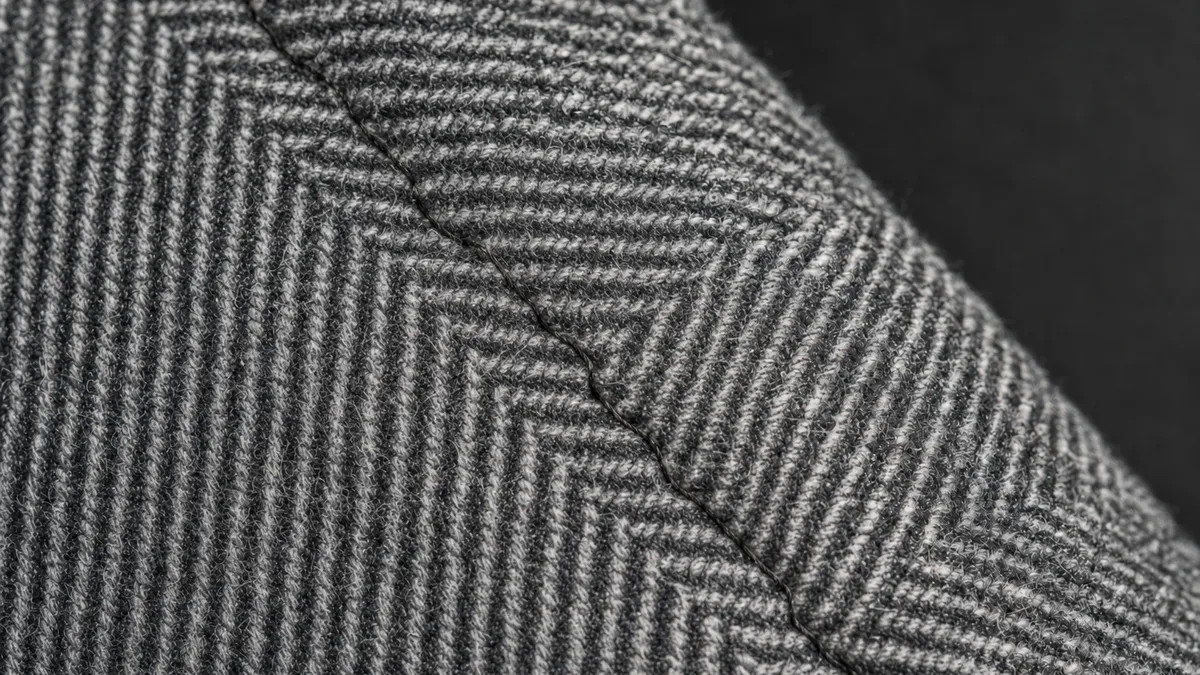 Replica
 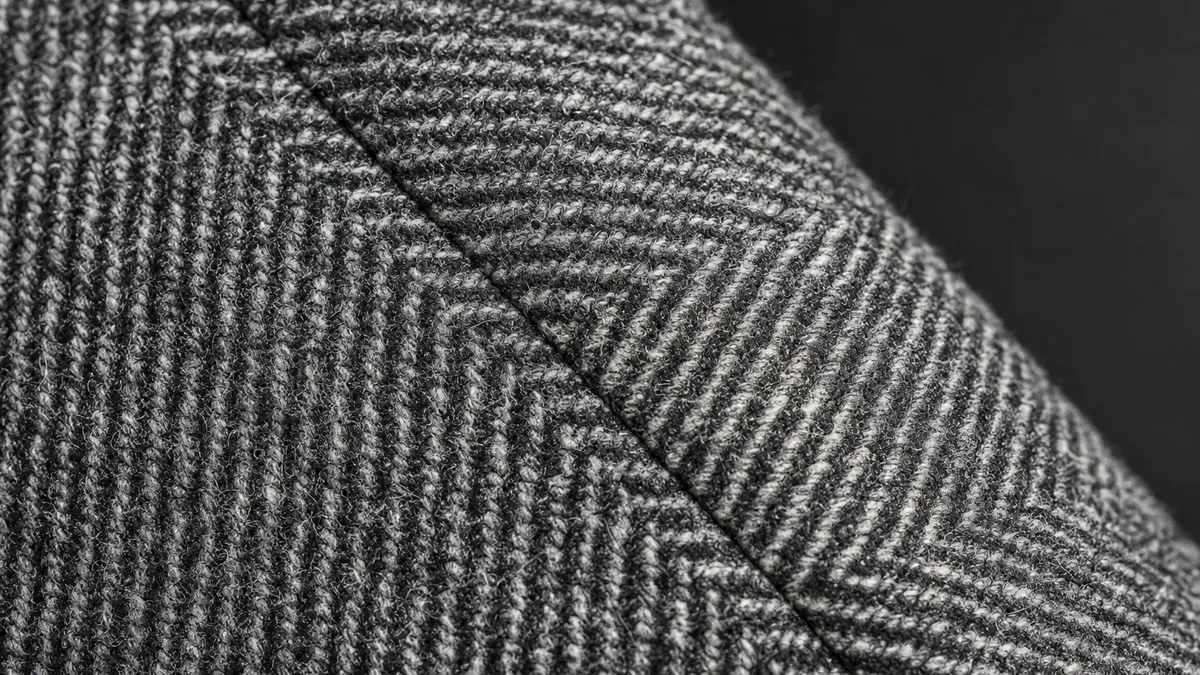 Authentic
 1. AMIRI/MA logo (typography)
Authentic: The signature font with even kerning; “AMIRI” and the “MA” monogram stay proportional, the print is crisp or the embroidery is dense with no background showing through.
Fake: Letters too wide or too condensed, “floating” letter spacing, blurry printing, or sparse embroidery with gaps.
2. Neck tag and labels
Authentic: A woven Amiri label with the correct font and tight weave, sewn on straight; the interior size, composition, and care labels are legible and formatted to the release.
Fake: A crooked or printed-instead-of-woven label, the wrong font, sloppy attachment stitching, spelling errors, and faded printing on the care tag.
3. Leather denim patches (MX1)
Authentic: The leather biker knee panels are cut cleanly and sit symmetrically, the leather is thick with a clean edge, and the topstitching follows the contour evenly.
Fake: Skewed or asymmetric patches, thin “plastic” leather, a ragged edge, and crooked or sparse stitching around the perimeter.
4. Distressing and cut (Stack)
Authentic: The rips and fading look organic and follow the fit; Stack jeans have the signature elongated “stacked” leg silhouette.
Fake: Identical “drawn-on” fading, crude symmetric slashes, and the wrong length or fit that never stacks.
5. Hardware and stitching
Authentic: The button and rivets carry sharp engraved branding, the stitching is dense and even, and the thread color and gauge match the model.
Fake: No-name or muddy hardware engraving, sparse wandering stitching, the wrong thread shade, and glue residue.
6. Skeleton/Bones prints and fabric
Authentic: Graphics with precise registration and correct placement, a soft screenprint hand-feel, heavyweight cotton, and the recognizable boxy cut.
Fake: Misregistered or blurry graphics, a thick “rubbery” or pre-cracked print, thin fabric, and off proportions.
Popular Amiri models
Model-by-model checks — what to look at on each:
Where to inspect
The key zones to photograph and check on this type of item — a schematic, not a product photo.
- 1Neck label and tags
- 2Print and its printing
- 3Stitching and hem
- 4Shoulder and sleeve seam
- 5Fabric and weight
How to photograph your Amiri for a check
Shoot in daylight, avoid glare, keep focus sharp. You need 5 angles:
- 1 Full item (front)
- 2 AMIRI/MA logo close-up
- 3 Neck tag and interior labels
- 4 Denim leather patch/hardware
- 5 Stitching and distressing
How to read the result
The AI returns a verdict with a confidence score:
- 75–100% — Authentic: high confidence the item is genuine.
- 60–74% — Likely authentic: probably genuine with minor concerns.
- 40–59% — Uncertain: the photos are not conclusive — retake or add angles.
- 25–39% — Likely fake: several red flags.
- 0–24% — Fake: clear signs of a replica.
Check your Amiri right now
Snap photos of your item and get an AI verdict with a confidence score in about a minute.
FAQ
Does Amiri have a serial number I can check?
No — Amiri uses no public serial numbers or authenticity cards. The verdict comes from the whole picture: logo typography, tags and labels, leather and denim quality, hardware, and a match against the real release. AI cross-references the piece with known drops.
Why are the MX1 leather patches and the typography the fastest tells?
On MX1 jeans the leather biker panels demand a precise cut and symmetric placement, while the AMIRI/MA logo needs a consistent font and kerning. Replicas almost always fall apart here first: skewed or thin patches and “floating” letters are the quickest things to spot.
Is a piece without box or bag a problem?
Packaging is easy to fake, so having it or not proves nothing. Focus on the logo, tags, leather, denim, and stitching — and run photos through the app before you commit.
Can a good Amiri replica be spotted from photos?
Yes, if the shots are detailed: the logo up close, the neck and care tags, the leather patch and hardware, and the stitching and distressing. AI gives an honest confidence percentage and flags “uncertain” when there aren’t enough angles.