Guides · Luxury Clothing
How to Spot Fake Versace Clothing: Real vs Fake (2026)
With Versace clothing the legit check doesn’t run through hardware — it runs through three things: the interior tags, the quality of the graphic application, and the level of construction. The Medusa head, the Barocco baroque print and the La Greca meander all demand precise detail and pattern alignment, while the labels demand calibrated typography and clean attachment. One correction that trips people up most: the main line, Versace Jeans Couture and Collection use DIFFERENT labels, and those labels have changed over the years — a mismatch against a random photo online proves nothing by itself. Versace has no public code lookup, so the verdict always comes from the full set of tells checked against documented references for the specific release.
Real vs fake Versace: comparison table
Data current as of July 2026. Replicas evolve, so judge by the combination of signs — never a single one.
| Sign | Authentic | Fake |
|---|---|---|
| Brand label and its typography | The “VERSACE” label (on some lines historically “GIANNI VERSACE”) is set in a calibrated typeface with even spacing; the label fabric is dense, the printing or weaving is crisp, and the attachment is straight and square. | Mushy letters with off spacing, a thin loose label, faded printing, crooked or crude attachment; a marking set that doesn’t match documented release references. |
| Composition, care and size tags | Separate composition/care and size tags print sharply, wash symbols are legible, and the stated composition matches the actual fabric; the tag set fits the line and the release. | Smudged printing, text errors, unreadable care symbols, a composition that doesn’t match how the fabric feels, or a tag the release should have but doesn’t. |
| Differences between Versace lines | Labels for the main line, Versace Jeans Couture and Collection differ from each other and across years — an authentic piece matches the marking of its own line and period. | A mixed set: one line’s label paired with another line’s tags, markings that didn’t exist in the claimed period, or one “universal” label used on everything. |
| Medusa head (print and embroidery) | Facial features are defined and symmetric, the locks read as separate strands, the outline is clean; embroidery is dense with no base fabric showing and no stray threads, print lays down as an even layer. | A blurred, filled-in face with no detail, asymmetric halves, locks merged together; loose embroidery with gaps or a thick print that cracks. |
| Barocco: scale and registration | The baroque pattern is at a calibrated scale with defined scrolls and leaves, deep even saturation, precise color registration, and the repeat aligned at the seams and along the placket. | A pattern larger or smaller than reference, elements simplified into blobs, a washed-out look, halos and doubled outlines from registration slip, and the pattern breaking at the seams. |
| La Greca, fabric and construction | The meander runs continuously at a constant pitch with crisp corners and meets cleanly at seams and ribbing; dense cotton, silk or knitwear, even stitching at consistent pitch, clean bar tacks, substantial hardware with crisp engraving. | A drifting meander pitch with rounded corners, a step in the pattern at the seam, thin see-through fabric, slack ribbing, sparse wandering stitching, lightweight hardware with smeared engraving. |
The difference is in the details — drag the slider
Typical differences in workmanship: stitching consistency, edge finishing, detail quality. Left — factory quality, right — common replica flaws.
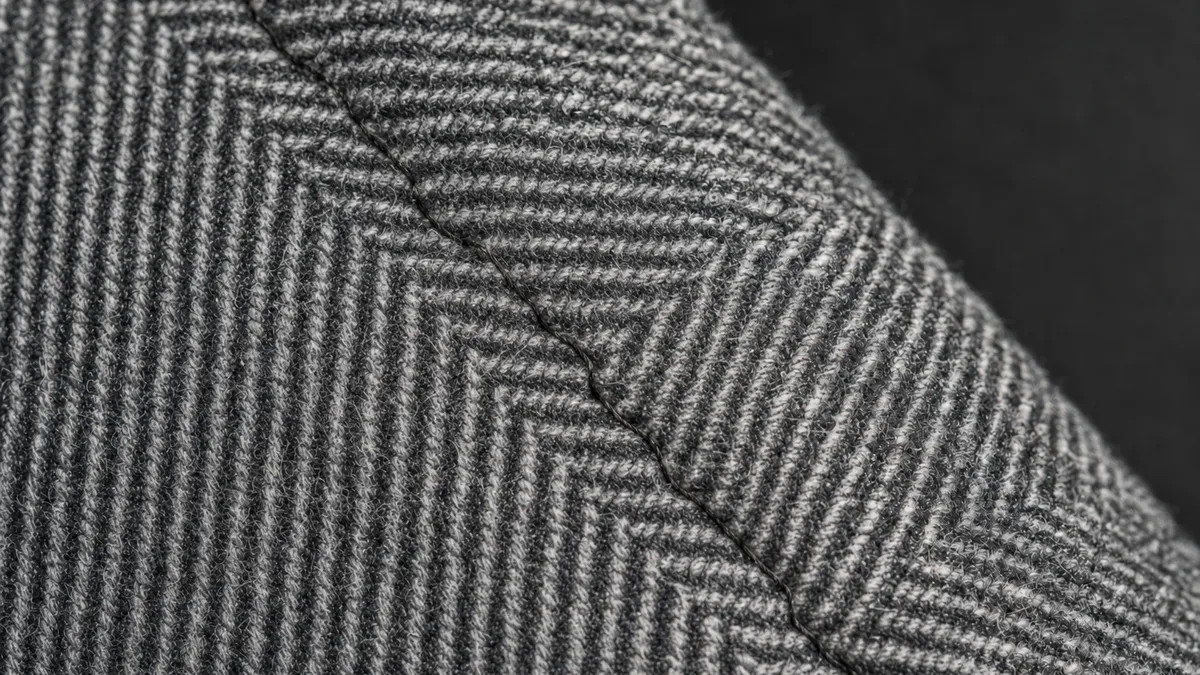 Replica
 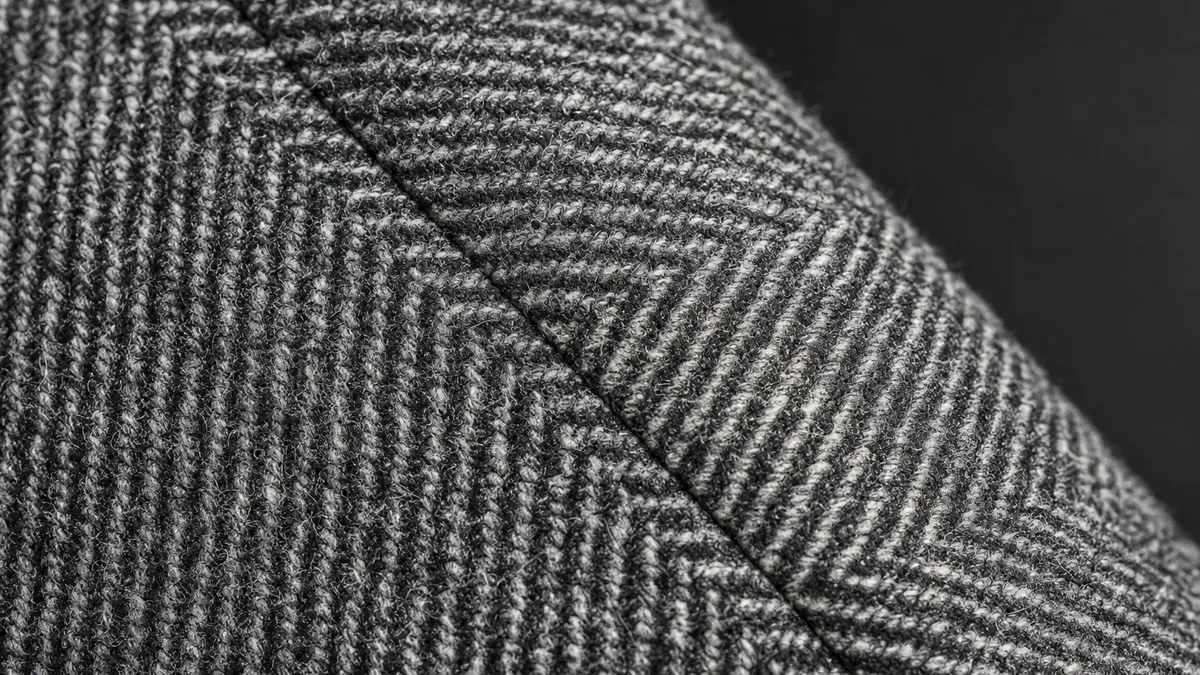 Authentic
 1. Brand label and its typography
Authentic: The “VERSACE” label (on some lines historically “GIANNI VERSACE”) is set in a calibrated typeface with even spacing; the label fabric is dense, the printing or weaving is crisp, and the attachment is straight and square.
Fake: Mushy letters with off spacing, a thin loose label, faded printing, crooked or crude attachment; a marking set that doesn’t match documented release references.
2. Composition, care and size tags
Authentic: Separate composition/care and size tags print sharply, wash symbols are legible, and the stated composition matches the actual fabric; the tag set fits the line and the release.
Fake: Smudged printing, text errors, unreadable care symbols, a composition that doesn’t match how the fabric feels, or a tag the release should have but doesn’t.
3. Differences between Versace lines
Authentic: Labels for the main line, Versace Jeans Couture and Collection differ from each other and across years — an authentic piece matches the marking of its own line and period.
Fake: A mixed set: one line’s label paired with another line’s tags, markings that didn’t exist in the claimed period, or one “universal” label used on everything.
4. Medusa head (print and embroidery)
Authentic: Facial features are defined and symmetric, the locks read as separate strands, the outline is clean; embroidery is dense with no base fabric showing and no stray threads, print lays down as an even layer.
Fake: A blurred, filled-in face with no detail, asymmetric halves, locks merged together; loose embroidery with gaps or a thick print that cracks.
5. Barocco: scale and registration
Authentic: The baroque pattern is at a calibrated scale with defined scrolls and leaves, deep even saturation, precise color registration, and the repeat aligned at the seams and along the placket.
Fake: A pattern larger or smaller than reference, elements simplified into blobs, a washed-out look, halos and doubled outlines from registration slip, and the pattern breaking at the seams.
6. La Greca, fabric and construction
Authentic: The meander runs continuously at a constant pitch with crisp corners and meets cleanly at seams and ribbing; dense cotton, silk or knitwear, even stitching at consistent pitch, clean bar tacks, substantial hardware with crisp engraving.
Fake: A drifting meander pitch with rounded corners, a step in the pattern at the seam, thin see-through fabric, slack ribbing, sparse wandering stitching, lightweight hardware with smeared engraving.
Popular Versace models
Model-by-model checks — what to look at on each:
Where to inspect
The key zones to photograph and check on this type of item — a schematic, not a product photo.
- 1Neck label and tags
- 2Print and its printing
- 3Stitching and hem
- 4Shoulder and sleeve seam
- 5Fabric and weight
How to photograph your Versace for a check
Shoot in daylight, avoid glare, keep focus sharp. You need 5 angles:
- 1 Full item (front)
- 2 Brand label at the neck or waistband close-up
- 3 Composition, care and size tags
- 4 Medusa, Barocco or La Greca close-up
- 5 Pattern alignment at a seam, stitching and hardware
How to read the result
The AI returns a verdict with a confidence score:
- 75–100% — Authentic: high confidence the item is genuine.
- 60–74% — Likely authentic: probably genuine with minor concerns.
- 40–59% — Uncertain: the photos are not conclusive — retake or add angles.
- 25–39% — Likely fake: several red flags.
- 0–24% — Fake: clear signs of a replica.
Check your Versace right now
Snap photos of your item and get an AI verdict with a confidence score in about a minute.
FAQ
How do I check a Versace tag real vs fake on clothing?
Look at four things: the typeface and letter spacing of the “VERSACE” wordmark (on some lines historically “GIANNI VERSACE”), the density and quality of the label fabric itself, how crisp the printing or weaving is, and whether the attachment is straight and square. Separately, confirm that a composition/care tag and a size label are present and that their printing is sharp and error-free. The key caveat: the main line, Versace Jeans Couture and Collection carry different labels that have changed over time, so a mismatch with someone else’s photo isn’t a verdict — match documented references for your own line and release. Versace has no public code lookup.
What’s the fastest Versace legit check on clothing?
Three quick tests in a row: the tags (typography, attachment, fit with the product line), Medusa head detail, and pattern alignment plus color registration. On an authentic piece the Medusa shows separate locks and symmetric features, and the Barocco or La Greca continues across a seam without a break. A blurred face, a pale pattern, and a step in the pattern at the seams are the most common rep tells.
My label doesn’t match photos I found online — is it fake?
Not necessarily. Versace produces across several lines with different markings, and labels have changed by year, so there is no single standard covering every case. Find references for your own line and period, review the complete tag set, and call the verdict on the full picture: tags, Medusa, print, fabric and construction.
Can a good Versace clothing replica be spotted from photos?
Yes, if the shots are detailed: the brand label and tags up close, the Medusa or pattern near, a seam section showing pattern alignment, plus stitching and hardware. AI analyzes the zones, checks them against documented release references, and returns an honest confidence percentage, flagging “uncertain” when there aren’t enough angles. These are indicators, not a guarantee — on an expensive purchase back the check up with an in-hand inspection.