Guides · Luxury Clothing
How to Spot Fake Givenchy Clothing: Real vs Fake (2026)
Givenchy is a French fashion house within LVMH, and its clothing line is authenticated nothing like its bags: there’s no rigid frame and no leather embossing to read. A verdict on a tee, hoodie, sweatshirt or jumper is built in four layers: interior label typography, print quality and registration, logo embroidery density, and fabric structure — especially in knitwear. Givenchy has no public code lookup, so every tell is weighed together and matched against documented references for the specific release. Below is the order to check in, and exactly where replicas fall apart.
Real vs fake Givenchy: comparison table
Data current as of July 2026. Replicas evolve, so judge by the combination of signs — never a single one.
| Sign | Authentic | Fake |
|---|---|---|
| Interior label typography | The “GIVENCHY” brand label (often with “PARIS”) uses precise letterforms: calibrated spacing, uniform stroke weight, correct point size; the printing is crisp and the label is sewn in straight at the center of the neck. The separate composition/care and size labels read without blur. | Distorted letterforms, drifting letter spacing, the wrong point size, smudged or faded printing; the label is sewn in crooked with frayed edges and unreadable care symbols. |
| Print quality and registration | The print lays down as an even layer with clean edges and saturated color, the layers register with no doubled outline, and the scale and position are calibrated against the neckline and side seams. | Blurred edges and a halo along the outline, registration slip and color doubling, a dull or patchy layer, a shifted or oversized print, and cracking after a wash. |
| 4G motif and star print | The four stylized G’s hold an exact shape with uniform line weight, and the repeat runs on a consistent pitch in straight rows; the artwork carries coherently across seams as far as the cut allows. The stars share one scale with sharp tips. | Simplified G geometry, varying line weights, a wandering pitch and leaning rows, mismatched panel joins; stars of differing size with blunted tips. |
| Logo embroidery | The stitches are dense and even, the letter outlines are clean, the base doesn’t show through, and the reverse side is tidy with no knots or stray threads; the fabric around the embroidery lies flat. | Loose embroidery with the base showing through, mushy letter outlines, stray threads and knots on the reverse, and fabric that puckers or wrinkles around the logo. |
| Knitwear and fabric | Dense, springy fabric that isn’t see-through; in knitwear, uniform even stitches, quality yarn (often wool or cashmere — verify the composition on the label), springy cuff and collar ribbing, and no pilling on a new piece. | Thin loose fabric, uneven stitches with gaps between rows, stiff scratchy shiny thread, slack ribbing that stretches out fast, and pilling on a just-bought piece. |
| Hardware and construction | Zippers and buttons feel substantial, with crisp engraving and a smooth action; the stitching is even and dense, bar tacks are tidy and the seams lie flat. The country of origin is often Italy or Portugal. | Lightweight jangly hardware, mushy engraving, a snagging zipper; sparse or wandering stitching, thick crude seams, a skewed armhole and glue residue. |
The difference is in the details — drag the slider
Typical differences in workmanship: stitching consistency, edge finishing, detail quality. Left — factory quality, right — common replica flaws.
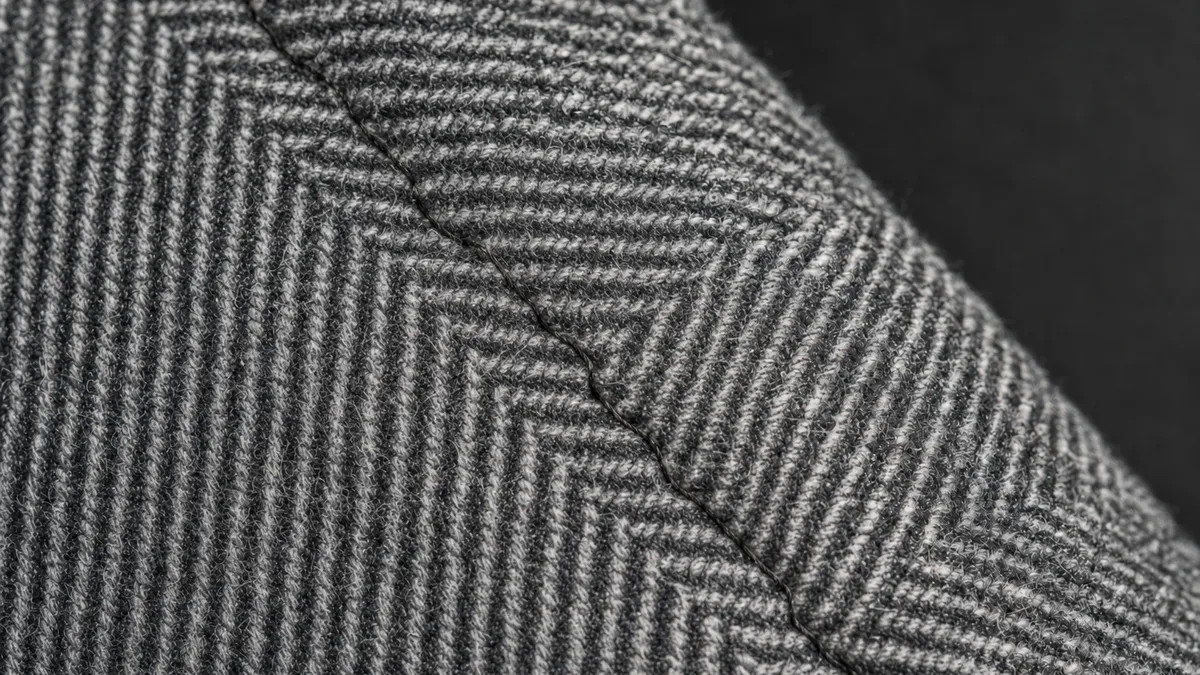 Replica
 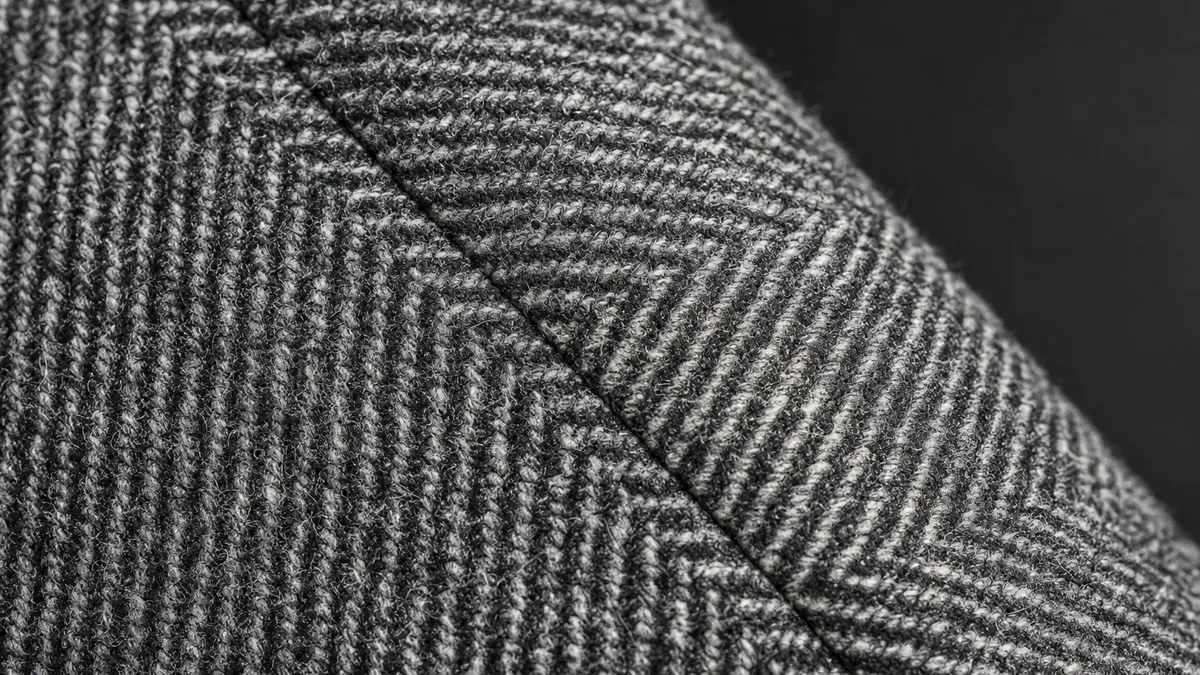 Authentic
 1. Interior label typography
Authentic: The “GIVENCHY” brand label (often with “PARIS”) uses precise letterforms: calibrated spacing, uniform stroke weight, correct point size; the printing is crisp and the label is sewn in straight at the center of the neck. The separate composition/care and size labels read without blur.
Fake: Distorted letterforms, drifting letter spacing, the wrong point size, smudged or faded printing; the label is sewn in crooked with frayed edges and unreadable care symbols.
2. Print quality and registration
Authentic: The print lays down as an even layer with clean edges and saturated color, the layers register with no doubled outline, and the scale and position are calibrated against the neckline and side seams.
Fake: Blurred edges and a halo along the outline, registration slip and color doubling, a dull or patchy layer, a shifted or oversized print, and cracking after a wash.
3. 4G motif and star print
Authentic: The four stylized G’s hold an exact shape with uniform line weight, and the repeat runs on a consistent pitch in straight rows; the artwork carries coherently across seams as far as the cut allows. The stars share one scale with sharp tips.
Fake: Simplified G geometry, varying line weights, a wandering pitch and leaning rows, mismatched panel joins; stars of differing size with blunted tips.
4. Logo embroidery
Authentic: The stitches are dense and even, the letter outlines are clean, the base doesn’t show through, and the reverse side is tidy with no knots or stray threads; the fabric around the embroidery lies flat.
Fake: Loose embroidery with the base showing through, mushy letter outlines, stray threads and knots on the reverse, and fabric that puckers or wrinkles around the logo.
5. Knitwear and fabric
Authentic: Dense, springy fabric that isn’t see-through; in knitwear, uniform even stitches, quality yarn (often wool or cashmere — verify the composition on the label), springy cuff and collar ribbing, and no pilling on a new piece.
Fake: Thin loose fabric, uneven stitches with gaps between rows, stiff scratchy shiny thread, slack ribbing that stretches out fast, and pilling on a just-bought piece.
6. Hardware and construction
Authentic: Zippers and buttons feel substantial, with crisp engraving and a smooth action; the stitching is even and dense, bar tacks are tidy and the seams lie flat. The country of origin is often Italy or Portugal.
Fake: Lightweight jangly hardware, mushy engraving, a snagging zipper; sparse or wandering stitching, thick crude seams, a skewed armhole and glue residue.
Popular Givenchy models
Model-by-model checks — what to look at on each:
Where to inspect
The key zones to photograph and check on this type of item — a schematic, not a product photo.
- 1Neck label and tags
- 2Print and its printing
- 3Stitching and hem
- 4Shoulder and sleeve seam
- 5Fabric and weight
How to photograph your Givenchy for a check
Shoot in daylight, avoid glare, keep focus sharp. You need 5 angles:
- 1 Full item (front)
- 2 Interior labels: brand, composition/care, size
- 3 Print or 4G motif close-up
- 4 Logo embroidery and its reverse side
- 5 Knit, ribbing and seam stitching
How to read the result
The AI returns a verdict with a confidence score:
- 75–100% — Authentic: high confidence the item is genuine.
- 60–74% — Likely authentic: probably genuine with minor concerns.
- 40–59% — Uncertain: the photos are not conclusive — retake or add angles.
- 25–39% — Likely fake: several red flags.
- 0–24% — Fake: clear signs of a replica.
Check your Givenchy right now
Snap photos of your item and get an AI verdict with a confidence score in about a minute.
FAQ
What’s the fastest way to start a Givenchy legit check on clothing?
Start with interior label typography: compare the letterforms, spacing and point size of the “GIVENCHY” wordmark against documented release references. Then judge print or embroidery quality, and for knitwear the knit density and ribbing spring. That combination filters out most replicas, but it remains a set of tells rather than a guarantee.
How can you tell if a Givenchy jumper is real?
A jumper has no print to read, so the Logo Knit Sweater is judged by its structure: quality yarn (wool or cashmere — verify the composition on the label, not the listing), dense uniform stitches with no gaps between rows, springy collar and cuff ribbing, and a logo knitted in by intarsia or embroidered without pulled or puckered stitches. Loose knitting, slack ribbing, pilling straight out of the box and a crooked logo are the usual rep tells; confirm them alongside the interior label typography and against documented release references.
Can I check Givenchy authenticity by a code or serial number?
No. Givenchy has no public code-lookup database, and no honest service will offer one. The right approach is to match the set of interior labels and markings against documented references for the specific release and call the verdict on the full picture.
Is a photo of the print enough for a verdict?
The print is a strong single signal, but a reliable verdict comes from the combination: interior label typography + print or embroidery quality + fabric structure + construction and hardware. The app prompts the angles that matter for the piece and honestly flags “uncertain” when there isn’t enough to go on.