Guides · Luxury Clothing
How to Tell if Your Saint Laurent Is Real or Fake (2026)
Saint Laurent is the Paris house founded by Yves Saint Laurent in 1961; in 2012, under Hedi Slimane, the ready-to-wear line was rebranded “Saint Laurent”. Since then the house calling cards – the “SAINT LAURENT” wordmark in a strict grotesque, the Teddy jacket, skinny jeans, and denim western shirts – have become its most copied pieces. The real thing rests on three pillars: exact logo typography, the signature tags, and a precisely engineered slim fit in quality materials. The Cassandre (YSL) monogram lives mostly on accessories – on clothing, the font is the main test.
Real vs fake Saint Laurent: comparison table
Data current as of July 2026. Replicas evolve, so judge by the combination of signs – never a single one.
| Sign | Authentic | Fake |
|---|---|---|
| SAINT LAURENT typography | The strict house grotesque: even kerning, calibrated stroke weight and letter height; the print is dense with crisp edges. | A near-miss typeface (close but not it), drifting letter spacing, letters too thin or too heavy, a blurred outline. |
| Neck label and tags | A woven Saint Laurent label with a sharp font and correct layout; the size and composition/care tags sewn on straight, with the right country of origin (often Italy). | Blurry lettering, a “one-size-fits-all” label, composition errors, a crooked seam, a tag layout that doesn’t match the release. |
| Fabric and materials | Dense denim with an even weave, quality fleece, and Teddy materials that look expensive; the fabric is even and holds its shape. | Thin, loose fabric, an uneven denim shade, plasticky “leather” on Teddy reps, a piece that loses its shape quickly. |
| Cut and fit | The signature slim manner: skinny jeans taper smoothly the full length, shirts sit fitted, and the Teddy hangs with neat shoulders and calibrated length. | A merely narrowed – or outright baggy – block: accordion creasing, wide shoulders, proportions that don’t match reference photos. |
| Hardware and details | Weighty snaps and rivets with crisp markings, zippers that sit straight with no skew in the tape, dense Teddy ribbing with mirrored stripes. | Light, cheap metal, smudged engraving, skewed snaps, slack ribbing with stripes of uneven width. |
| Stitching and symmetry | Even, dense stitching, mirrored western yokes, symmetrical pockets, neat bar tacks and hems. | Wandering stitch length, yokes of different shapes, skewed pockets, crude tacks and a rippling hem. |
The difference is in the details – drag the slider
Typical differences in workmanship: stitching consistency, edge finishing, detail quality. Left – factory quality, right – common replica flaws.
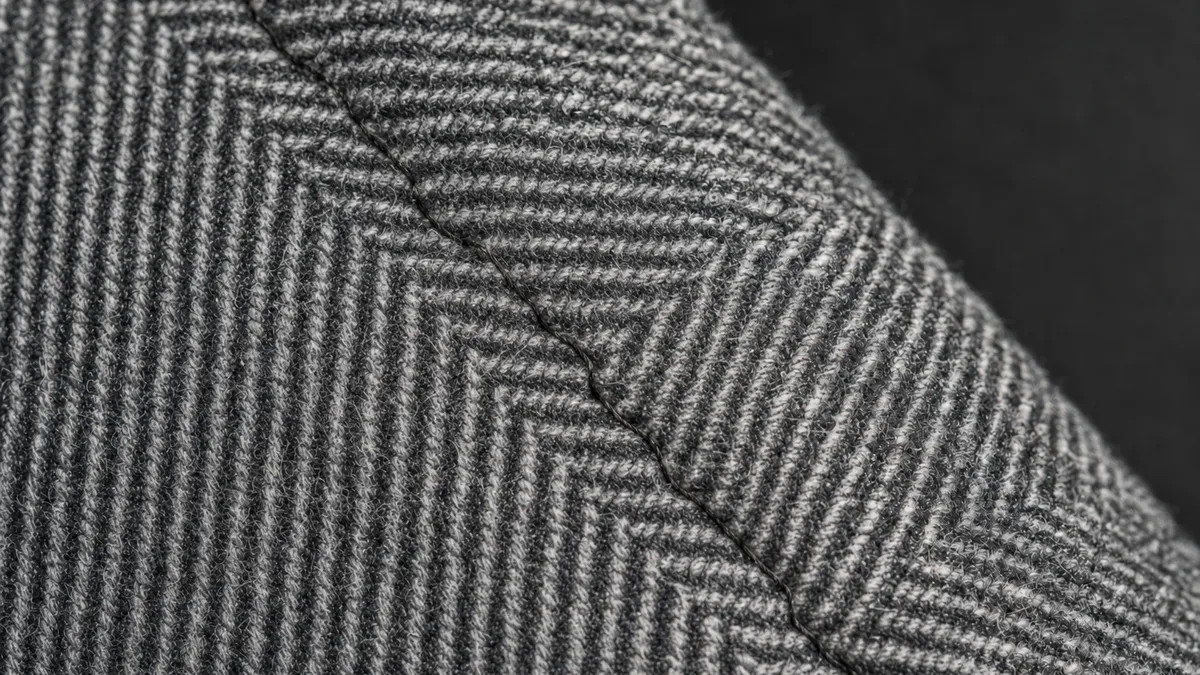 Replica
 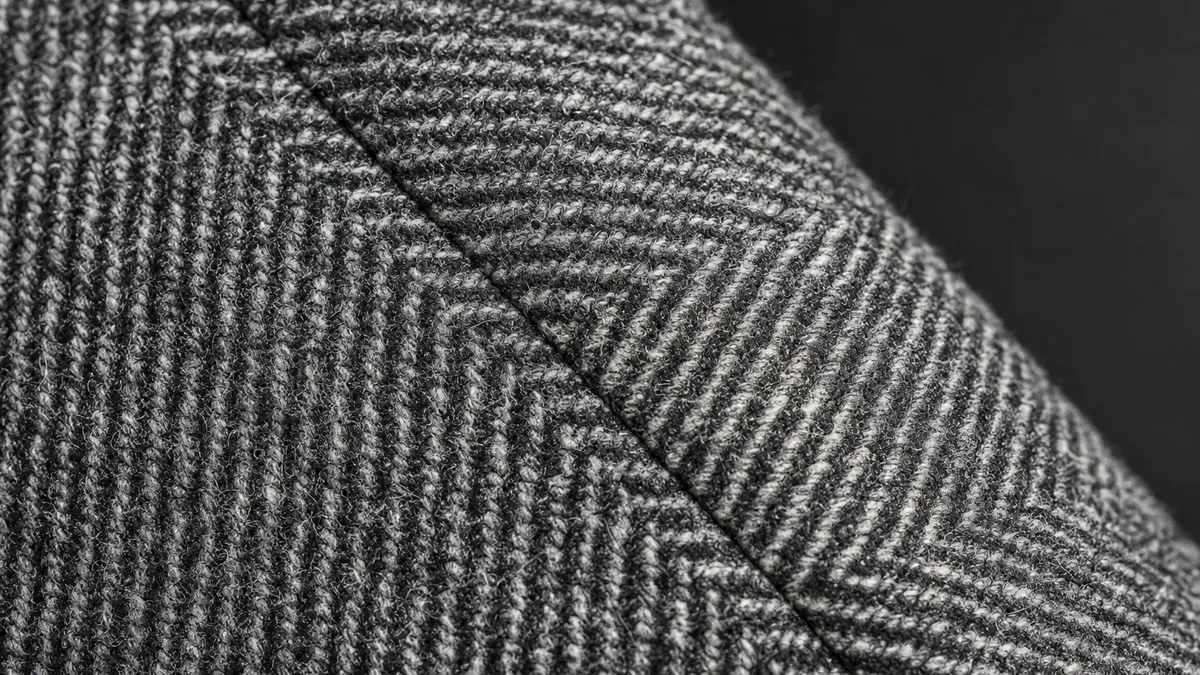 Authentic
 1. SAINT LAURENT typography
Authentic: The strict house grotesque: even kerning, calibrated stroke weight and letter height; the print is dense with crisp edges.
Fake: A near-miss typeface (close but not it), drifting letter spacing, letters too thin or too heavy, a blurred outline.
2. Neck label and tags
Authentic: A woven Saint Laurent label with a sharp font and correct layout; the size and composition/care tags sewn on straight, with the right country of origin (often Italy).
Fake: Blurry lettering, a “one-size-fits-all” label, composition errors, a crooked seam, a tag layout that doesn’t match the release.
3. Fabric and materials
Authentic: Dense denim with an even weave, quality fleece, and Teddy materials that look expensive; the fabric is even and holds its shape.
Fake: Thin, loose fabric, an uneven denim shade, plasticky “leather” on Teddy reps, a piece that loses its shape quickly.
4. Cut and fit
Authentic: The signature slim manner: skinny jeans taper smoothly the full length, shirts sit fitted, and the Teddy hangs with neat shoulders and calibrated length.
Fake: A merely narrowed – or outright baggy – block: accordion creasing, wide shoulders, proportions that don’t match reference photos.
5. Hardware and details
Authentic: Weighty snaps and rivets with crisp markings, zippers that sit straight with no skew in the tape, dense Teddy ribbing with mirrored stripes.
Fake: Light, cheap metal, smudged engraving, skewed snaps, slack ribbing with stripes of uneven width.
6. Stitching and symmetry
Authentic: Even, dense stitching, mirrored western yokes, symmetrical pockets, neat bar tacks and hems.
Fake: Wandering stitch length, yokes of different shapes, skewed pockets, crude tacks and a rippling hem.
Popular Saint Laurent models
Model-by-model checks – what to look at on each:
Where to inspect
The key zones to photograph and check on this type of item – a schematic, not a product photo.
- 1Neck label and tags
- 2Print and its printing
- 3Stitching and hem
- 4Shoulder and sleeve seam
- 5Fabric and weight
How to photograph your Saint Laurent for a check
Shoot in daylight, avoid glare, keep focus sharp. You need 5 angles:
- 1 Full item (front with logo)
- 2 “SAINT LAURENT” wordmark close-up
- 3 Neck label and composition tags
- 4 Hardware: snaps, rivets, zipper
- 5 Stitching, yokes and ribbing
How to read the result
The AI returns a verdict with a confidence score:
- 75–100% – Authentic: high confidence the item is genuine.
- 60–74% – Likely authentic: probably genuine with minor concerns.
- 40–59% – Uncertain: the photos are not conclusive – retake or add angles.
- 25–39% – Likely fake: several red flags.
- 0–24% – Fake: clear signs of a replica.
Check your Saint Laurent right now
Snap photos of your item and get an AI verdict with a confidence score in about a minute.
FAQ
What’s the fastest Saint Laurent tell?
The logo typography. The “SAINT LAURENT” wordmark uses the strict house grotesque with exact kerning and stroke weight, while replicas almost always grab a near-miss typeface and mangle the spacing. Compare the letters to photos of a confirmed original – it’s the first and most reliable test.
How do I check a Teddy jacket when versions differ?
The Teddy has appeared in many versions: body and sleeve material combinations, colorways, and trim changed release to release. So match the piece to photos of a confirmed original of the same version; the universal signals are the fit, dense ribbing with mirrored stripes, clean snaps, and tidy tags.
Should the clothing carry the YSL monogram?
Not necessarily. The interlocking Cassandre (YSL) monogram is primarily an accessories mark; on clothing the house mostly uses the “SAINT LAURENT” grotesque wordmark. If a tee or hoodie shows an unusual logo, match the piece to photos of the specific release rather than an “averaged” image.
Is a photo of the logo enough?
The logo is the strongest single signal, but a reliable verdict comes from the combination: typography + tags + fabric and fit + hardware and stitching. The app tells you which angles to shoot, analyzes each zone, and returns a verdict with a confidence score.