Guides · Luxury Clothing
How to Tell if Your Dolce & Gabbana Is Real or Fake (2026)
Dolce & Gabbana is the Italian house of Domenico Dolce and Stefano Gabbana, built on a rich Mediterranean aesthetic: the crown, the “DG” monogram, Sicilian motifs, baroque, and leopard. Its expensive pieces draw heavy counterfeiting, and a replica usually gives itself away on logo typography, interior tags, print quality, and hardware. D&G has no public online “code check” database — authenticity comes from the tags, prints, hardware, construction, and a match against the documented release.
Real vs fake Dolce & Gabbana: comparison table
Data current as of July 2026. Replicas evolve, so judge by the combination of signs — never a single one.
| Sign | Authentic | Fake |
|---|---|---|
| Interior tags and labels | A main woven or printed “DOLCE & GABBANA” label with correct typography and even attachment, plus separate composition/care and country labels (often Italy) with sharp printing and legible symbols. | A crooked or sloppily attached label, the wrong font and spacing, smeared or faded printing on the care tag, and spelling errors. |
| “DG” / “DOLCE & GABBANA” typography | The signature font with even kerning, correct geometry on the “&”, and crisp printing or dense embroidery with no background showing through. | “Floating” letter spacing, letters too wide or too condensed, a distorted “&”, blurry printing, or loose embroidery. |
| Prints (crown, DG, baroque, Sicily) | Crisp layer registration, saturated even colors, clean edges, and pattern alignment of complex motifs across the seams. | Registration slip, dull muddy colors, blurry edges, a broken pattern at the seams, and simplified ornament detail. |
| Hardware and engraving | Weighty buttons and zippers with crisp “DG” engraving and clean casting, and neatly set eyelets and rivets. | Light peeling hardware, smeared or no-name engraving, and crooked or plastic eyelets. |
| Construction and fabric quality | Dense even stitching, tidy symmetric seams, and quality Italian cotton or natural silk with correct drape. | Sparse or wandering stitching, skewed seams, thin see-through fabric, and synthetics with a “plastic” shine instead of silk. |
| Logo and crown embroidery | Dense embroidery with a clean outline, even stitch height, and no background showing through. | Loose embroidery with stray threads, an uneven outline, fabric showing through, and a distorted crown or letters. |
The difference is in the details — drag the slider
Typical differences in workmanship: stitching consistency, edge finishing, detail quality. Left — factory quality, right — common replica flaws.
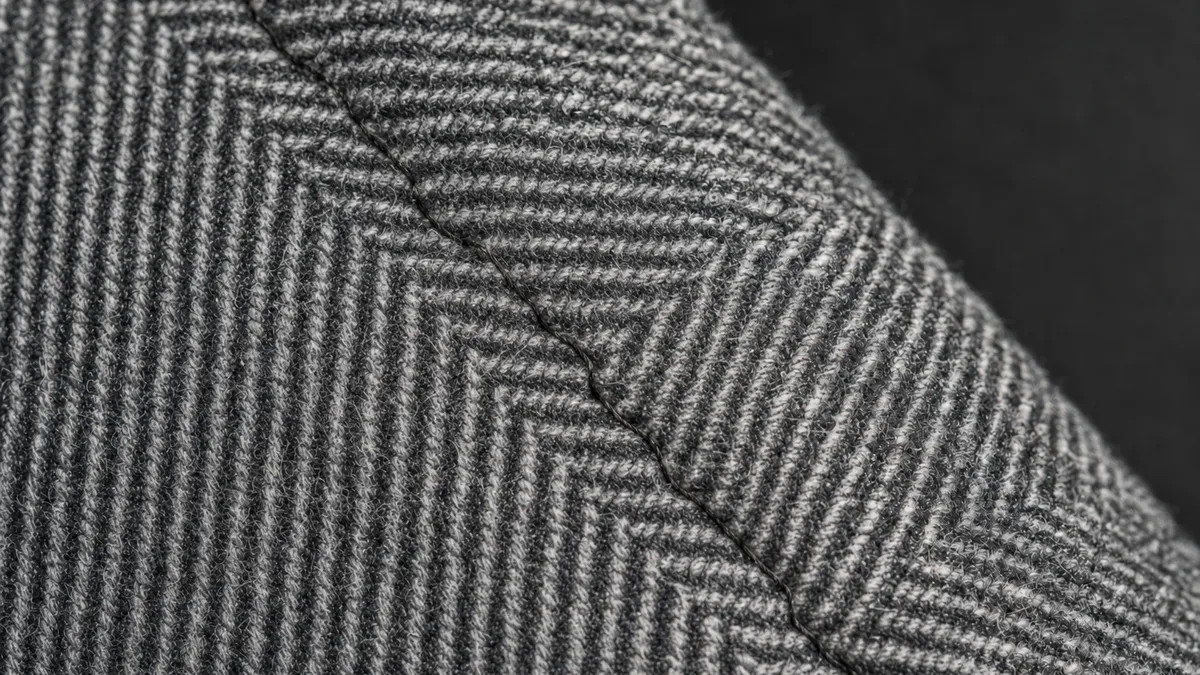 Replica
 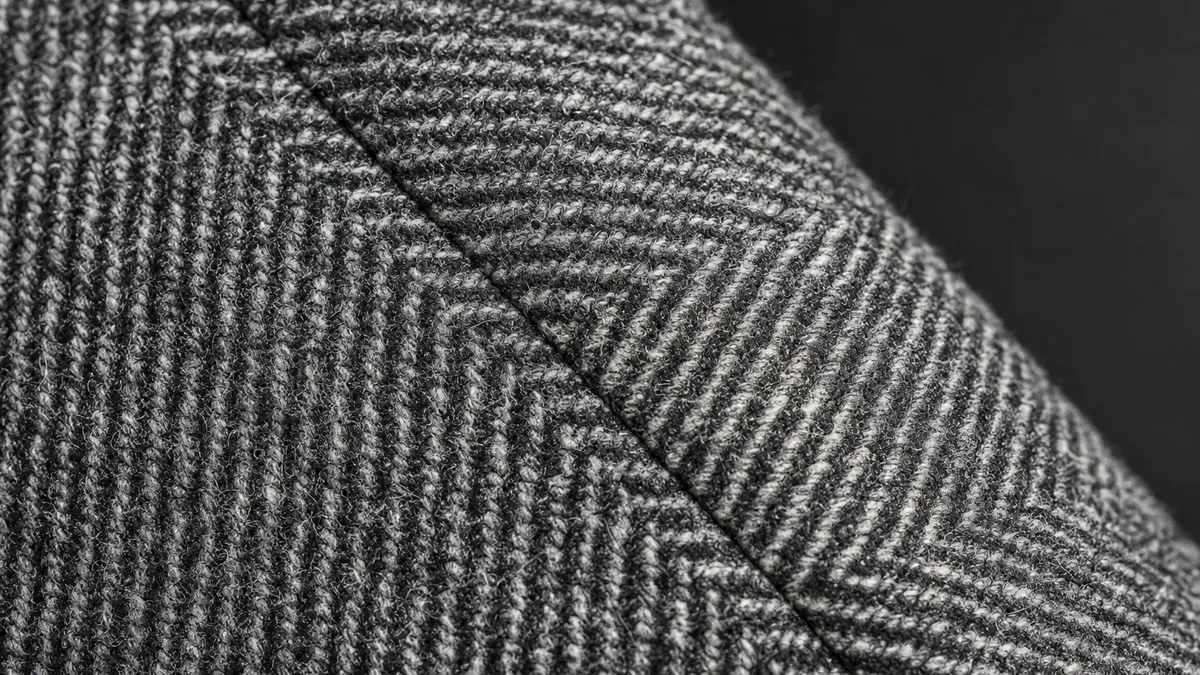 Authentic
 1. Interior tags and labels
Authentic: A main woven or printed “DOLCE & GABBANA” label with correct typography and even attachment, plus separate composition/care and country labels (often Italy) with sharp printing and legible symbols.
Fake: A crooked or sloppily attached label, the wrong font and spacing, smeared or faded printing on the care tag, and spelling errors.
2. “DG” / “DOLCE & GABBANA” typography
Authentic: The signature font with even kerning, correct geometry on the “&”, and crisp printing or dense embroidery with no background showing through.
Fake: “Floating” letter spacing, letters too wide or too condensed, a distorted “&”, blurry printing, or loose embroidery.
3. Prints (crown, DG, baroque, Sicily)
Authentic: Crisp layer registration, saturated even colors, clean edges, and pattern alignment of complex motifs across the seams.
Fake: Registration slip, dull muddy colors, blurry edges, a broken pattern at the seams, and simplified ornament detail.
4. Hardware and engraving
Authentic: Weighty buttons and zippers with crisp “DG” engraving and clean casting, and neatly set eyelets and rivets.
Fake: Light peeling hardware, smeared or no-name engraving, and crooked or plastic eyelets.
5. Construction and fabric quality
Authentic: Dense even stitching, tidy symmetric seams, and quality Italian cotton or natural silk with correct drape.
Fake: Sparse or wandering stitching, skewed seams, thin see-through fabric, and synthetics with a “plastic” shine instead of silk.
6. Logo and crown embroidery
Authentic: Dense embroidery with a clean outline, even stitch height, and no background showing through.
Fake: Loose embroidery with stray threads, an uneven outline, fabric showing through, and a distorted crown or letters.
Popular Dolce & Gabbana models
Model-by-model checks — what to look at on each:
Where to inspect
The key zones to photograph and check on this type of item — a schematic, not a product photo.
- 1Neck label and tags
- 2Print and its printing
- 3Stitching and hem
- 4Shoulder and sleeve seam
- 5Fabric and weight
How to photograph your Dolce & Gabbana for a check
Shoot in daylight, avoid glare, keep focus sharp. You need 5 angles:
- 1 Full item (front)
- 2 “DG”/“DOLCE & GABBANA” logo close-up
- 3 Main label and interior composition/care tags
- 4 Print close-up and pattern alignment at the seams
- 5 Hardware, stitching and seams
How to read the result
The AI returns a verdict with a confidence score:
- 75–100% — Authentic: high confidence the item is genuine.
- 60–74% — Likely authentic: probably genuine with minor concerns.
- 40–59% — Uncertain: the photos are not conclusive — retake or add angles.
- 25–39% — Likely fake: several red flags.
- 0–24% — Fake: clear signs of a replica.
Check your Dolce & Gabbana right now
Snap photos of your item and get an AI verdict with a confidence score in about a minute.
FAQ
Does Dolce and Gabbana have a code or serial number I can check?
Dolce & Gabbana has no public online “code check” database. The verdict comes from the whole picture: interior tags and their typography, print and embroidery quality, engraved hardware, construction and fabric, and a match against the documented release. Ignore any seller promising a “code check”.
How do I authenticate Dolce and Gabbana clothing quickly?
Start with the interior tags and the signature prints: the tags need correct typography and even attachment, while prints (crown, DG, baroque, Sicily) need crisp registration and pattern alignment across the seams. Replicas fall apart here first — crooked tag printing and a blurry or seam-broken pattern are the quickest tells.
Is a piece without box or bag a problem?
Packaging is easy to fake, so having it or not proves nothing. Focus on the interior tags, prints, hardware, construction and fabric — and run photos through the app before you commit.
Can a good Dolce & Gabbana replica be spotted from photos?
Yes, if the shots are detailed: the logo up close, the main label and composition/care tags, the print and its alignment at the seams, and the hardware and stitching. AI gives an honest confidence percentage and flags “uncertain” when there aren’t enough angles.