Guides · Luxury Clothing
How to Tell if Your Fendi Is Real or Fake (2026)
Fendi is the Roman house founded by the Fendi family in 1925 and now part of the LVMH group. Its clothing is recognized by two marks: the double “F” — the Zucca monogram created by Karl Lagerfeld, the house’s longtime creative director, with one “F” inverted against the other — and the “FENDI ROMA” wordmark. The monogram’s geometry, the pattern’s rhythm, and the typography are where replicas give themselves away most often; add the tags, fabric, and stitching and you have a reliable check.
Real vs fake Fendi: comparison table
Data current as of July 2026. Replicas evolve, so judge by the combination of signs — never a single one.
| Sign | Authentic | Fake |
|---|---|---|
| Double “F” geometry | The Zucca monogram with a precise inversion: one “F” flipped and joined cleanly to the other, equal stroke weight, a calibrated gap, tidy corners. | Distorted letter proportions, a shifted inverted “F,” a crude join, an uneven gap between the letters. |
| FF pattern rhythm | The monogram repeats at an even pitch horizontally and vertically; at visible seams the motif meets deliberately. | Drifting intervals, sliding rows, letters chopped chaotically at side seams and sleeves. |
| FENDI ROMA typography | The strict house typeface: correct letter weight, even kerning, the right size ratio between the “FENDI” and “ROMA” lines. | A near-miss typeface (close but not it), broken letter spacing, wrong line proportions. |
| Neck tag | A woven Fendi label with a sharp font and correct layout; sewn on straight with clean edges. | Blurry lettering, the wrong font or layout, a crooked seam, signs of re-stitching. |
| Size and composition tags | Size and care/composition tags in the right fonts; the composition matches the garment, and the country of manufacture is correct (often Italy). | A single “one-size-fits-all” label, composition errors, the wrong country, faded or smudged printing. |
| Fabric, hardware, and stitching | Dense, quality material; weighty, smooth zips with crisp branding (where the release includes it); even stitching and a clean interior. | Thin, loose fabric, light snagging zips, wandering stitches, raw edges, and loose thread. |
The difference is in the details — drag the slider
Typical differences in workmanship: stitching consistency, edge finishing, detail quality. Left — factory quality, right — common replica flaws.
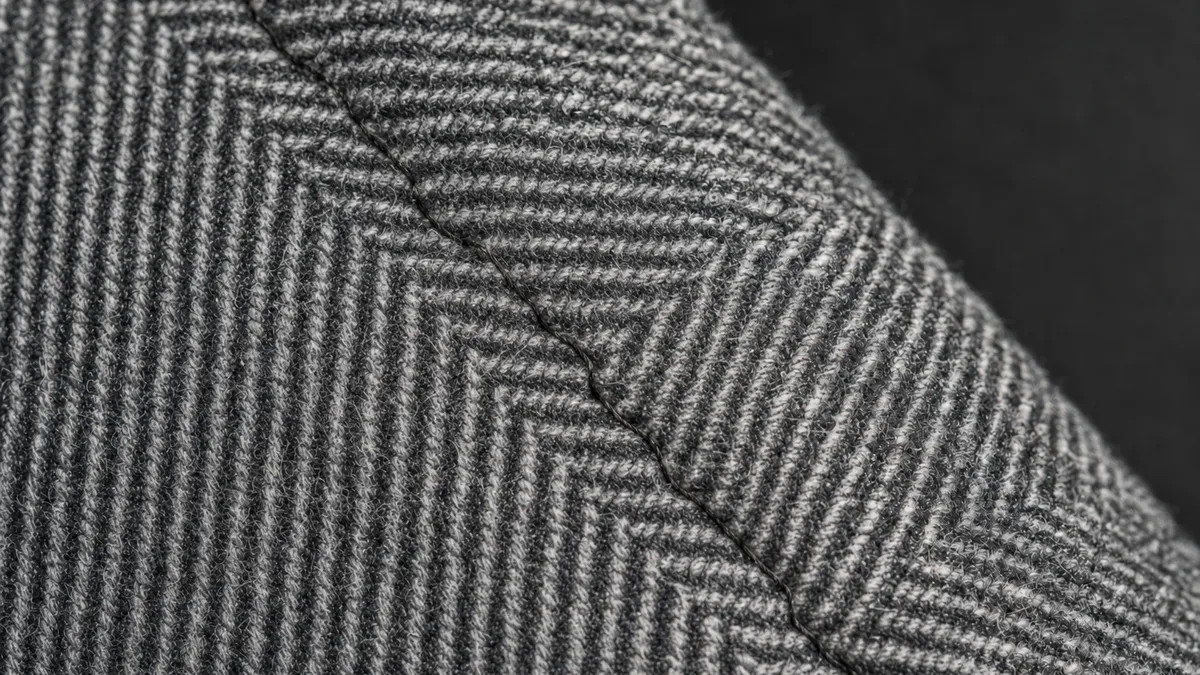 Replica
 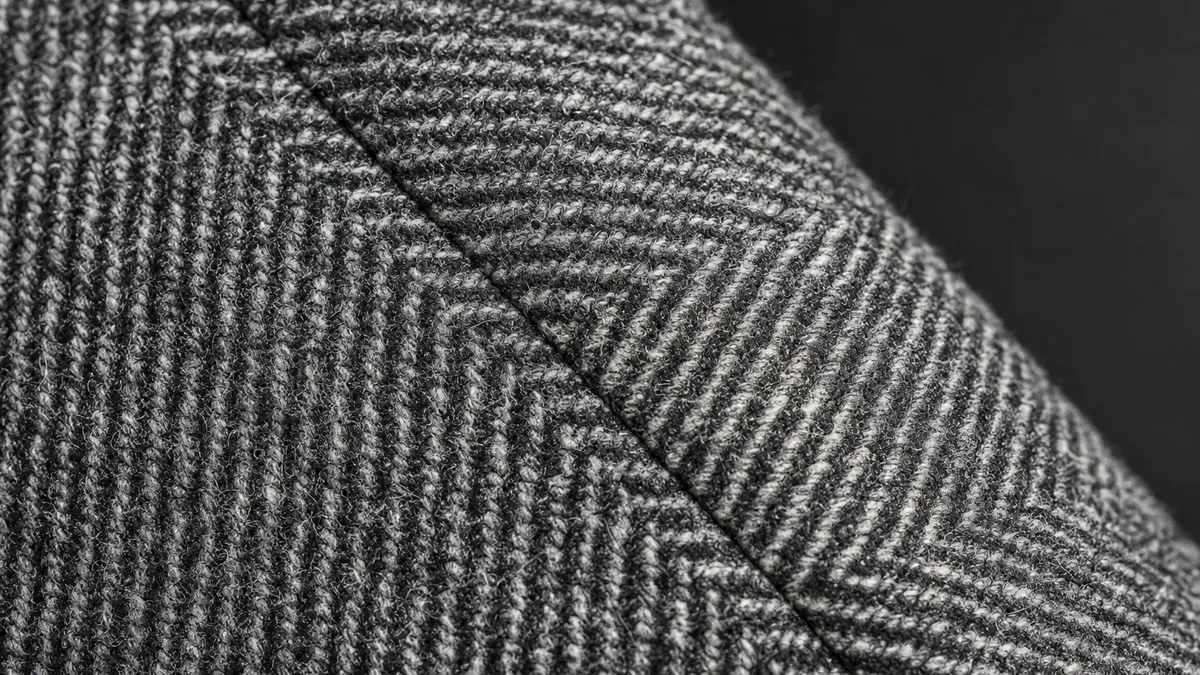 Authentic
 1. Double “F” geometry
Authentic: The Zucca monogram with a precise inversion: one “F” flipped and joined cleanly to the other, equal stroke weight, a calibrated gap, tidy corners.
Fake: Distorted letter proportions, a shifted inverted “F,” a crude join, an uneven gap between the letters.
2. FF pattern rhythm
Authentic: The monogram repeats at an even pitch horizontally and vertically; at visible seams the motif meets deliberately.
Fake: Drifting intervals, sliding rows, letters chopped chaotically at side seams and sleeves.
3. FENDI ROMA typography
Authentic: The strict house typeface: correct letter weight, even kerning, the right size ratio between the “FENDI” and “ROMA” lines.
Fake: A near-miss typeface (close but not it), broken letter spacing, wrong line proportions.
4. Neck tag
Authentic: A woven Fendi label with a sharp font and correct layout; sewn on straight with clean edges.
Fake: Blurry lettering, the wrong font or layout, a crooked seam, signs of re-stitching.
5. Size and composition tags
Authentic: Size and care/composition tags in the right fonts; the composition matches the garment, and the country of manufacture is correct (often Italy).
Fake: A single “one-size-fits-all” label, composition errors, the wrong country, faded or smudged printing.
6. Fabric, hardware, and stitching
Authentic: Dense, quality material; weighty, smooth zips with crisp branding (where the release includes it); even stitching and a clean interior.
Fake: Thin, loose fabric, light snagging zips, wandering stitches, raw edges, and loose thread.
Popular Fendi models
Model-by-model checks — what to look at on each:
Where to inspect
The key zones to photograph and check on this type of item — a schematic, not a product photo.
- 1Neck label and tags
- 2Print and its printing
- 3Stitching and hem
- 4Shoulder and sleeve seam
- 5Fabric and weight
How to photograph your Fendi for a check
Shoot in daylight, avoid glare, keep focus sharp. You need 5 angles:
- 1 Full item (front with logo)
- 2 FF monogram close-up
- 3 “FENDI ROMA” wordmark / neck tag
- 4 Size and composition tags
- 5 Seams, hardware, and stitching
How to read the result
The AI returns a verdict with a confidence score:
- 75–100% — Authentic: high confidence the item is genuine.
- 60–74% — Likely authentic: probably genuine with minor concerns.
- 40–59% — Uncertain: the photos are not conclusive — retake or add angles.
- 25–39% — Likely fake: several red flags.
- 0–24% — Fake: clear signs of a replica.
Check your Fendi right now
Snap photos of your item and get an AI verdict with a confidence score in about a minute.
FAQ
What’s the fastest Fendi tell?
The double-“F” geometry. One letter of the monogram is inverted against the other, and the original keeps exact proportions: equal stroke weight, a calibrated gap, and a clean join. On the pattern, also check the even repeat pitch and the motif alignment at the seams — replicas break the rhythm and chop the mark at random.
Does Fendi use holograms or chips for authentication?
Fendi’s authentication elements have changed over time, so their presence and form depend on the line and production year — don’t treat any single element as decisive. It’s more reliable to judge the combination: monogram, typography, tags, fabric, and stitching, matched against photos of a confirmed original.
Where is Fendi clothing made?
Often in Italy — the composition tag lists the country of manufacture. But a “Made in Italy” line guarantees nothing on its own: replicas print it too. Check that the tag’s font, layout, and print quality match reference, and that the composition matches the garment’s actual feel.
Is a photo of the monogram enough?
The monogram is the strongest single signal, but a reliable verdict comes from the combination: FF geometry + typography + tags + fabric and stitching. The app tells you which angles to shoot and cross-references the piece against the release.