Guides · Sneakers
How to Tell if Your Hoka Sneakers Are Real or Fake (2026)
Hoka (originally Hoka One One) is built around a single idea – maximum cushioning – and its whole identity rests on a thick EVA midsole. That’s also where reps are weakest: precisely reproducing a tall stack’s geometry, the Meta-Rocker curve, and left/right layer symmetry in a mold is hard, so copies almost always distort the sole profile. This guide covers 6 groups of tells, the exact photo angles to shoot, and a way to run a Hoka legit check from photos in about a minute.
Real vs fake Hoka: comparison table
Data current as of July 2026. Replicas evolve, so judge by the combination of signs – never a single one.
| Sign | Authentic | Fake |
|---|---|---|
| Thick midsole stack geometry | The stack silhouette is correct: contours flow, sidewalls stay even along the full length, EVA layer “steps” are tidy and symmetric left and right, and overall height matches the release reference. | A distorted profile: the midsole reads puffed up or shaved through the midfoot, sidewalls are wavy or dented, and layer heights differ between the left and right shoe. |
| Meta-Rocker (rocker geometry) | The profile lifts smoothly from heel to toe, the curve sits where the reference shows it, and on a flat surface the shoe noticeably rolls forward. | A flat profile with no rocker, or a curve in the wrong place – the last and sole shape were copied by eye, and the stride feels like it stumbles. |
| Active Foot Frame (foot seat) | The foot sits recessed into the midsole: the midfoot walls cradle it, the insole sits below the level of the sidewalls, and the fit feels “in” the sole rather than “on” it. | A flat seat: the walls are undefined or shaved off, the foot rides on top of the sole, and there is no lateral support. |
| Logo and branding | The Hoka logo on the sidewall, tongue, and heel has measured proportions, with crisp print or embroidery, clean edges, and symmetric placement. Hoka One One-era releases may carry branding that differs from current – that’s normal. | Mushy, stretched, or condensed lettering, shifted placement, loose embroidery with stray threads, and a crooked print outline. |
| Molding and sole bonding | A clean even bond line between upper and sole with no glue pooling or gaps, rubber outsole patches placed as the reference shows and glued flush, and crisp molding edges. | Glue smears and pooling along the sidewall, gaps and lifting edges, patches that are shifted or simplified, mushy molding edges, and rubber that looks soft and plasticky. |
| Insole, inner label, laces | Crisp size and model printing on the insole and inner label, an insole glued flat, dense laces, and tidy eyelets. The “made in” marking is often Vietnam or Cambodia. | Smeared or shifted printing, an insole lifting at the edges, loose laces, coarse eyelets, and label data that doesn’t line up with what the release reference shows. |
The difference is in the details – drag the slider
Typical differences in workmanship: stitching consistency, edge finishing, detail quality. Left – factory quality, right – common replica flaws.
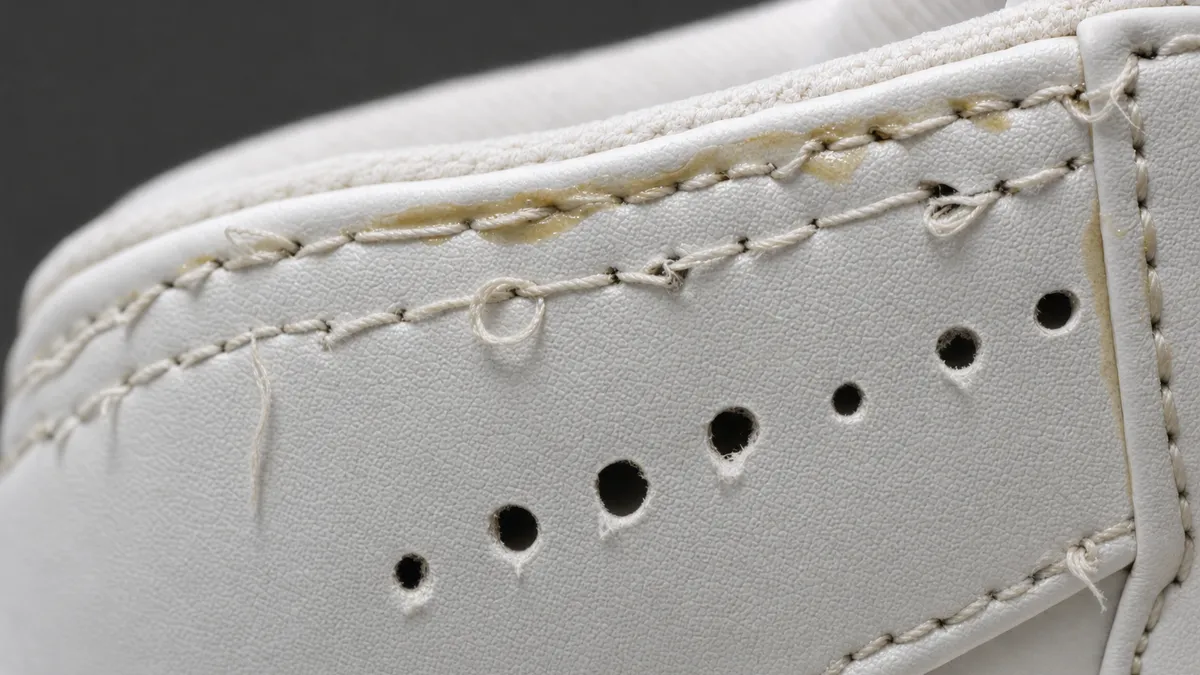 Replica
 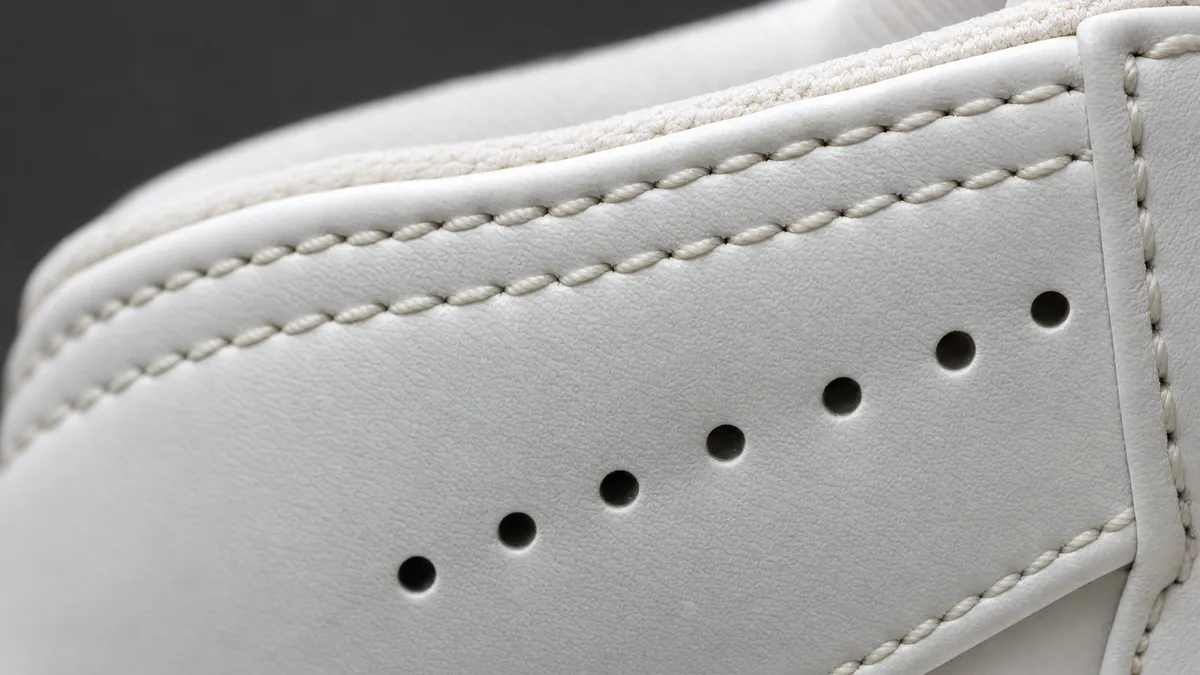 Authentic
 1. Thick midsole stack geometry
Authentic: The stack silhouette is correct: contours flow, sidewalls stay even along the full length, EVA layer “steps” are tidy and symmetric left and right, and overall height matches the release reference.
Fake: A distorted profile: the midsole reads puffed up or shaved through the midfoot, sidewalls are wavy or dented, and layer heights differ between the left and right shoe.
2. Meta-Rocker (rocker geometry)
Authentic: The profile lifts smoothly from heel to toe, the curve sits where the reference shows it, and on a flat surface the shoe noticeably rolls forward.
Fake: A flat profile with no rocker, or a curve in the wrong place – the last and sole shape were copied by eye, and the stride feels like it stumbles.
3. Active Foot Frame (foot seat)
Authentic: The foot sits recessed into the midsole: the midfoot walls cradle it, the insole sits below the level of the sidewalls, and the fit feels “in” the sole rather than “on” it.
Fake: A flat seat: the walls are undefined or shaved off, the foot rides on top of the sole, and there is no lateral support.
4. Logo and branding
Authentic: The Hoka logo on the sidewall, tongue, and heel has measured proportions, with crisp print or embroidery, clean edges, and symmetric placement. Hoka One One-era releases may carry branding that differs from current – that’s normal.
Fake: Mushy, stretched, or condensed lettering, shifted placement, loose embroidery with stray threads, and a crooked print outline.
5. Molding and sole bonding
Authentic: A clean even bond line between upper and sole with no glue pooling or gaps, rubber outsole patches placed as the reference shows and glued flush, and crisp molding edges.
Fake: Glue smears and pooling along the sidewall, gaps and lifting edges, patches that are shifted or simplified, mushy molding edges, and rubber that looks soft and plasticky.
6. Insole, inner label, laces
Authentic: Crisp size and model printing on the insole and inner label, an insole glued flat, dense laces, and tidy eyelets. The “made in” marking is often Vietnam or Cambodia.
Fake: Smeared or shifted printing, an insole lifting at the edges, loose laces, coarse eyelets, and label data that doesn’t line up with what the release reference shows.
Popular Hoka models
Model-by-model checks – what to look at on each:
Where to inspect
The key zones to photograph and check on this type of item – a schematic, not a product photo.
- 1Logo shape and placement
- 2Toe box and upper shape
- 3Heel counter and tab
- 4Midsole and stitching
- 5Tongue and size tag
How to photograph your Hoka for a check
Shoot in daylight, avoid glare, keep focus sharp. You need 5 angles:
- 1 Full pair straight from the side (stack profile and rocker)
- 2 Heel-on view on a flat surface (rear symmetry)
- 3 Full outsole from below (patches and tread)
- 4 Close-up of the sidewall and tongue logo
- 5 Insole and inner size label
How to read the result
The AI returns a verdict with a confidence score:
- 75–100% – Authentic: high confidence the item is genuine.
- 60–74% – Likely authentic: probably genuine with minor concerns.
- 40–59% – Uncertain: the photos are not conclusive – retake or add angles.
- 25–39% – Likely fake: several red flags.
- 0–24% – Fake: clear signs of a replica.
Check your Hoka right now
Snap photos of your item and get an AI verdict with a confidence score in about a minute.
FAQ
What’s the fastest Hoka legit check?
Shoot the pair straight from the side and study the thick midsole: the stack contours should flow, the sidewalls should be even, and the EVA layer “steps” should match on the left and right shoe. Then judge the Meta-Rocker curve and the cleanliness of the bond line. That combination filters out most reps.
Can a Hoka be verified by serial number?
Hoka has no public serial-number lookup, so any promise to verify a pair “by code” deserves scepticism. The verdict rests on a combination of tells – stack geometry and symmetry, the rocker, the foot seat, logo proportions, and molding quality – compared against documented references for that release.
Is the brand called Hoka or Hoka One One?
The brand was historically Hoka One One and later moved to the shorter Hoka wordmark. Older models can therefore carry branding that differs from current, and that alone is not a sign of a fake. Always compare the wordmark and logo style with documented references for the specific release you’re checking.
How accurate is a fake Hoka vs real photo check with AI?
Accuracy depends on the quality and number of photos: the sole profile, EVA layers, rocker, logos, and bond line all read well from images. LegitCheck AI cross-references the tells across your angles and returns a verdict with a confidence score, flagging “uncertain” rather than guessing when the photos don’t support a call. It’s a fast signal-based screening, not a legally binding authentication, and it offers no guarantees.