Hoka · Authentication
Clifton 9: real vs fake
The Clifton 9 is Hoka’s lightweight flagship: a thick EVA stack at a low weight, and that exact combination is what reps struggle to reproduce. Fakes usually give themselves away with a bloated or shaved midsole profile, mismatched layer heights left vs right, and an incorrect Meta-Rocker curve. Upload a side and outsole shot to LegitCheck AI and have the stack geometry and branding checked.
What to check on the Clifton 9
Model-specific zones – on top of the brand-level signs.
EVA stack profile
On the Clifton 9 the midsole silhouette flows smoothly: height builds toward the heel with no bulges or abrupt cuts, and the sidewalls stay even along the full length. Reps distort the profile – the midsole reads either puffed up or shaved in the midfoot. Compare the contours against documented release references.
Left/right layer symmetry
Set the pair on a flat surface and compare the EVA layer “steps” on the left and right shoe: on retail they match in height and spacing. A visible height difference, or one sole leaning relative to the other, is a serious signal.
Meta-Rocker and weight
The Clifton is positioned as a light shoe with a pronounced rocker geometry: the profile lifts smoothly toward the toe and the shoe rolls forward on a flat surface. A flat profile with no rocker, or a pair noticeably heavier than expected for the size, is a reason to check the other zones.
Active Foot Frame
The foot should sit slightly recessed into the midsole: the midfoot walls cradle the foot and the insole sits below the level of the sidewalls. On fakes the fit is flat – the walls are undefined and the foot rides on top of the sole.
Logo and branding
The Hoka logo on the sidewall, tongue, and heel has measured proportions with crisp print or embroidery edges. Mushy, stretched, or shifted lettering is a red flag. Note that the brand was formerly Hoka One One, so older releases can carry different branding – that alone is not a defect.
Sole bonding line
Where the upper meets the sole, retail shows a clean even line with no glue pooling or gaps, and the rubber outsole patches sit where the reference shows them. Glue smears, lifting edges, and a wandering bond line are typical of reps.
Where to inspect
The key zones to photograph and check on this type of item – a schematic, not a product photo.
- 1Logo shape and placement
- 2Toe box and upper shape
- 3Heel counter and tab
- 4Midsole and stitching
- 5Tongue and size tag
The difference is in the details – drag the slider
Typical differences in workmanship: stitching consistency, edge finishing, detail quality. Left – factory quality, right – common replica flaws.
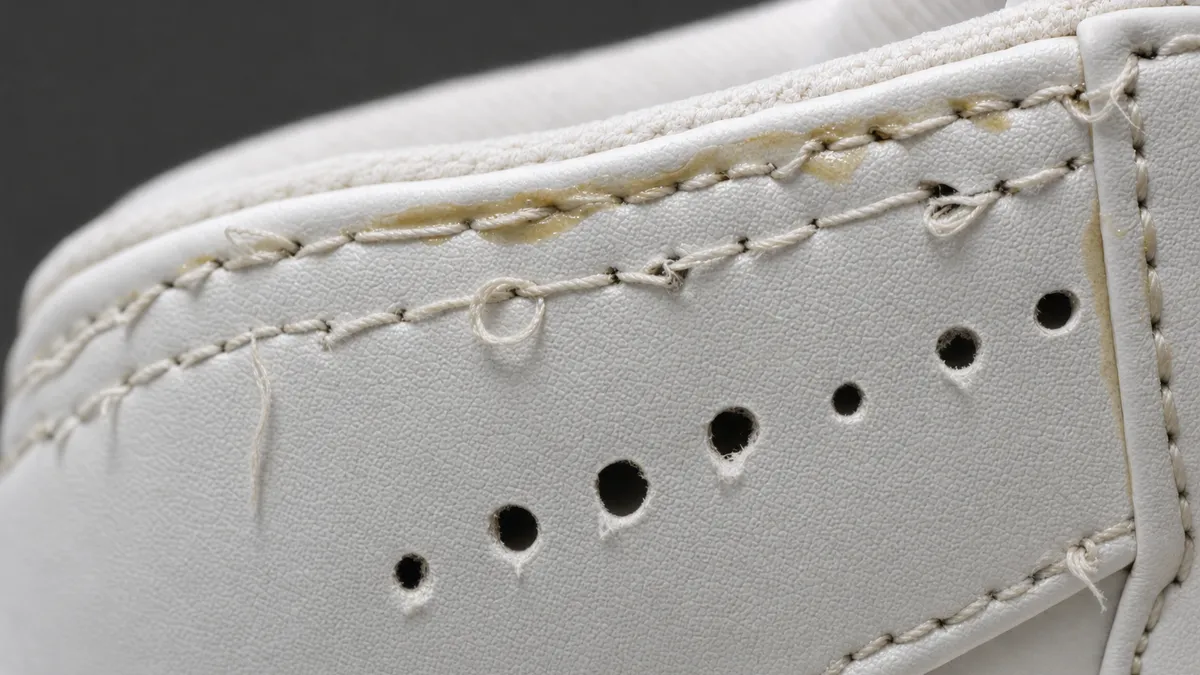 Replica
 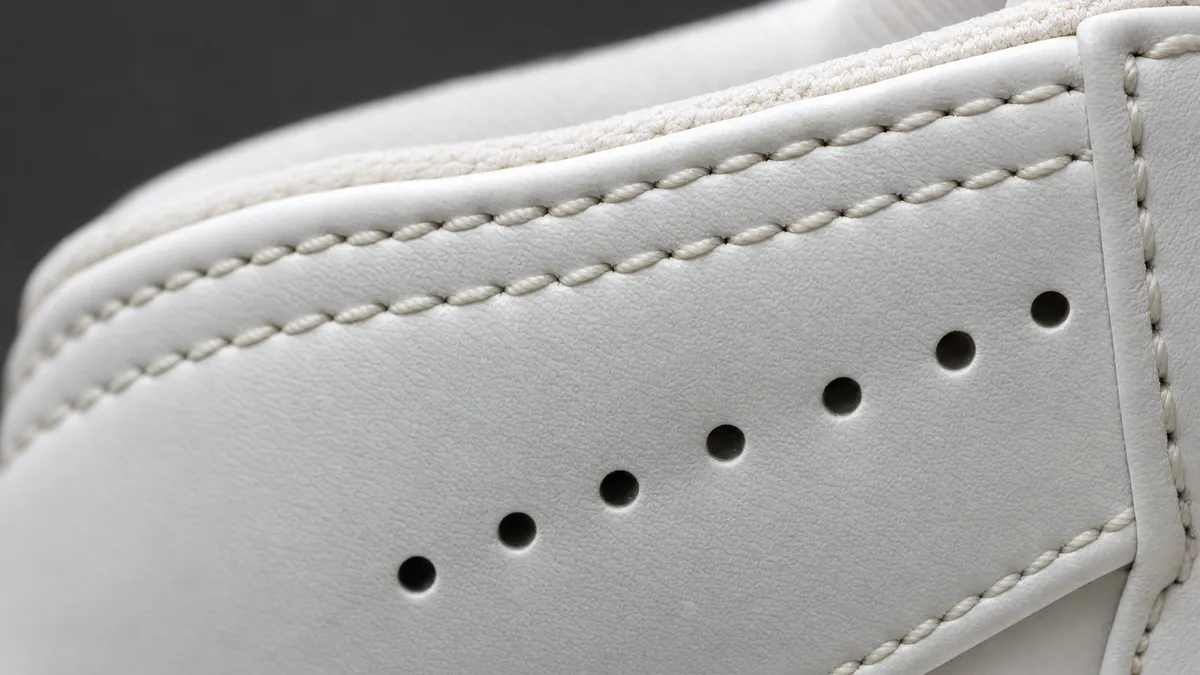 Authentic
 Photo angles for the check
- 1 Overall view
- 2 Logo
- 3 Interior tag
- 4 Outsole
- 5 Box label
Check your Clifton 9 right now
Snap photos of your item and get an AI verdict with a confidence score in about a minute.
FAQ
Where should I start on a Clifton 9?
With a side photo: judge the EVA stack profile and the Meta-Rocker curve, then compare layer heights on the left and right shoe. Distorted geometry and layer asymmetry are the most common rep tells.
Can I verify a Clifton 9 by serial number?
Hoka has no public lookup database for serial numbers. Rely on midsole geometry, bonding cleanliness, logo proportions, and the insole and inner-label printing, compared against documented release references.
Are photos enough for a verdict?
The sole profile, EVA layers, logos, and bond line all read well in photos. Shoot the pair straight from the side, the outsole from below, the tongue, and the inner label – LegitCheck AI compares the zones and returns a verdict with a confidence score. It’s a signal-based screening, not a guarantee.
More Hoka models
Other sneakers brands
Check another brand in this category: