Hoka · Authentication
Arahi 7: real vs fake
The Arahi 7 is Hoka’s stability model: support is built into the midsole itself through a firmer J-shaped frame rather than rigid inserts in the upper. That zone is what reps reproduce worst – the sidewall reads uniform in density and the stack profile is distorted. Shoot a close-up of the midsole from the side and let the AI check the support zone and geometry.
What to check on the Arahi 7
Model-specific zones – on top of the brand-level signs.
J-Frame support in the midsole
On the Arahi, support is a J-shaped zone of firmer EVA along the medial side and around the heel. On retail that zone reads by a clear visible boundary against the surrounding foam; on some colorways it is also set off by color, but not always. What should worry you is a sidewall uniform in density – check against documented references for the specific colorway.
Density-zone boundaries
The transition between the main foam and the support zone is tidy on retail, with an even line along its whole length. A blurred, ragged, or left/right asymmetric boundary is a classic copy tell.
Stack profile and symmetry
Sidewalls are even, EVA layers run symmetrically left and right, and overall height matches the release reference. On reps the profile is puffed or shaved and layers sit at different heights.
Meta-Rocker and Active Foot Frame
The heel-to-toe rocker is pronounced and the foot sits recessed into the midsole: the walls cradle the foot and the insole sits below their level. A flat rocker and a flat seat with undefined walls point to a copy.
Logo and branding
The Hoka logo on the sidewall, tongue, and heel is crisp and proportional, with print or embroidery free of mush and misalignment. Hoka One One-era releases can carry different branding – compare with documented references for that specific release.
Bonding, insole, laces
The bond line is even with no glue pooling or gaps; size and model printing on the insole and inner label is crisp, the laces dense, the eyelets tidy. “Made in” is often Vietnam or Cambodia, but the country alone proves nothing.
Where to inspect
The key zones to photograph and check on this type of item – a schematic, not a product photo.
- 1Logo shape and placement
- 2Toe box and upper shape
- 3Heel counter and tab
- 4Midsole and stitching
- 5Tongue and size tag
The difference is in the details – drag the slider
Typical differences in workmanship: stitching consistency, edge finishing, detail quality. Left – factory quality, right – common replica flaws.
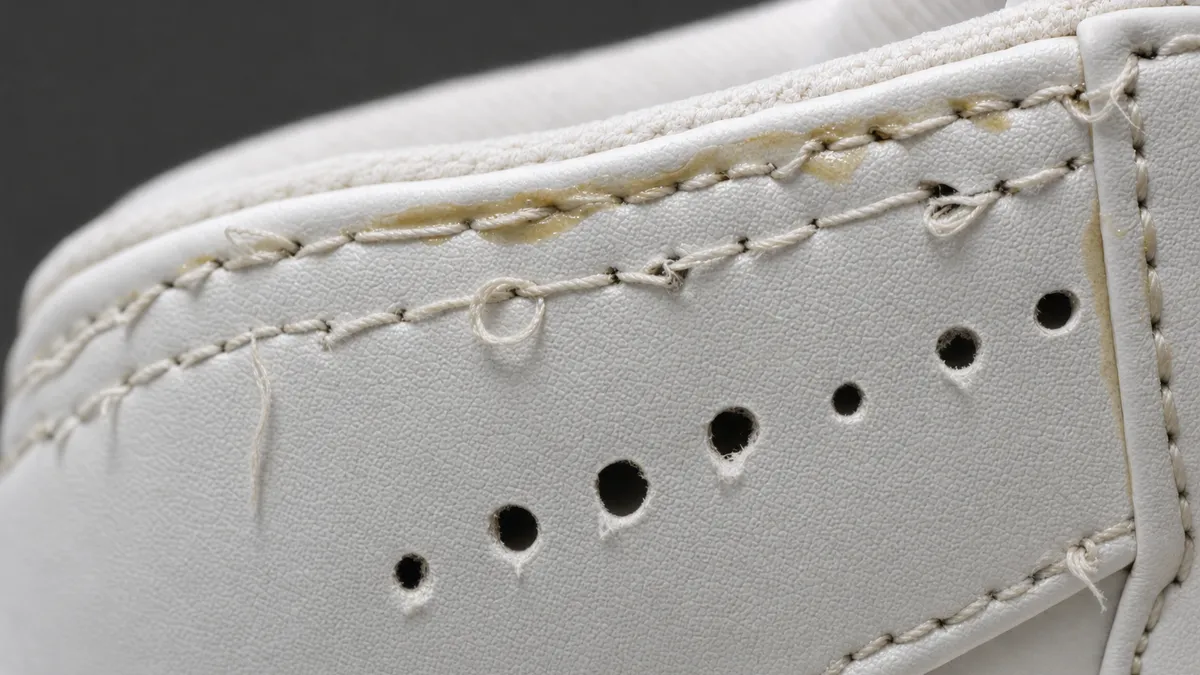 Replica
 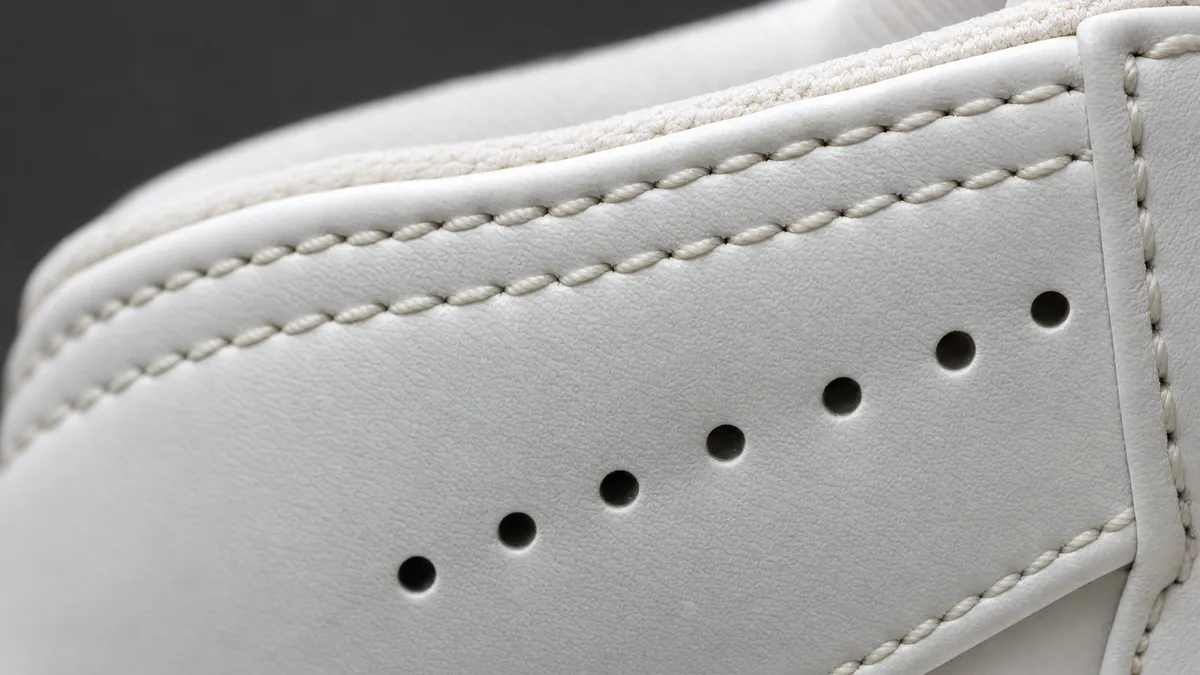 Authentic
 Photo angles for the check
- 1 Overall view
- 2 Logo
- 3 Interior tag
- 4 Outsole
- 5 Box label
Check your Arahi 7 right now
Snap photos of your item and get an AI verdict with a confidence score in about a minute.
FAQ
What is the J-Frame and why check it?
It’s a J-shaped zone of firmer EVA along the medial side and around the heel – Hoka’s way of adding stability without rigid inserts. On retail the zone reads by a clear visible boundary, and on some colorways by color too; a sidewall uniform in appearance with no visible boundary is a strong rep tell.
Can I tell an Arahi 7 from neutral Hoka models?
Yes, precisely by that support zone: the Arahi has one, while the neutral Clifton and Bondi don’t set support apart this way. If a pair is sold as an Arahi but no support zone is visible on the midsole, treat that as a warning and check the rest.
Which shots give the most?
A close-up of the midsole from the medial side (the support zone), the pair straight from the side, a heel-on view, the insole, and the inner label. LegitCheck AI compares the zones and returns a verdict with a confidence score – a signal-based screening, not a guarantee.
More Hoka models
Other sneakers brands
Check another brand in this category: