Guides · Sneakers
How to Tell if Your Vans Are Real or Fake (2026)
Vans is one of the most counterfeited footwear brands – the simple construction of the Old Skool and Authentic looks easy to copy, but that’s exactly where reps trip up. This guide covers 6 groups of tells that apply across the lineup, the exact photo angles to shoot, and a way to check a pair from photos in about a minute.
Real vs fake Vans: comparison table
Data current as of July 2026. Replicas evolve, so judge by the combination of signs – never a single one.
| Sign | Authentic | Fake |
|---|---|---|
| Sidestripe (Old Skool and Sk8-Hi only) | On models that use it, an even curve at the heel and toe, consistent width along its length, and clean stitching with no skipped stitches. | On the Old Skool and Sk8-Hi, a crooked stripe, drifting width, or uneven/broken stitching. On the Authentic, Era, and Slip-On there is no stripe at all by design – that belongs under "normal," not "fake." |
| Waffle outsole pattern | Crisp, even cells of consistent depth across the whole sole, with tidy edge finishing. | A blurry or muddy pattern, cells of mismatched shape, or rubber overflow along the sole edge. |
| Vulcanization and welt quality | The outsole bonds to the upper along a clean line with no glue overflow, and the side welt sits tight around the full perimeter. | Glue squeezing out past the sole edge, a welt that lifts in spots, or an uneven, wavy bond line. |
| Stitching and eyelets | Even stitch spacing around the whole upper with no skipped stitches, and eyelets matched in size and shape with no metal burrs. | Drifting stitch spacing, skipped stitches or broken thread, and eyelets that are misshapen or mismatched in diameter. |
| Sidewall print | The "vans off the wall" print is crisp, with letters of consistent height and correct proportions. | A smudged print, letters of uneven height, or a print that’s partly missing. |
| Canvas, suede, or checkerboard quality | A tight, even weave with no gaps between threads; on checkerboard releases, crisp squares of consistent size, with a pattern break at a panel seam being a normal result of the fabric cut. | Thin or uneven fabric with sparse threads at flex points; checkerboard squares that are blurry, uneven, or clearly mismatched in size. |
The difference is in the details – drag the slider
Typical differences in workmanship: stitching consistency, edge finishing, detail quality. Left – factory quality, right – common replica flaws.
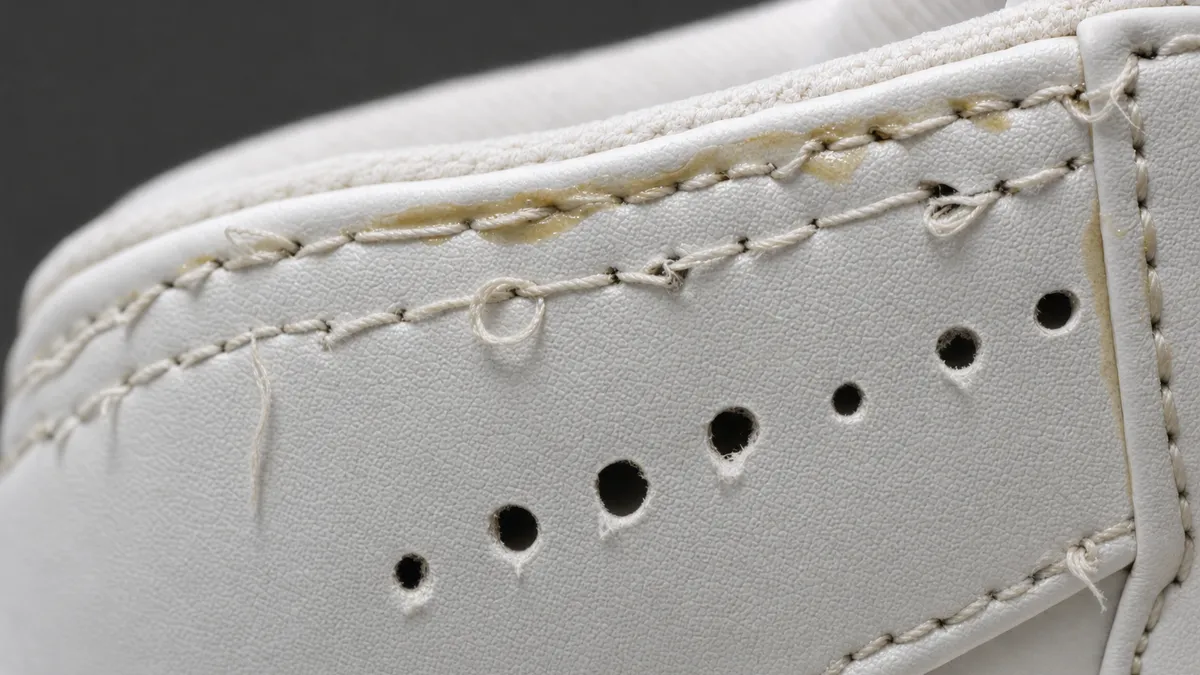 Replica
 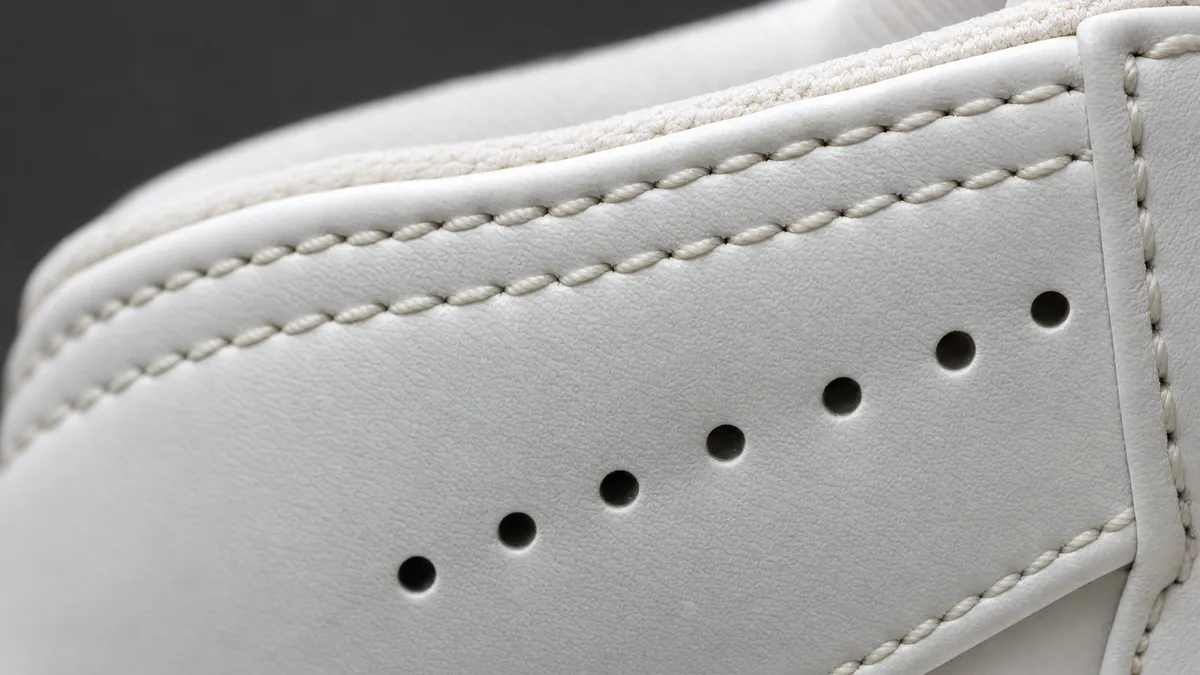 Authentic
 1. Sidestripe (Old Skool and Sk8-Hi only)
Authentic: On models that use it, an even curve at the heel and toe, consistent width along its length, and clean stitching with no skipped stitches.
Fake: On the Old Skool and Sk8-Hi, a crooked stripe, drifting width, or uneven/broken stitching. On the Authentic, Era, and Slip-On there is no stripe at all by design – that belongs under "normal," not "fake."
2. Waffle outsole pattern
Authentic: Crisp, even cells of consistent depth across the whole sole, with tidy edge finishing.
Fake: A blurry or muddy pattern, cells of mismatched shape, or rubber overflow along the sole edge.
3. Vulcanization and welt quality
Authentic: The outsole bonds to the upper along a clean line with no glue overflow, and the side welt sits tight around the full perimeter.
Fake: Glue squeezing out past the sole edge, a welt that lifts in spots, or an uneven, wavy bond line.
4. Stitching and eyelets
Authentic: Even stitch spacing around the whole upper with no skipped stitches, and eyelets matched in size and shape with no metal burrs.
Fake: Drifting stitch spacing, skipped stitches or broken thread, and eyelets that are misshapen or mismatched in diameter.
5. Sidewall print
Authentic: The "vans off the wall" print is crisp, with letters of consistent height and correct proportions.
Fake: A smudged print, letters of uneven height, or a print that’s partly missing.
6. Canvas, suede, or checkerboard quality
Authentic: A tight, even weave with no gaps between threads; on checkerboard releases, crisp squares of consistent size, with a pattern break at a panel seam being a normal result of the fabric cut.
Fake: Thin or uneven fabric with sparse threads at flex points; checkerboard squares that are blurry, uneven, or clearly mismatched in size.
Popular Vans models
Model-by-model checks – what to look at on each:
Where to inspect
The key zones to photograph and check on this type of item – a schematic, not a product photo.
- 1Logo shape and placement
- 2Toe box and upper shape
- 3Heel counter and tab
- 4Midsole and stitching
- 5Tongue and size tag
How to photograph your Vans for a check
Shoot in daylight, avoid glare, keep focus sharp. You need 5 angles:
- 1 Full pair from the side
- 2 Close-up of the Sidestripe or side panel
- 3 Outsole from below, showing the waffle tread and "off the wall" print
- 4 Close-up of the heel and edge stitching
- 5 Tongue and inner upper
How to read the result
The AI returns a verdict with a confidence score:
- 75–100% – Authentic: high confidence the item is genuine.
- 60–74% – Likely authentic: probably genuine with minor concerns.
- 40–59% – Uncertain: the photos are not conclusive – retake or add angles.
- 25–39% – Likely fake: several red flags.
- 0–24% – Fake: clear signs of a replica.
Check your Vans right now
Snap photos of your item and get an AI verdict with a confidence score in about a minute.
FAQ
Is a missing Sidestripe a sign of a fake?
Not if the model was never built with one. The Sidestripe only appears on the Old Skool and Sk8-Hi. The Authentic, Era, and Slip-On don’t have this feature at all, so its absence there isn’t a reason to call the pair fake. Identify the model first, then check the tells that actually apply to it.
Is a yellowed outsole a bad sign?
No. Light-colored Vans outsoles yellow over time from oxidation and UV exposure – that’s normal aging on a genuine pair, not a counterfeit indicator. Judge the tread pattern, bond quality, and print sharpness instead of the yellowing tone.
Can I verify a Vans style number or production date from the tag code?
There’s no public database for checking Vans by style number, and the markings on the wash tag and insole have changed across years and factories. Instead, judge how well the code is printed – sharpness, even characters, no smudging – rather than trying to decode its format.
How accurate is an AI photo check for Vans?
Accuracy depends on the quality and number of photos. LegitCheck AI cross-references the tells across all your angles – the Sidestripe where applicable, the outsole, stitching, and material quality – and returns a verdict with a confidence score, flagging "uncertain" rather than guessing when the photos don’t support a definitive call. It’s a fast screening tool, not a legally binding authentication.