Guides · Sneakers
How to Tell if Your Salomon Sneakers Are Real or Fake (2026)
Salomon has gone from technical trail brand to lifestyle hit: the XT-6 and XT-4 get replicated at scale, with the Speedcross, ACS Pro, and XA Pro 3D not far behind. The good news is that fakes almost always give themselves away on the signature details – the Quicklace system, the Contagrip outsole pattern, and the quality of the welded overlays. This guide covers 6 groups of tells, the exact photo angles to shoot, and a way to verify your sneakers from photos in about a minute.
Real vs fake Salomon: comparison table
Data current as of July 2026. Replicas evolve, so judge by the combination of signs – never a single one.
| Sign | Authentic | Fake |
|---|---|---|
| Quicklace system | A thin but strong lace, a correctly shaped lock toggle with a crisp “SALOMON” marking, and a lace pocket on the tongue. | A toggle of the wrong shape or stiffness, a cheap lace, a crooked marking, and a missing or badly made pocket. |
| Contagrip outsole | A crisp signature tread pattern with even lug geometry and depth, and clean bonding to the upper. | A blurry tread pattern, melted lug edges, and uneven bonding with gaps and glue smears. |
| Sensifit overlays | Heat-welded overlays that lie flat and cradle the foot with no glue along the edges, over dense quality mesh. | Crooked, shifted overlays, glue residue along the edges, and thin loose cheap-looking mesh. |
| SALOMON branding | The “SALOMON” wordmark in the correct font on the tongue, heel, and toggle; on the S/Lab line, a correct “S/LAB” marking in place. | A distorted font, shifted letters, blurry embossing or print, and branding in the wrong position. |
| Tag and insole | An even font on the inner tag with size, model, and “made in” (often Vietnam or China), and a flatly glued insole. | A sloppy tag font, crooked printing, an insole lifting at the edges, and untidily set data. |
| Color and colorway | The exact shade and layout of color blocks match documented references for the release. | A drifting tone, or color blocks shifted or placed differently from retail. |
The difference is in the details – drag the slider
Typical differences in workmanship: stitching consistency, edge finishing, detail quality. Left – factory quality, right – common replica flaws.
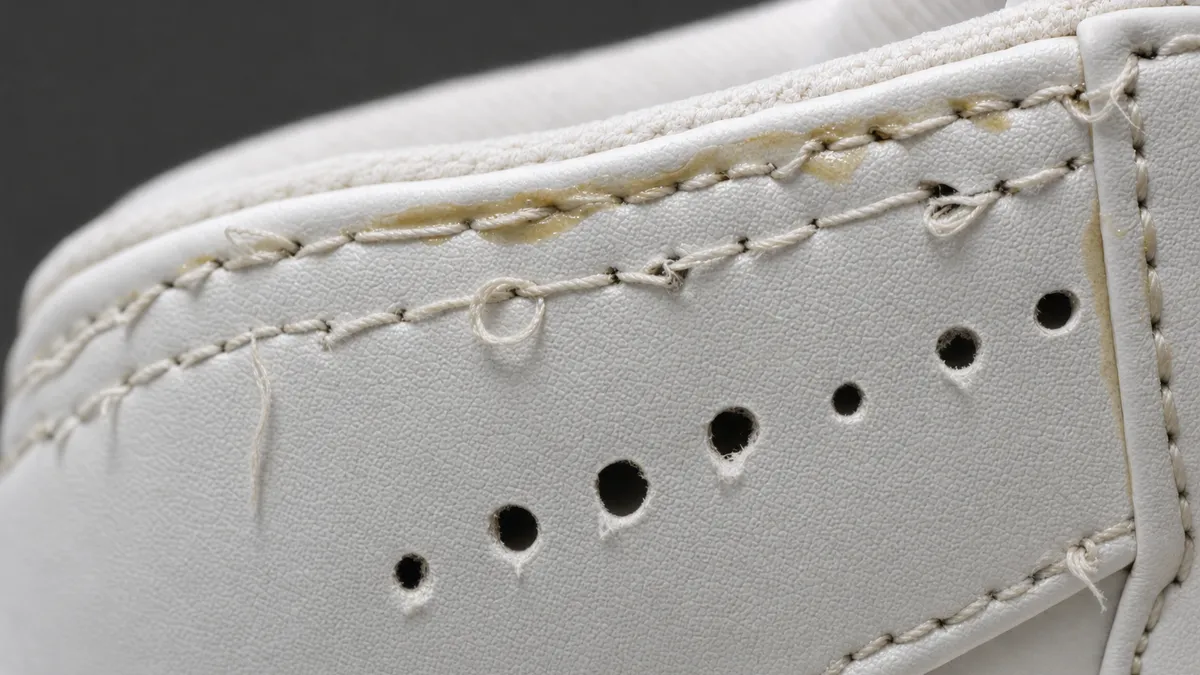 Replica
 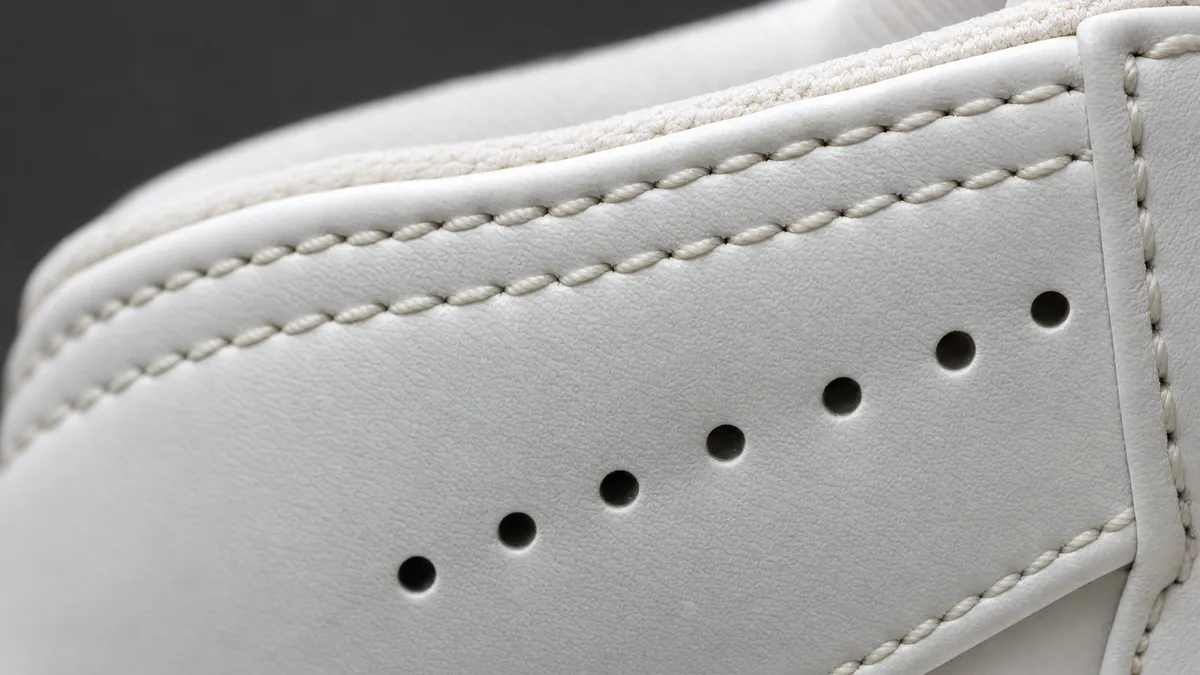 Authentic
 1. Quicklace system
Authentic: A thin but strong lace, a correctly shaped lock toggle with a crisp “SALOMON” marking, and a lace pocket on the tongue.
Fake: A toggle of the wrong shape or stiffness, a cheap lace, a crooked marking, and a missing or badly made pocket.
2. Contagrip outsole
Authentic: A crisp signature tread pattern with even lug geometry and depth, and clean bonding to the upper.
Fake: A blurry tread pattern, melted lug edges, and uneven bonding with gaps and glue smears.
3. Sensifit overlays
Authentic: Heat-welded overlays that lie flat and cradle the foot with no glue along the edges, over dense quality mesh.
Fake: Crooked, shifted overlays, glue residue along the edges, and thin loose cheap-looking mesh.
4. SALOMON branding
Authentic: The “SALOMON” wordmark in the correct font on the tongue, heel, and toggle; on the S/Lab line, a correct “S/LAB” marking in place.
Fake: A distorted font, shifted letters, blurry embossing or print, and branding in the wrong position.
5. Tag and insole
Authentic: An even font on the inner tag with size, model, and “made in” (often Vietnam or China), and a flatly glued insole.
Fake: A sloppy tag font, crooked printing, an insole lifting at the edges, and untidily set data.
6. Color and colorway
Authentic: The exact shade and layout of color blocks match documented references for the release.
Fake: A drifting tone, or color blocks shifted or placed differently from retail.
Popular Salomon models
Model-by-model checks – what to look at on each:
Where to inspect
The key zones to photograph and check on this type of item – a schematic, not a product photo.
- 1Logo shape and placement
- 2Toe box and upper shape
- 3Heel counter and tab
- 4Midsole and stitching
- 5Tongue and size tag
How to photograph your Salomon for a check
Shoot in daylight, avoid glare, keep focus sharp. You need 5 angles:
- 1 Full pair from the side
- 2 Close-up of the Quicklace toggle and tongue pocket
- 3 Contagrip outsole with the tread pattern
- 4 Sensifit welded overlays and upper mesh
- 5 Inner tag (size, model, “made in”)
How to read the result
The AI returns a verdict with a confidence score:
- 75–100% – Authentic: high confidence the item is genuine.
- 60–74% – Likely authentic: probably genuine with minor concerns.
- 40–59% – Uncertain: the photos are not conclusive – retake or add angles.
- 25–39% – Likely fake: several red flags.
- 0–24% – Fake: clear signs of a replica.
Check your Salomon right now
Snap photos of your item and get an AI verdict with a confidence score in about a minute.
FAQ
Where should I start a Salomon legit check?
With the Quicklace system: judge the shape and stiffness of the toggle with its “SALOMON” marking, the lace quality, and whether the tongue has a lace pocket. Then move on to the Contagrip outsole and the welded overlays. It’s the fastest screening before a detailed check.
What is Contagrip and how do I check it?
Contagrip is Salomon’s signature outsole rubber with a distinctive tread pattern. On retail the lug geometry and depth are crisp and the bonding to the upper is clean. A blurry pattern, melted edges, and uneven bonding with gaps point to a rep. Weigh it together with the other tells.
Can I verify a Salomon by serial number?
Salomon has no public serial-number lookup. The inner tag lists size, model, and country of manufacture – often Vietnam or China – but authenticity has to be judged from the combination of tells: Quicklace, Contagrip, Sensifit overlays, and branding, while matching the exact colorway against documented references for the release.
How accurate is an AI photo check for Salomon?
Accuracy depends on the quality and number of photos. LegitCheck AI cross-references the tells across all your angles and returns a verdict with a confidence score, and flags “uncertain” rather than guessing when the photos don’t support a definitive call. It’s a fast screening tool, not a legally binding authentication.