Guides · Luxury Handbags
How to Tell if a Louis Vuitton Bag Is Real or Fake (2026)
Louis Vuitton is the most counterfeited luxury brand in the world – customs agencies estimate it accounts for a sizable share of all seized fakes. The upside: LV’s production is strictly standardized, so authentic bags carry a set of consistent tells, from the date code format to the exact shade of yellow thread. Here’s what to check.
Real vs fake Louis Vuitton: comparison table
Data current as of September 2026. Replicas evolve, so judge by the combination of signs – never a single one.
| Sign | Authentic | Fake |
|---|---|---|
| Date code / microchip | 1990–2021 – a heat-stamped code of 2 letters (factory) and 4 digits (month or week + year), usually on an interior tab or pocket, in a format that matches its era; 1980s – 3–4 digits, from the mid-1980s followed by 2 factory letters; before the early 1980s – no code at all. Through 2021 codes gave way to an RFID microchip line by line, with no announced date: 2021 bags turn up with either, later ones normally have a chip and no visible code. | A code printed in ink instead of heat-stamped, thick or uneven lettering, digits impossible in any era (SD0000: there is no month or week 00), a factory code that contradicts the “made in” line, or a code year that contradicts the model (a 1995 code on a model launched in 2015). A missing code is not on this list by itself: chip-era bags, pre-1980s pieces and worn tabs have none. |
| LV monogram | A crisp, symmetrical pattern with even spacing; on classic models (Speedy, Neverfull) the motif is continuous and mirrored, and logos aren’t cut off by seams where they shouldn’t be. | A shifted or tilted pattern, inconsistent spacing, a print that’s washed-out or overly bright, or monograms crudely chopped by seams on classic silhouettes. |
| Stitching | Even, mustard-yellow stitches on the vachetta, with an identical stitch count on symmetrical parts (for example, on the handle anchors). | Thread that’s neon-yellow or too pale, uneven spacing, different stitch counts left vs. right, and stray thread ends. |
| Heat stamp and fonts | “LOUIS VUITTON® PARIS made in France / made in Spain / made in Italy / made in U.S.A.” – the country in the stamp depends on the factory (see the date code decoder) and must match the factory code. The lettering is thin, crisp and deep; the “O” is perfectly round, the “L” has a short foot, and letters sit close together. What you check is the font, the thinness, and the depth of the impression – not the specific country. | Thick or wobbly letters, an oval “O,” wide letter spacing, a stamp that’s shallow or flooded with dye – or a country in the stamp that contradicts the factory code in the date code. |
| Hardware | Brass hardware with satisfying heft, cleanly engraved LOUIS VUITTON lettering, no chipped plating; zippers glide smoothly. | Lightweight metal, tiny or crooked engraving (or none at all), peeling plating, and zippers that snag. |
| Vachetta (natural leather) | Pale when new, it oxidizes and darkens to a honey tone over time; edges are neatly painted burgundy/red. | Faux leather that never develops a patina, rough unfinished edges, and a chemical smell. |
The difference is in the details – drag the slider
Typical differences in workmanship: stitching consistency, edge finishing, detail quality. Left – factory quality, right – common replica flaws.
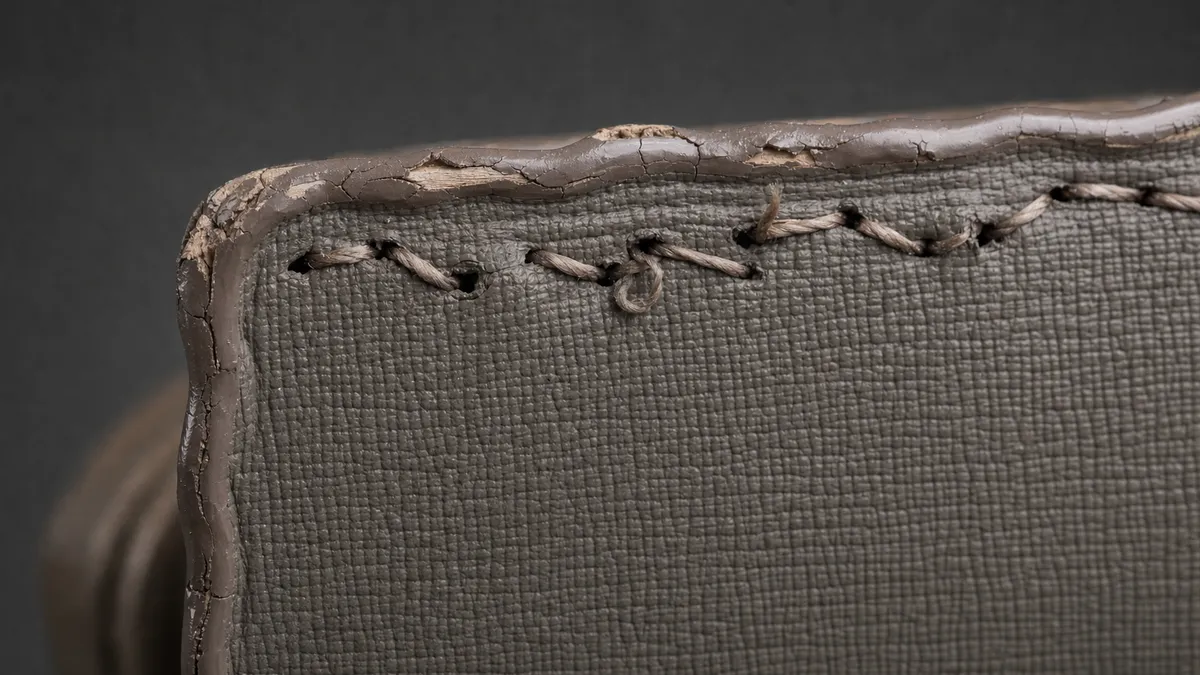 Replica
 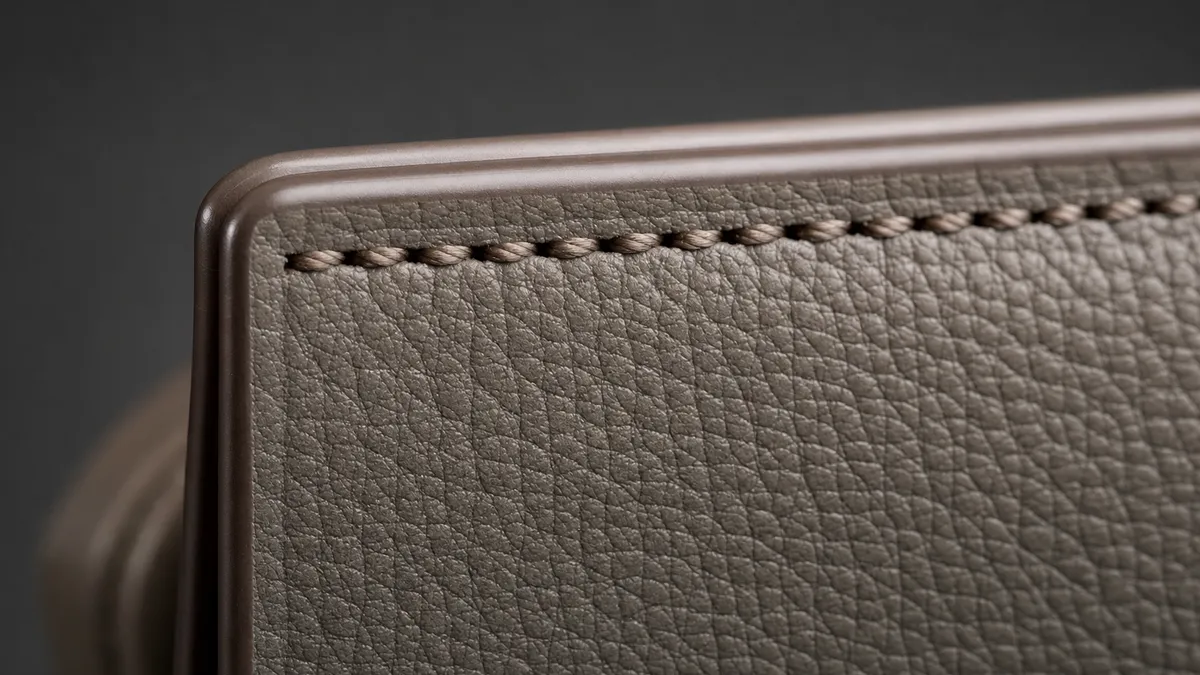 Authentic
 1. Date code / microchip
Authentic: 1990–2021 – a heat-stamped code of 2 letters (factory) and 4 digits (month or week + year), usually on an interior tab or pocket, in a format that matches its era; 1980s – 3–4 digits, from the mid-1980s followed by 2 factory letters; before the early 1980s – no code at all. Through 2021 codes gave way to an RFID microchip line by line, with no announced date: 2021 bags turn up with either, later ones normally have a chip and no visible code.
Fake: A code printed in ink instead of heat-stamped, thick or uneven lettering, digits impossible in any era (SD0000: there is no month or week 00), a factory code that contradicts the “made in” line, or a code year that contradicts the model (a 1995 code on a model launched in 2015). A missing code is not on this list by itself: chip-era bags, pre-1980s pieces and worn tabs have none.
2. LV monogram
Authentic: A crisp, symmetrical pattern with even spacing; on classic models (Speedy, Neverfull) the motif is continuous and mirrored, and logos aren’t cut off by seams where they shouldn’t be.
Fake: A shifted or tilted pattern, inconsistent spacing, a print that’s washed-out or overly bright, or monograms crudely chopped by seams on classic silhouettes.
3. Stitching
Authentic: Even, mustard-yellow stitches on the vachetta, with an identical stitch count on symmetrical parts (for example, on the handle anchors).
Fake: Thread that’s neon-yellow or too pale, uneven spacing, different stitch counts left vs. right, and stray thread ends.
4. Heat stamp and fonts
Authentic: “LOUIS VUITTON® PARIS made in France / made in Spain / made in Italy / made in U.S.A.” – the country in the stamp depends on the factory (see the date code decoder) and must match the factory code. The lettering is thin, crisp and deep; the “O” is perfectly round, the “L” has a short foot, and letters sit close together. What you check is the font, the thinness, and the depth of the impression – not the specific country.
Fake: Thick or wobbly letters, an oval “O,” wide letter spacing, a stamp that’s shallow or flooded with dye – or a country in the stamp that contradicts the factory code in the date code.
5. Hardware
Authentic: Brass hardware with satisfying heft, cleanly engraved LOUIS VUITTON lettering, no chipped plating; zippers glide smoothly.
Fake: Lightweight metal, tiny or crooked engraving (or none at all), peeling plating, and zippers that snag.
6. Vachetta (natural leather)
Authentic: Pale when new, it oxidizes and darkens to a honey tone over time; edges are neatly painted burgundy/red.
Fake: Faux leather that never develops a patina, rough unfinished edges, and a chemical smell.
Popular Louis Vuitton models
Model-by-model checks – what to look at on each:
Where to inspect
The key zones to photograph and check on this type of item – a schematic, not a product photo.
- 1Logo and hardware
- 2Handle attachment
- 3Stitching and edges
- 4Date code and tag
- 5Zipper and base
How to photograph your Louis Vuitton for a check
Shoot in daylight, avoid glare, keep focus sharp. You need 5 angles:
- 1 Full front of the bag
- 2 Monogram close-up
- 3 LOUIS VUITTON heat stamp
- 4 Date code or interior tab
- 5 Hardware and anchor stitching
How to read the result
The AI returns a verdict with a confidence score:
- 75–100% – Authentic: high confidence the item is genuine.
- 60–74% – Likely authentic: probably genuine with minor concerns.
- 40–59% – Uncertain: the photos are not conclusive – retake or add angles.
- 25–39% – Likely fake: several red flags.
- 0–24% – Fake: clear signs of a replica.
Check your Louis Vuitton right now
Snap photos of your item and get an AI verdict with a confidence score in about a minute.
FAQ
My new LV bag has no date code – is it fake?
Not necessarily. Through 2021 Louis Vuitton replaced date codes with an embedded RFID microchip, line by line rather than on one date – the brand never announced an exact one, so 2021 bags turn up with a code or with a chip. Later bags normally have no visible code. Pieces from before the early 1980s never had one, and on a used bag the code can wear off. What does call for a closer look is a code that contradicts the model: a 1995 code on a model launched in 2015.
Can I verify that a date code matches the bag?
Yes. On 1990–2021 codes the two letters encode the factory (country) and the four digits the month or week and year; 1980s codes put the digits first, sometimes followed by factory letters. The format changed from era to era, so a format that doesn’t match the claimed production year is a red flag. The app tells you where to find the code on your specific model.
The monogram is cut off by a seam – is that a fake?
It depends on the model. On classic Speedy and Neverfull bags the pattern is symmetrical and continuous, but on some models (with exterior pockets, for example) the motif is cropped by design. That’s why you compare against a reference for the exact model – which is what the AI does.
The seller has a boutique receipt. Is that enough?
No. Receipts get faked more often than the bags themselves, and a receipt isn’t tied to a specific item. Judge the bag itself: monogram, heat stamp, stitching, hardware, and the code or chip.