Guides · Luxury Handbags
How to Authenticate a Chloé Bag: Real vs Fake (2026)
Chloé is a French house whose Paddington, Marcie, Drew, Faye, and Woody bags have spent decades among the most recognizable – and most counterfeited – names in luxury. The brand's design and markings have changed across eras: a 1990s vintage bag and a current boutique model look different, yet both can be genuine – "vintage or not" and "real or fake" are two separate questions, and confusing them is a mistake. The check rests on leather quality, the sharpness of the logo embossing, stitching accuracy, hardware quality, and the interior markings – but the tag's format has changed across lines and years, and Chloé has no public database for a serial-number lookup.
Real vs fake Chloé: comparison table
Data current as of July 2026. Replicas evolve, so judge by the combination of signs – never a single one.
| Sign | Authentic | Fake |
|---|---|---|
| Leather quality | Dense leather with a natural, lively grain that never repeats from panel to panel; soft models fall in a smooth, heavy drape with no plasticky sheen. | Stiff or thin, lifeless leather, a uniform stamped grain with a clearly repeating pattern, a noticeable chemical smell on a supposedly new item. |
| Logo embossing | The Chloé logo (wordmark or the line's signature mark) is embossed crisply and deeply, with even letter geometry and consistent stroke weight. | A shallow, blurry, or mushy impression, letters of uneven weight or spacing, a shape noticeably off from reference for the same line. |
| Stitching and handle symmetry | Even stitching with consistent pitch, even on curves; handles and straps are mounted symmetrically against the bag body, with no skew in the mounting points. | Wandering stitch pitch, seams that pucker the leather and wrinkle the panel; handles mounted with a visible skew or at different heights left to right. |
| Leather edge paint and finishing | Leather edges are painted neatly, with an unbroken paint line and no drips or gaps, and an even edge along the full length of the seam. | Edge paint with drips, skips, or a clearly uneven line, an unfinished or "fuzzy" raw leather edge. |
| Hardware | Metal with clean, even plating and no bubbling, crisp and deep engraving, snaps and clasps sitting flush with no visible gap or skew. Hardware weight is an in-hand check and isn't judged from a photo. | Thin, stamped-looking hardware with a rough edge, small mushy engraving, a visible gap in locks and clasps. |
| Lining and interior leather tag | The lining is sewn neatly, with no stray threads or crooked seams; the interior leather tag carries crisp embossing, and its marking set matches documented references for the same release and era. Format and content have changed over the years and across lines, so there's no fixed character count – cross-check against photos from the same period. | Sloppy lining stitching with stray threads, faint or crooked tag embossing, markings that don't match reference for the claimed line and era. |
The difference is in the details – drag the slider
Typical differences in workmanship: stitching consistency, edge finishing, detail quality. Left – factory quality, right – common replica flaws.
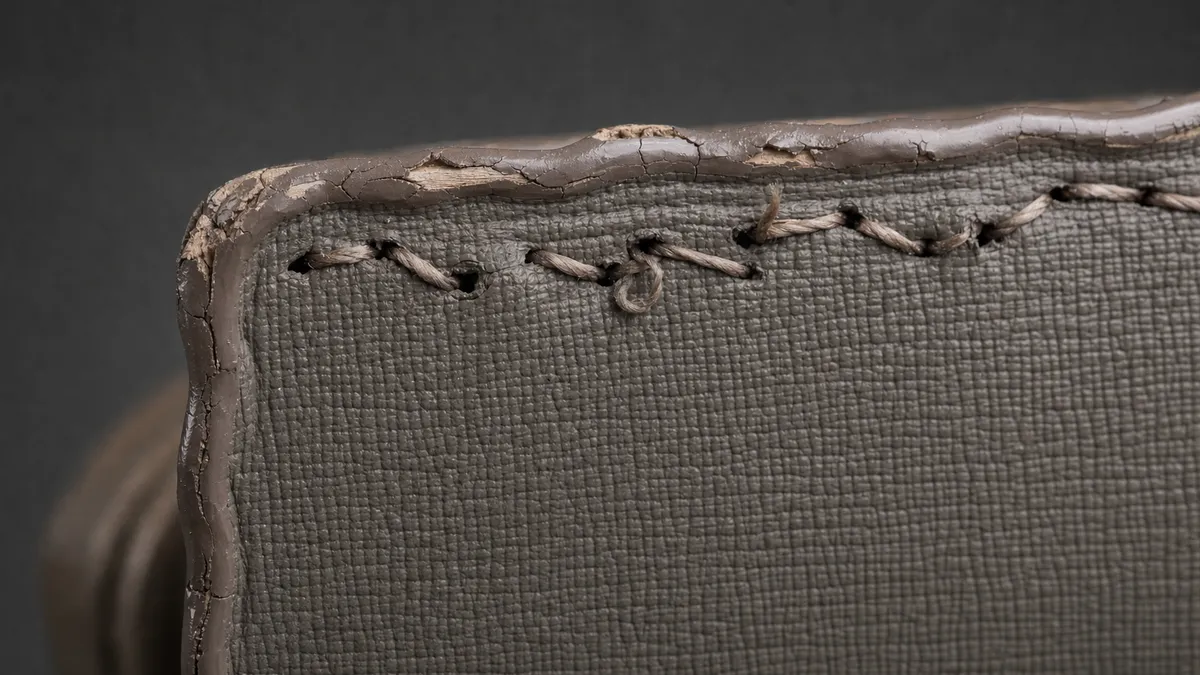 Replica
 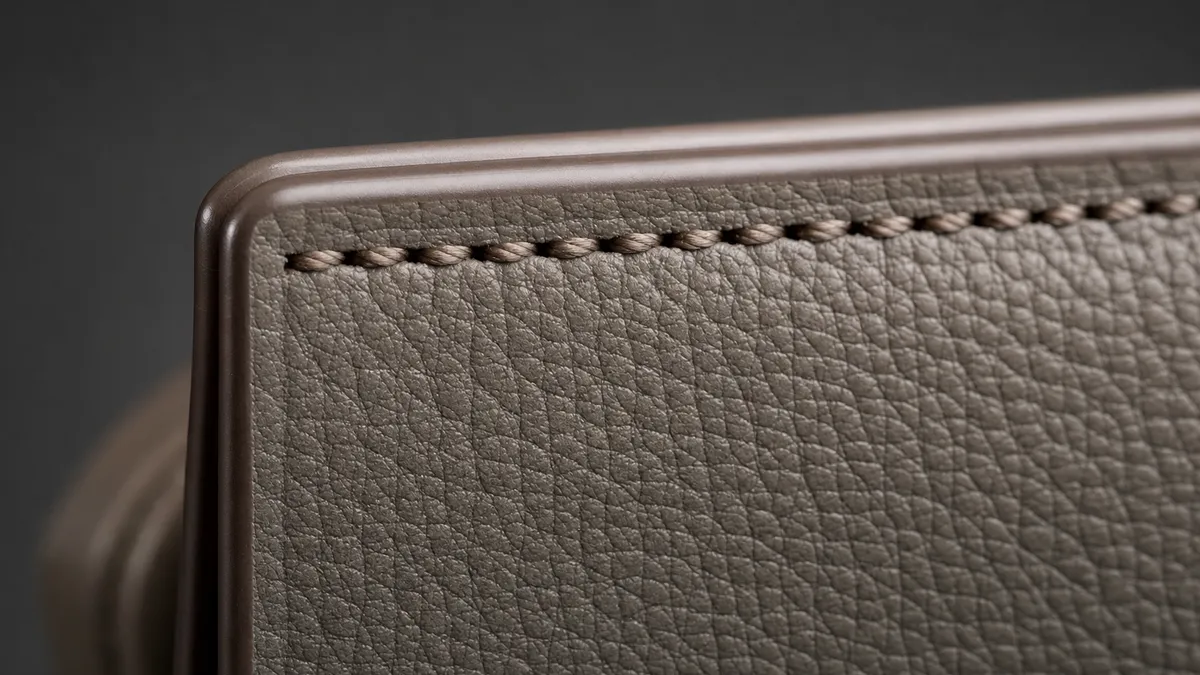 Authentic
 1. Leather quality
Authentic: Dense leather with a natural, lively grain that never repeats from panel to panel; soft models fall in a smooth, heavy drape with no plasticky sheen.
Fake: Stiff or thin, lifeless leather, a uniform stamped grain with a clearly repeating pattern, a noticeable chemical smell on a supposedly new item.
2. Logo embossing
Authentic: The Chloé logo (wordmark or the line's signature mark) is embossed crisply and deeply, with even letter geometry and consistent stroke weight.
Fake: A shallow, blurry, or mushy impression, letters of uneven weight or spacing, a shape noticeably off from reference for the same line.
3. Stitching and handle symmetry
Authentic: Even stitching with consistent pitch, even on curves; handles and straps are mounted symmetrically against the bag body, with no skew in the mounting points.
Fake: Wandering stitch pitch, seams that pucker the leather and wrinkle the panel; handles mounted with a visible skew or at different heights left to right.
4. Leather edge paint and finishing
Authentic: Leather edges are painted neatly, with an unbroken paint line and no drips or gaps, and an even edge along the full length of the seam.
Fake: Edge paint with drips, skips, or a clearly uneven line, an unfinished or "fuzzy" raw leather edge.
5. Hardware
Authentic: Metal with clean, even plating and no bubbling, crisp and deep engraving, snaps and clasps sitting flush with no visible gap or skew. Hardware weight is an in-hand check and isn't judged from a photo.
Fake: Thin, stamped-looking hardware with a rough edge, small mushy engraving, a visible gap in locks and clasps.
6. Lining and interior leather tag
Authentic: The lining is sewn neatly, with no stray threads or crooked seams; the interior leather tag carries crisp embossing, and its marking set matches documented references for the same release and era. Format and content have changed over the years and across lines, so there's no fixed character count – cross-check against photos from the same period.
Fake: Sloppy lining stitching with stray threads, faint or crooked tag embossing, markings that don't match reference for the claimed line and era.
Where to inspect
The key zones to photograph and check on this type of item – a schematic, not a product photo.
- 1Logo and hardware
- 2Handle attachment
- 3Stitching and edges
- 4Date code and tag
- 5Zipper and base
How to photograph your Chloé for a check
Shoot in daylight, avoid glare, keep focus sharp. You need 5 angles:
- 1 Full bag (front)
- 2 Embossed logo close-up
- 3 Hardware and engravings
- 4 Lining and interior leather tag
- 5 Stitching, leather edges, and handle attachment
How to read the result
The AI returns a verdict with a confidence score:
- 75–100% – Authentic: high confidence the item is genuine.
- 60–74% – Likely authentic: probably genuine with minor concerns.
- 40–59% – Uncertain: the photos are not conclusive – retake or add angles.
- 25–39% – Likely fake: several red flags.
- 0–24% – Fake: clear signs of a replica.
Check your Chloé right now
Snap photos of your item and get an AI verdict with a confidence score in about a minute.
FAQ
Can I authenticate a Chloé bag by the number on the interior tag?
Chloé bags carry an interior leather tag with markings, but there is no public database to "run" a number through, and the tag's format has changed across years and lines – we deliberately don't give an exact character count or decoding here. The right approach is to match the marking set against documented references for the specific release and call the verdict on the full set of tells: leather, embossing, stitching, and hardware.
My bag looks different from the brand's current collection – is that fake?
Not necessarily. "Vintage or not" and "real or fake" are two separate questions. Chloé's design, silhouettes, and markings have changed across eras, and a 1990s or 2000s vintage bag legitimately looks different from a current boutique model – both can be genuine. Cross-check the bag against documented photos of the same model from the same period, not the current collection.
The tag lists a country of production I don't recognize – is that a red flag?
Not on its own. Country of production varies across Chloé bags, and the stamp alone proves nothing – it's easy to fake and shouldn't be your only criterion. Weigh the country of origin together with the rest of the tells: leather quality, embossing, stitching, and hardware.
My bag has worn leather and darkened corners – is that a fake?
No, that's ordinary wear and storage, expected on a used or vintage bag, and it doesn't indicate a fake on its own. The same goes for slight tarnishing or oxidation on hardware over time. Judge the quality of the original materials and workmanship instead: leather grain, embossing depth, stitching accuracy, and hardware casting.