Guides · Luxury Handbags
How to Tell if an Hermès Bag Is Real or Fake (2026)
The Birkin and the Kelly are counterfeiting’s most expensive targets: a high-grade replica can cost thousands of dollars and sell at the price of the real thing. But Hermès bags are sewn by hand using saddlery techniques – and handwork is precisely what’s hardest to fake. We look at the stitching, the stamps, and the metal.
Real vs fake Hermès: comparison table
Data current as of July 2026. Replicas evolve, so judge by the combination of signs – never a single one.
| Sign | Authentic | Fake |
|---|---|---|
| Saddle stitch (hand-sewn) | Stitches sit at a slight angle with the telltale hand-sewn rhythm; waxed linen thread and tension that looks organic yet tidy. | Perfectly identical machine stitches with no angle, synthetic thread, a lifeless uniformity – or, at the other extreme, crude sloppiness. |
| Blind stamp | A small, discreet stamp with the year code (a letter – in a circle, a square, or standalone depending on the era) and the craftsman’s marks; placement matches the model. | The stamp is missing, struck large and showy, or the letter/shape format doesn’t match the claimed year. |
| HERMÈS heat stamp | “HERMÈS PARIS MADE IN FRANCE” in thin, even letters with a crisp “È”; uniform depth, and any gilding stays clean without bleeding. | Thick or uneven letters, an “E” with a missing or crooked accent, inconsistent depth, paint bleed. |
| Hardware and locks | Heavy hardware with dense plating; the Hermès engraving is fine and precise; the keys, clochette, and lock match the model. | Lightweight metal with a brassy shine, coarse engraving, a wobbly lock, a clochette cut from thin leather. |
| Leather and finish | The stated leather matches its texture (Togo – large, lively grain; Epsom – fine embossed grain; Box – smooth with a sheen); it smells like genuine leather. | A plasticky, uniform grain, texture that doesn’t match the stated leather, a chemical smell. |
| Shape and posture | A Birkin or Kelly holds its structure; corners and proportions are exact, the flap lies flat, the handles are symmetrical. | A slouchy, drifting silhouette, mismatched corners, a skewed flap, handles at different heights. |
The difference is in the details – drag the slider
Typical differences in workmanship: stitching consistency, edge finishing, detail quality. Left – factory quality, right – common replica flaws.
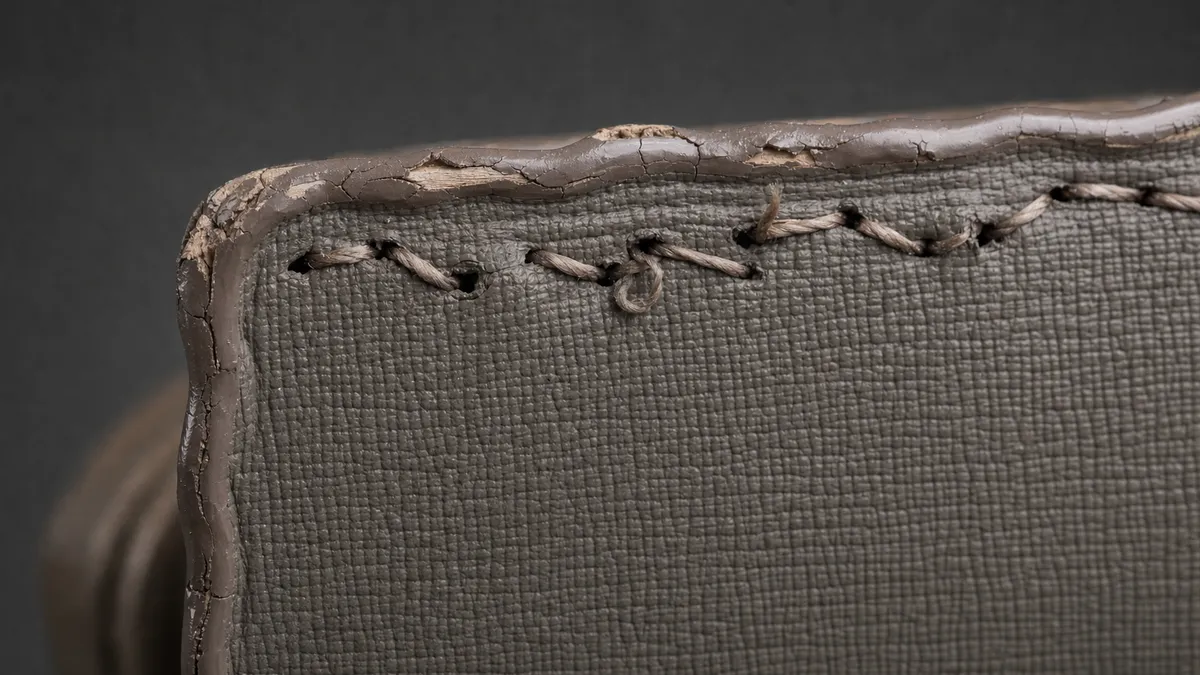 Replica
 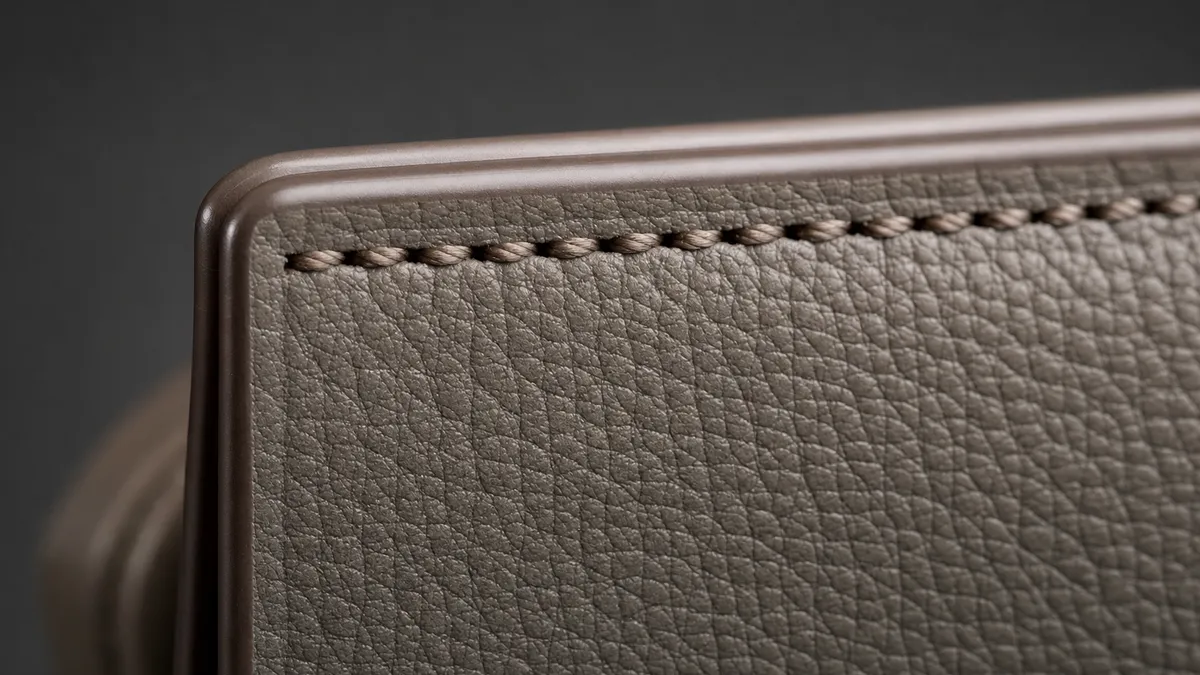 Authentic
 1. Saddle stitch (hand-sewn)
Authentic: Stitches sit at a slight angle with the telltale hand-sewn rhythm; waxed linen thread and tension that looks organic yet tidy.
Fake: Perfectly identical machine stitches with no angle, synthetic thread, a lifeless uniformity – or, at the other extreme, crude sloppiness.
2. Blind stamp
Authentic: A small, discreet stamp with the year code (a letter – in a circle, a square, or standalone depending on the era) and the craftsman’s marks; placement matches the model.
Fake: The stamp is missing, struck large and showy, or the letter/shape format doesn’t match the claimed year.
3. HERMÈS heat stamp
Authentic: “HERMÈS PARIS MADE IN FRANCE” in thin, even letters with a crisp “È”; uniform depth, and any gilding stays clean without bleeding.
Fake: Thick or uneven letters, an “E” with a missing or crooked accent, inconsistent depth, paint bleed.
4. Hardware and locks
Authentic: Heavy hardware with dense plating; the Hermès engraving is fine and precise; the keys, clochette, and lock match the model.
Fake: Lightweight metal with a brassy shine, coarse engraving, a wobbly lock, a clochette cut from thin leather.
5. Leather and finish
Authentic: The stated leather matches its texture (Togo – large, lively grain; Epsom – fine embossed grain; Box – smooth with a sheen); it smells like genuine leather.
Fake: A plasticky, uniform grain, texture that doesn’t match the stated leather, a chemical smell.
6. Shape and posture
Authentic: A Birkin or Kelly holds its structure; corners and proportions are exact, the flap lies flat, the handles are symmetrical.
Fake: A slouchy, drifting silhouette, mismatched corners, a skewed flap, handles at different heights.
Popular Hermès models
Model-by-model checks – what to look at on each:
Where to inspect
The key zones to photograph and check on this type of item – a schematic, not a product photo.
- 1Logo and hardware
- 2Handle attachment
- 3Stitching and edges
- 4Date code and tag
- 5Zipper and base
How to photograph your Hermès for a check
Shoot in daylight, avoid glare, keep focus sharp. You need 5 angles:
- 1 Full bag (posture/proportions)
- 2 Saddle stitch close-up
- 3 HERMÈS PARIS heat stamp
- 4 Blind stamp
- 5 Hardware, lock, and clochette
How to read the result
The AI returns a verdict with a confidence score:
- 75–100% – Authentic: high confidence the item is genuine.
- 60–74% – Likely authentic: probably genuine with minor concerns.
- 40–59% – Uncertain: the photos are not conclusive – retake or add angles.
- 25–39% – Likely fake: several red flags.
- 0–24% – Fake: clear signs of a replica.
Check your Hermès right now
Snap photos of your item and get an AI verdict with a confidence score in about a minute.
FAQ
The seller offers a Birkin with an “Hermès certificate.” Is that a plus?
Quite the opposite: Hermès does not issue authenticity cards or certificates. Any “official certificate” in the box is a standard replica accessory. Authenticity is supported by a boutique receipt and the tells on the bag itself.
Where do I find the blind stamp?
It depends on the model and year: on the underside of the flap, near the strap, or inside. The year-code format has changed across the decades (a standalone letter, a letter in a circle, a letter in a square). The app factors in the era when assessing.
A new Birkin “from the boutique” below retail – possible?
Practically never. Demand for the Birkin outstrips supply, boutique waitlists run for years, and classic styles trade above retail on the secondary market. A price below boutique retail is the strongest red flag there is.
Can a superfake Hermès really be spotted from photos?
High-grade replicas demand maximally detailed photos: the saddle stitch up close, the blind stamp, the heat stamp, the hardware. AI returns a verdict with a confidence percentage and flags “uncertain” rather than guessing when the shots aren’t enough – for deals at this level, treat the check as your first filter.