Guides · Trading Cards
How to Tell if a PSA Graded Slab Is Real or Fake (2026)
A PSA slab – the sealed plastic case and label the graded card is encapsulated in – doesn’t get faked through the card itself. It gets faked through the case: a fully counterfeit holder, a label reprinted with someone else’s cert number, or a genuine case opened to swap the card inside. Unlike most collectible graders, PSA runs a free public cert lookup by number – it’s the strongest, most photo-compatible check available, but it has to be used the right way.
Real vs fake PSA Graded: comparison table
Data current as of July 2026. Replicas evolve, so judge by the combination of signs – never a single one.
| Sign | Authentic | Fake |
|---|---|---|
| Cert number in the PSA database | The number, entered into PSA’s Cert Verification tool, returns a record with the same card name, set and grade as on the label; for a large share of certs there’s a photo of the card matching what’s in the slab. | The number is found but describes a different card, set or grade – so either a digit on the label was misread, or the label is fake. If it isn’t found at all, recheck the digits and contact PSA support before assuming a fake: some older certs have documented gaps in the online records. |
| Case seam | An even, clean weld line around the perimeter with no step, no bulge of excess plastic and no glue residue between the halves. | A wavy or offset seam, a visible gap between the halves, a bulge of plastic or glue residue – signs the case was opened. |
| Label print | Small text is sharp and legible under magnification, the barcode is clean and matches the printed cert number next to it. | Grainy or blurry small print, a dot-pattern screen where a solid fill should be, a barcode that doesn’t match the number or reads smeared. |
| Hologram | On labels from roughly 2015 onward, the hologram’s pattern and shine noticeably shift on tilt, with sharp, well-registered elements. Older certs may carry no front-label hologram at all – normal for that generation. | On a 2015-or-newer label, the hologram looks flat and unchanging at every angle or reads like an ordinary sticker; or its pattern is blurred and misaligned within its zone. |
| Card matches the label | The name, set, card number and other details on the label exactly match what’s printed on the card inside the case. | The card inside doesn’t match the label description in at least one detail – a sign a different card was swapped into someone else’s case. |
| Label generation | The design, font and layout of the label match the generation documented for its printed cert date – an old label on an old cert is normal. | The label design doesn’t match any documented generation for the date printed on it, mixes elements from different years, or reads as a crude stylization of a PSA label. |
The difference is in the details – drag the slider
Typical differences in workmanship: stitching consistency, edge finishing, detail quality. Left – factory quality, right – common replica flaws.
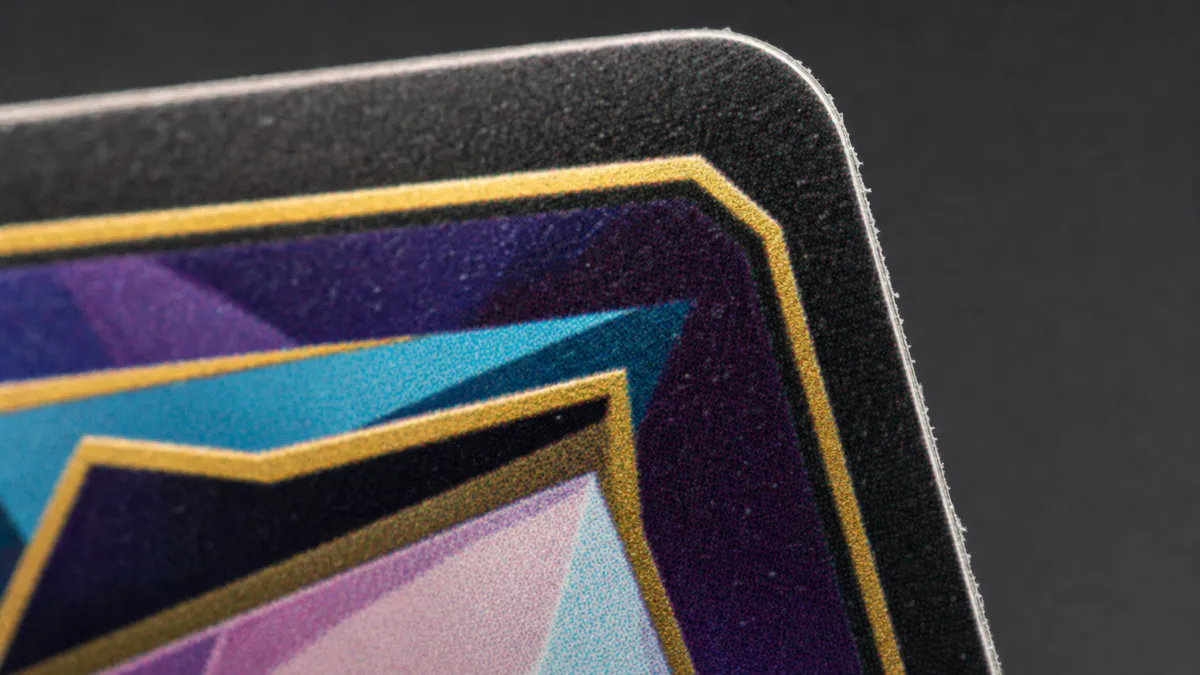 Replica
 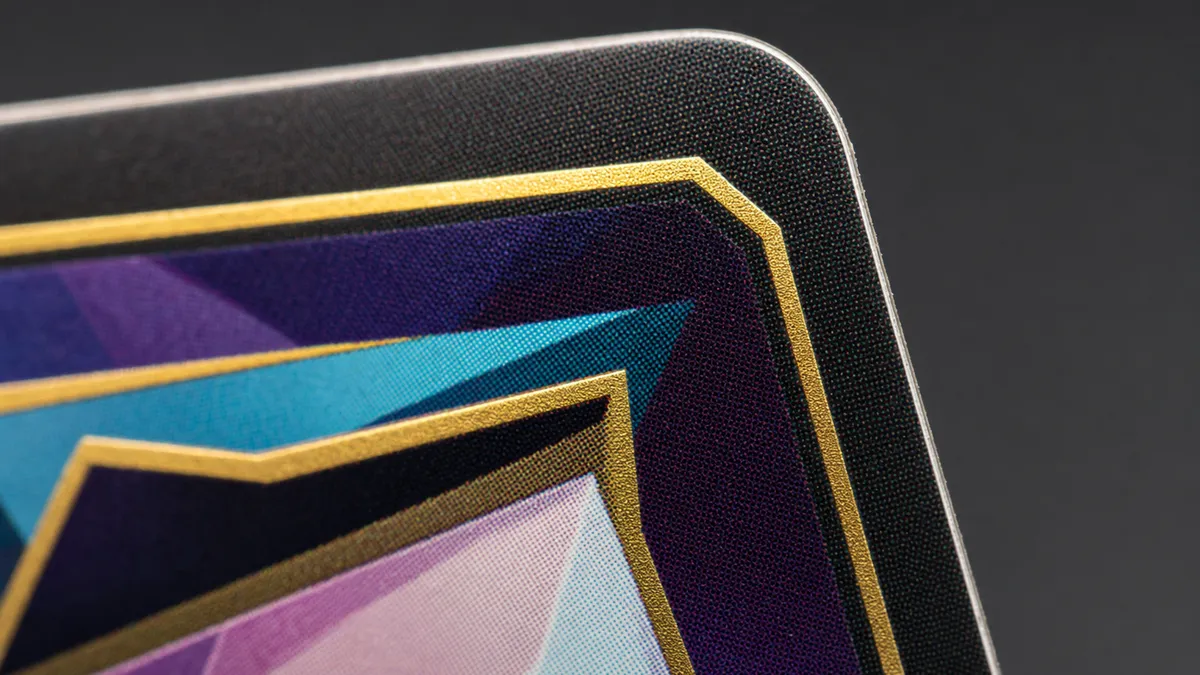 Authentic
 1. Cert number in the PSA database
Authentic: The number, entered into PSA’s Cert Verification tool, returns a record with the same card name, set and grade as on the label; for a large share of certs there’s a photo of the card matching what’s in the slab.
Fake: The number is found but describes a different card, set or grade – so either a digit on the label was misread, or the label is fake. If it isn’t found at all, recheck the digits and contact PSA support before assuming a fake: some older certs have documented gaps in the online records.
2. Case seam
Authentic: An even, clean weld line around the perimeter with no step, no bulge of excess plastic and no glue residue between the halves.
Fake: A wavy or offset seam, a visible gap between the halves, a bulge of plastic or glue residue – signs the case was opened.
3. Label print
Authentic: Small text is sharp and legible under magnification, the barcode is clean and matches the printed cert number next to it.
Fake: Grainy or blurry small print, a dot-pattern screen where a solid fill should be, a barcode that doesn’t match the number or reads smeared.
4. Hologram
Authentic: On labels from roughly 2015 onward, the hologram’s pattern and shine noticeably shift on tilt, with sharp, well-registered elements. Older certs may carry no front-label hologram at all – normal for that generation.
Fake: On a 2015-or-newer label, the hologram looks flat and unchanging at every angle or reads like an ordinary sticker; or its pattern is blurred and misaligned within its zone.
5. Card matches the label
Authentic: The name, set, card number and other details on the label exactly match what’s printed on the card inside the case.
Fake: The card inside doesn’t match the label description in at least one detail – a sign a different card was swapped into someone else’s case.
6. Label generation
Authentic: The design, font and layout of the label match the generation documented for its printed cert date – an old label on an old cert is normal.
Fake: The label design doesn’t match any documented generation for the date printed on it, mixes elements from different years, or reads as a crude stylization of a PSA label.
Popular PSA Graded models
Model-by-model checks – what to look at on each:
Where to inspect
The key zones to photograph and check on this type of item – a schematic, not a product photo.
- 1Corners and cut
- 2Centering
- 3Surface and gloss
- 4Edges and plies
- 5Print rosette
How to photograph your PSA Graded for a check
Shoot in daylight, avoid glare, keep focus sharp. You need 5 angles:
- 1 Full label with cert number and barcode
- 2 Label at two or three angles (hologram)
- 3 Case seam around the perimeter, close up
- 4 Card through the case window (name, set, number)
- 5 Full case, front and back
How to read the result
The AI returns a verdict with a confidence score:
- 75–100% – Authentic: high confidence the item is genuine.
- 60–74% – Likely authentic: probably genuine with minor concerns.
- 40–59% – Uncertain: the photos are not conclusive – retake or add angles.
- 25–39% – Likely fake: several red flags.
- 0–24% – Fake: clear signs of a replica.
Check your PSA Graded right now
Snap photos of your item and get an AI verdict with a confidence score in about a minute.
FAQ
How do I verify a PSA cert by number?
Enter the number from the label into PSA’s free Cert Verification tool. It returns the card name, set, year and grade, and for a large share of certs, a photo of the card from PSA’s records. Match this data against what you’re holding – don’t stop at the fact that a number was found, since it can be reprinted onto a fake label.
An old slab has no photo in the PSA database – is that suspicious?
No. Photo capture for cards wasn’t part of the database from the start, and a significant share of older certs simply have no image on file – that’s the normal state of a record from that era, not a fake tell.
Can a card swap be spotted from photos?
Indirectly, yes: match the name, set and number on the label against what’s printed on the card itself, and inspect the case seam for signs of tampering (a step, a bulge, glue residue). Full confidence comes from matching the PSA database record along with a clean, factory-looking seam.
Is a fresh case with an old cert number a fake?
Not necessarily: PSA officially reholders cards into a new case at the owner’s request, and that’s a legitimate service. This combination alone isn’t a verdict – check the cert number in the database and whether the card matches the description.