Guides · Cosmetics
How to Tell if Your Tom Ford Beauty Is Real or Fake (2026)
Tom Ford – the heavy metal Lip Color cases, Eye Color Quad palettes, and fragrances like Black Orchid and Oud Wood – is produced under license, and the packaging has changed over the years, so the "correct look" is tied to a specific release and line, not the brand in general. Makeup (lipstick, eyeshadow, foundation) and fragrance are different subtypes with different checkpoints: for lipstick it's the case casting and cap fit, for a bottle it's the glass, the print, and the cap fit. From photos, the most reliable things to check are the logo print, the box printing, and the batch code – not a memory of a "typical" Tom Ford.
Real vs fake Tom Ford: comparison table
Data current as of July 2026. Replicas evolve, so judge by the combination of signs – never a single one.
| Sign | Authentic | Fake |
|---|---|---|
| Lip Color case casting | A solid, heavy-feeling metal case with no casting flash or burrs on the edges, and an even surface with no pits or casting marks. | Visibly light, thin-walled metal or metal-look plastic, obvious casting seams, flash along the edges, and a rough, grainy surface. |
| "TOM FORD" engraving and print | Crisp, even engraving or print of "TOM FORD" on the case end or bottle, with consistent stroke weight and correct kerning. | Smeared, overly thin or overly bold lettering, off kerning, drifting letters, or wear marks visible on a supposedly new piece. |
| Lipstick cap and its fit | The cap seats snugly with no visible gap or skew; the fit alone is visible in a photo even though the closure type (magnetic or otherwise) is an in-hand check. | A visible gap or skew in the cap in the photo, an uneven seam at the joint, or a cheap-looking plastic collar instead of metal. |
| Fragrance bottle and cap | Even, thick glass with no bubbles or flow lines, crisp printing of the scent name and logo on the glass or label, and a cap that sits with no skew or gap. Longevity and sillage are an in-hand check, not judged from a photo. | Cloudy glass with bubbles and streaks, blurry or misaligned printing on the bottle, and a cap that sits crooked or with a visible gap. |
| Box printing and cellophane | Sturdy cardboard, crisp even "TOM FORD" printing with no blur, and clean edges; factory cellophane wrapped tight with no wrinkles or signs of resealing. | Thin, soft cardboard, a blurred or shifted logo, uneven box edges, and cellophane that sits loose, wrinkled, or visibly resealed. |
| Batch code on the box and product | The code is present on both the box and the product itself (for fragrance, on the bottle too) and normally matches; printed evenly, with no signs of rubbing off or relabeling. | The code is missing where it should be, obviously relabeled or wiped, or the codes on the box and product don't match each other. |
The difference is in the details – drag the slider
Typical differences in workmanship: stitching consistency, edge finishing, detail quality. Left – factory quality, right – common replica flaws.
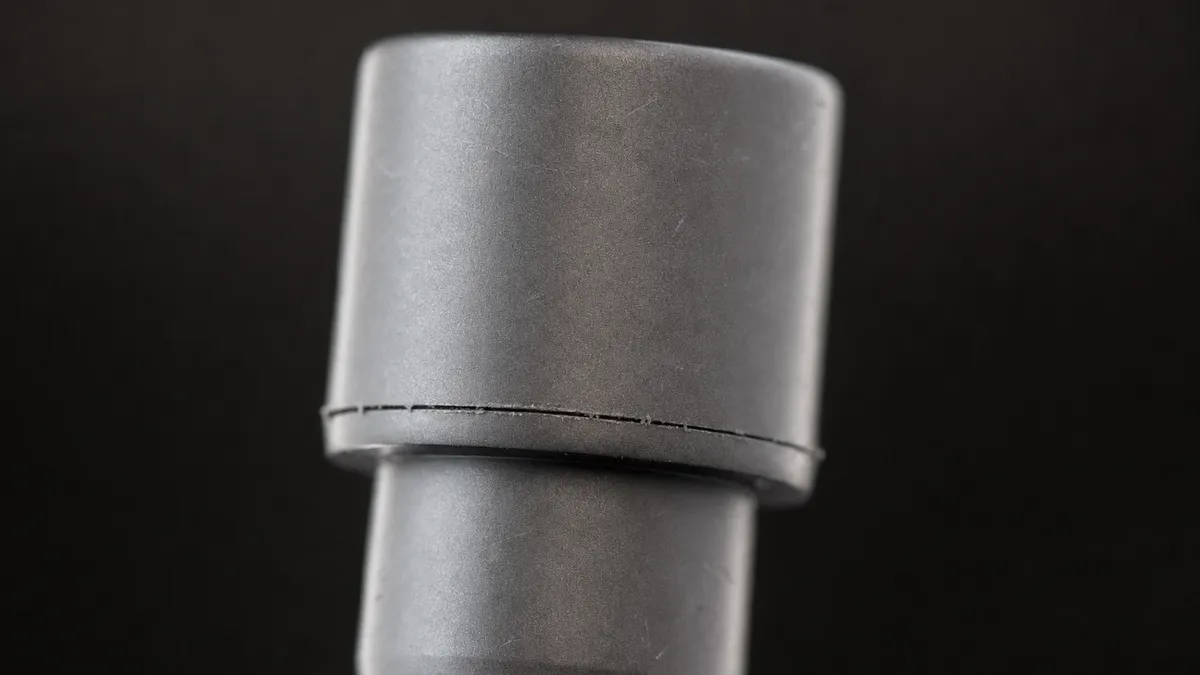 Replica
 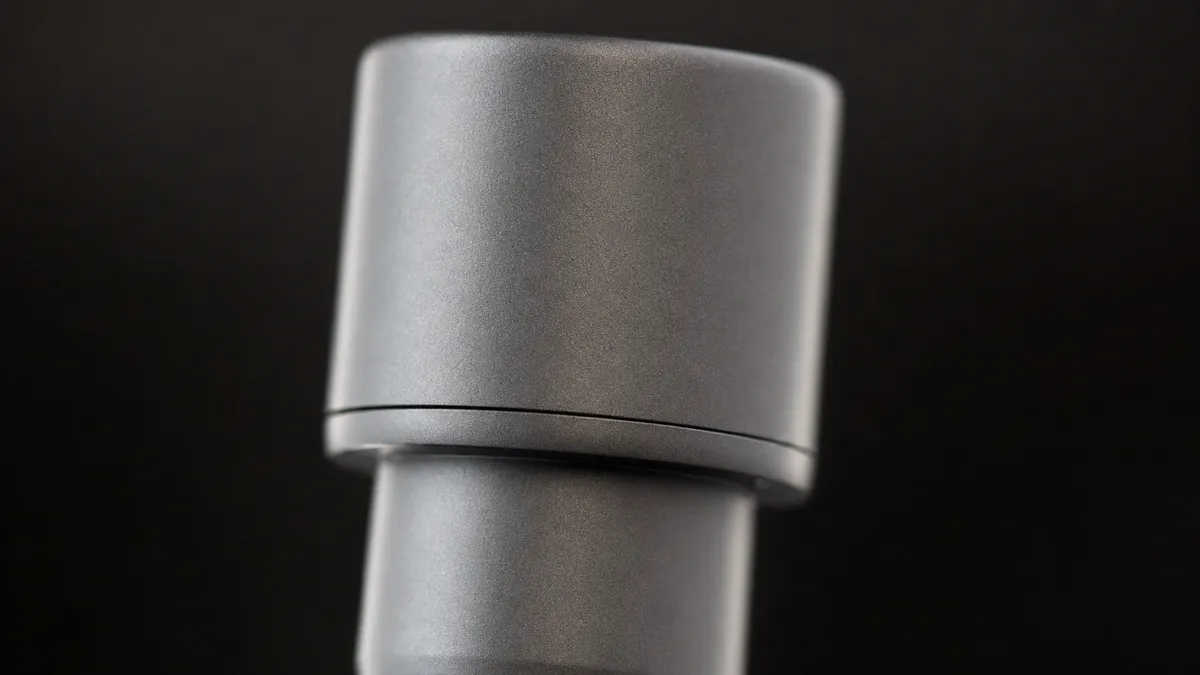 Authentic
 1. Lip Color case casting
Authentic: A solid, heavy-feeling metal case with no casting flash or burrs on the edges, and an even surface with no pits or casting marks.
Fake: Visibly light, thin-walled metal or metal-look plastic, obvious casting seams, flash along the edges, and a rough, grainy surface.
2. "TOM FORD" engraving and print
Authentic: Crisp, even engraving or print of "TOM FORD" on the case end or bottle, with consistent stroke weight and correct kerning.
Fake: Smeared, overly thin or overly bold lettering, off kerning, drifting letters, or wear marks visible on a supposedly new piece.
3. Lipstick cap and its fit
Authentic: The cap seats snugly with no visible gap or skew; the fit alone is visible in a photo even though the closure type (magnetic or otherwise) is an in-hand check.
Fake: A visible gap or skew in the cap in the photo, an uneven seam at the joint, or a cheap-looking plastic collar instead of metal.
4. Fragrance bottle and cap
Authentic: Even, thick glass with no bubbles or flow lines, crisp printing of the scent name and logo on the glass or label, and a cap that sits with no skew or gap. Longevity and sillage are an in-hand check, not judged from a photo.
Fake: Cloudy glass with bubbles and streaks, blurry or misaligned printing on the bottle, and a cap that sits crooked or with a visible gap.
5. Box printing and cellophane
Authentic: Sturdy cardboard, crisp even "TOM FORD" printing with no blur, and clean edges; factory cellophane wrapped tight with no wrinkles or signs of resealing.
Fake: Thin, soft cardboard, a blurred or shifted logo, uneven box edges, and cellophane that sits loose, wrinkled, or visibly resealed.
6. Batch code on the box and product
Authentic: The code is present on both the box and the product itself (for fragrance, on the bottle too) and normally matches; printed evenly, with no signs of rubbing off or relabeling.
Fake: The code is missing where it should be, obviously relabeled or wiped, or the codes on the box and product don't match each other.
Where to inspect
The key zones to photograph and check on this type of item – a schematic, not a product photo.
- 1Cap and fit
- 2Label printing
- 3Batch code on base
- 4Pump / applicator
- 5Glass and moulding
How to photograph your Tom Ford for a check
Shoot in daylight, avoid glare, keep focus sharp. You need 5 angles:
- 1 Full product (lipstick, eyeshadow, or bottle)
- 2 "TOM FORD" engraving/print close-up
- 3 Cap and its fit
- 4 Full box and its print
- 5 Batch code on the box and the product
How to read the result
The AI returns a verdict with a confidence score:
- 75–100% – Authentic: high confidence the item is genuine.
- 60–74% – Likely authentic: probably genuine with minor concerns.
- 40–59% – Uncertain: the photos are not conclusive – retake or add angles.
- 25–39% – Likely fake: several red flags.
- 0–24% – Fake: clear signs of a replica.
Check your Tom Ford right now
Snap photos of your item and get an AI verdict with a confidence score in about a minute.
FAQ
The case design differs from a photo I found online – is it fake?
Not necessarily. Tom Ford Beauty is produced under license, and the packaging and case design have changed by year and line. Before drawing a conclusion, compare your photo against documented images of your exact release and line, not a random photo from a different year.
The batch code doesn't come up in any database – is it fake?
Not on its own. A batch code only decodes a production date and isn't supported by every database or format; a null result in a calculator doesn't confirm or rule out authenticity. What matters more is that the code is physically present on the box and the product and matches between them.
What's the difference between checking a Tom Ford lipstick and a fragrance?
They're different subtypes with different checkpoints. For lipstick, the priority is the metal case casting, the logo engraving, and the cap fit. For fragrance, it's the bottle glass quality, the print on the label or glass, and the cap fit; longevity and sillage aren't judged from a photo and don't affect the verdict.
What's the fastest Tom Ford tell?
The combination of "case/bottle casting quality + crisp logo print + a matching batch code." These three usually suffer together on fakes. But one photo never gives a 100% guarantee – only the full set of signals, checked against a release from your period, is reliable.