Guides · Cosmetics
How to Tell if Your MAC Cosmetics Are Real or Fake (2026)
MAC is one of the most counterfeited beauty brands in the world, so some replicas are made very well, and telling them apart "at a glance" isn't always possible. The logo and packaging have changed across packaging generations, and the Professional (Pro) line differs from retail in box design – that's not a sign of a fake. The most reliable things to check are the logo print, the case and cap casting quality, the box printing, and whether a batch code is present – never rely on a single tell.
Real vs fake MAC: comparison table
Data current as of July 2026. Replicas evolve, so judge by the combination of signs – never a single one.
| Sign | Authentic | Fake |
|---|---|---|
| "M·A·C" logo print on the case | Crisp, even logo print or engraving with no blur, consistent letter weight, and dots between the letters sitting in the right place. | A smudged or overly bold logo, shifted or missing dots between the letters, and uneven kerning. |
| Lipstick cap and its fit | The cap seats snugly with no visible gap or skew when closed, and an even seam around the whole perimeter. | A visible gap or skew in the cap, an uneven seam at the joint, or noticeable play in the cap visible in the photo. |
| Lipstick/Studio Fix and similar box printing | Sturdy cardboard, crisp even printing of the product name and shade, and clean box edges and flaps. | Thin, soft cardboard, blurry or shifted printing, uneven edges, typos, or an uneven shade-name font. |
| Batch code on the product base | The code is present on the tube, bottle, or palette base and printed evenly; the printing format has changed across packaging generations, so there's no single "reference" look – the code only decodes a production date. | The code is entirely missing where it should be, obviously relabeled, or printed unevenly and shifted over the factory print. |
| Pro palette eyeshadow casting and fit | Eyeshadows pressed flush and even with the pan rim, and magnetic inserts that sit without skew; the Pro line's box design differs from retail – that's an official variant, not a fake. | Crooked, uneven pressing that spills over the pan edges, a visible gap when the palette closes, and rough casting of the plastic housing. |
| Box cellophane | Factory cellophane wrapped tight and even, with clean, bubble-free seams. | Cellophane that sits loose, wrinkled, or shows clear signs of resealing. |
The difference is in the details – drag the slider
Typical differences in workmanship: stitching consistency, edge finishing, detail quality. Left – factory quality, right – common replica flaws.
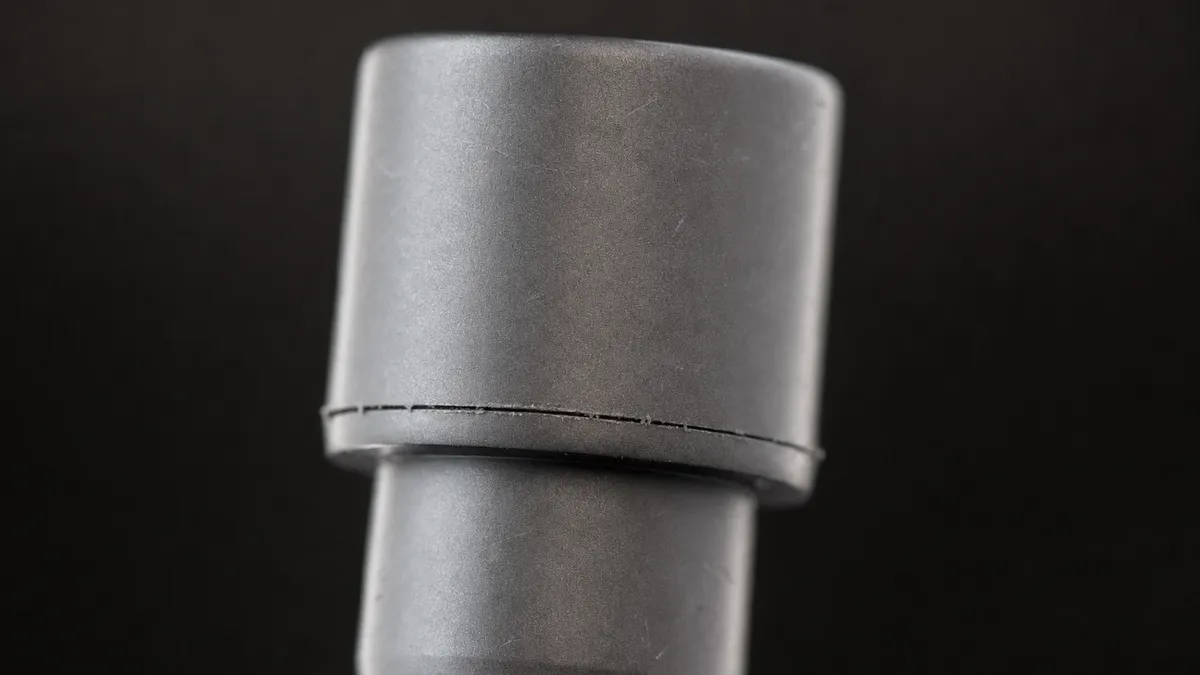 Replica
 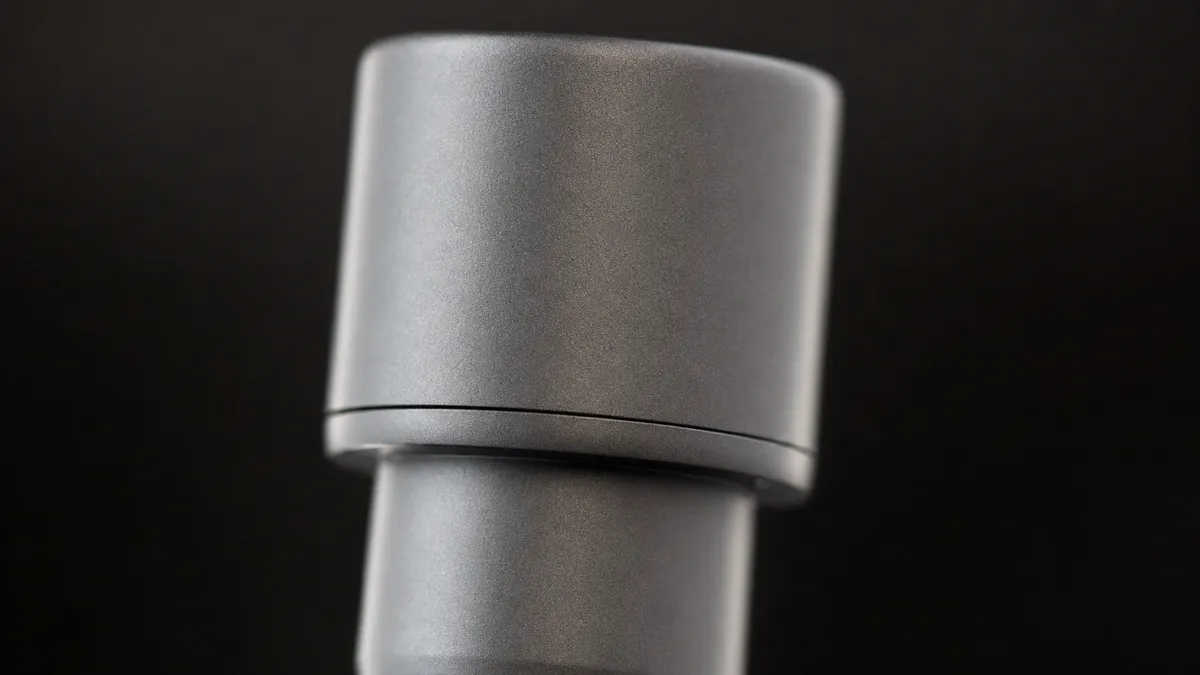 Authentic
 1. "M·A·C" logo print on the case
Authentic: Crisp, even logo print or engraving with no blur, consistent letter weight, and dots between the letters sitting in the right place.
Fake: A smudged or overly bold logo, shifted or missing dots between the letters, and uneven kerning.
2. Lipstick cap and its fit
Authentic: The cap seats snugly with no visible gap or skew when closed, and an even seam around the whole perimeter.
Fake: A visible gap or skew in the cap, an uneven seam at the joint, or noticeable play in the cap visible in the photo.
3. Lipstick/Studio Fix and similar box printing
Authentic: Sturdy cardboard, crisp even printing of the product name and shade, and clean box edges and flaps.
Fake: Thin, soft cardboard, blurry or shifted printing, uneven edges, typos, or an uneven shade-name font.
4. Batch code on the product base
Authentic: The code is present on the tube, bottle, or palette base and printed evenly; the printing format has changed across packaging generations, so there's no single "reference" look – the code only decodes a production date.
Fake: The code is entirely missing where it should be, obviously relabeled, or printed unevenly and shifted over the factory print.
5. Pro palette eyeshadow casting and fit
Authentic: Eyeshadows pressed flush and even with the pan rim, and magnetic inserts that sit without skew; the Pro line's box design differs from retail – that's an official variant, not a fake.
Fake: Crooked, uneven pressing that spills over the pan edges, a visible gap when the palette closes, and rough casting of the plastic housing.
6. Box cellophane
Authentic: Factory cellophane wrapped tight and even, with clean, bubble-free seams.
Fake: Cellophane that sits loose, wrinkled, or shows clear signs of resealing.
Where to inspect
The key zones to photograph and check on this type of item – a schematic, not a product photo.
- 1Cap and fit
- 2Label printing
- 3Batch code on base
- 4Pump / applicator
- 5Glass and moulding
How to photograph your MAC for a check
Shoot in daylight, avoid glare, keep focus sharp. You need 5 angles:
- 1 Full product (tube, bottle, or palette)
- 2 "M·A·C" logo close-up
- 3 Cap/closure close-up
- 4 Full box
- 5 Batch code on the product base
How to read the result
The AI returns a verdict with a confidence score:
- 75–100% – Authentic: high confidence the item is genuine.
- 60–74% – Likely authentic: probably genuine with minor concerns.
- 40–59% – Uncertain: the photos are not conclusive – retake or add angles.
- 25–39% – Likely fake: several red flags.
- 0–24% – Fake: clear signs of a replica.
Check your MAC right now
Snap photos of your item and get an AI verdict with a confidence score in about a minute.
FAQ
MAC fakes are supposedly so good you can't tell from a photo – is that true?
Partly. MAC is one of the most counterfeited beauty brands, and some replicas are made very carefully, so an "obvious" tell may not exist in a given photo. A reliable conclusion comes from the full set of signals – logo, cap, box printing, batch code – not any single one, and no service can guarantee 100% from one photo.
The Professional (Pro) line's box looks different from retail – is that a fake?
No. MAC's Professional line officially differs from retail in box design and markings – that's a legitimate product variant, not a sign of a fake.
The batch code doesn't come up online – is it fake?
Not necessarily. A batch code only decodes a production date, not authenticity; the code's printing format has changed across packaging generations, and there's essentially no public database for verifying authenticity by code. What matters more is that the code is physically present with no signs of relabeling or a smudged factory print.
What's the first MAC tell to check?
The "M·A·C" logo print and the cap fit – those are usually the first things replicas get wrong. Next, check the box printing and whether a batch code is present. But since the brand is faked at scale and often well, base your final call on the full set of signals, not just one.