Guides · Cosmetics
How to Tell if Your SK-II Is Real or Fake (2026)
SK-II – the Pitera-based Facial Treatment Essence and the wider cream and serum lineup – is one of the most counterfeited Japanese skincare brands. The check rests on bottle casting quality, crisp fine print, a snug lid fit, and a matching batch code between box and bottle. There's a separate point worth making up front, because it's the single most common cause of a false verdict for this specific brand: SK-II sells across many markets, and the set of text on the packaging – language, extra stickers, local labeling requirements – differs from country to country. That's a normal feature of legal export packaging, not a fake sign, and it should never be confused with the quality of the print itself.
Real vs fake SK-II: comparison table
Data current as of July 2026. Replicas evolve, so judge by the combination of signs – never a single one.
| Sign | Authentic | Fake |
|---|---|---|
| Bottle casting and material | Dense glass or well-made plastic with no casting bubbles or waves; where the SK-II logo is printed or embossed directly on the bottle, the mark is crisp and even. Weight is an in-hand check and isn't judged from a photo. | Visible bubbles and waves in the glass, thin, hollow-looking plastic, a blurry or undersized logo mark on the bottle. |
| Fine print quality | Under camera zoom, the letters of small text on the box and label read as a solid, even fill with crisp edges. | A halftone dot pattern instead of a solid fill, blurry or jagged letter edges – a typical sign of inkjet-printed replica packaging. |
| Logo and box print | The SK-II logo on the box is printed evenly, with correct kerning and symmetrical placement; box edges and flaps are clean. | A shifted or "drifting" logo, uneven kerning, thin cardboard with crumpled or unevenly glued flaps. |
| Lid fit | The lid or dispenser seats evenly, with no visible gap or skew against the bottle neck. | A visible gap or skew in the lid on camera, an uneven seam between lid and neck. |
| Shrink band on the neck | Where the model includes a shrink band, it's wrapped evenly, with no wrinkles or cuts, and sits flush around the neck. | A crumpled, skewed, or partially torn band with a factory-fresh appearance, or an uneven wrap with visible gaps. |
| Batch code and its match | A batch code is present on both the box and the base or side of the bottle and matches between them; the code confirms a production batch, not authenticity directly. | Different codes on box and bottle, no code at all where one should be, or markings that look wiped or relabeled. |
The difference is in the details – drag the slider
Typical differences in workmanship: stitching consistency, edge finishing, detail quality. Left – factory quality, right – common replica flaws.
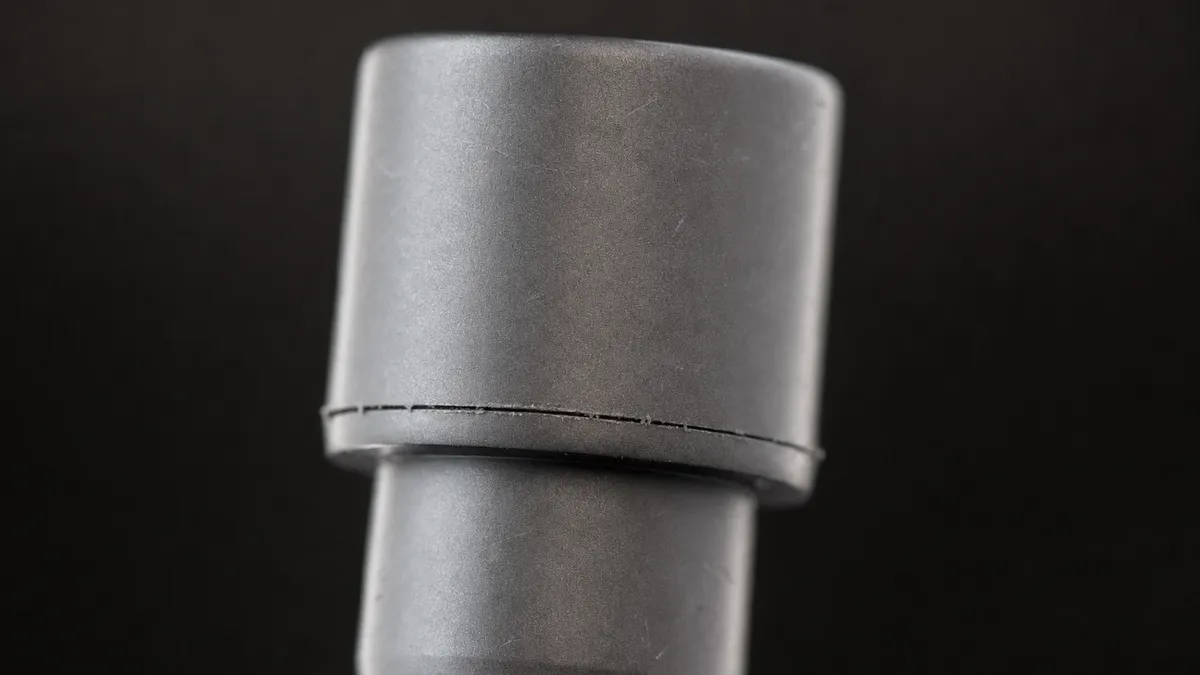 Replica
 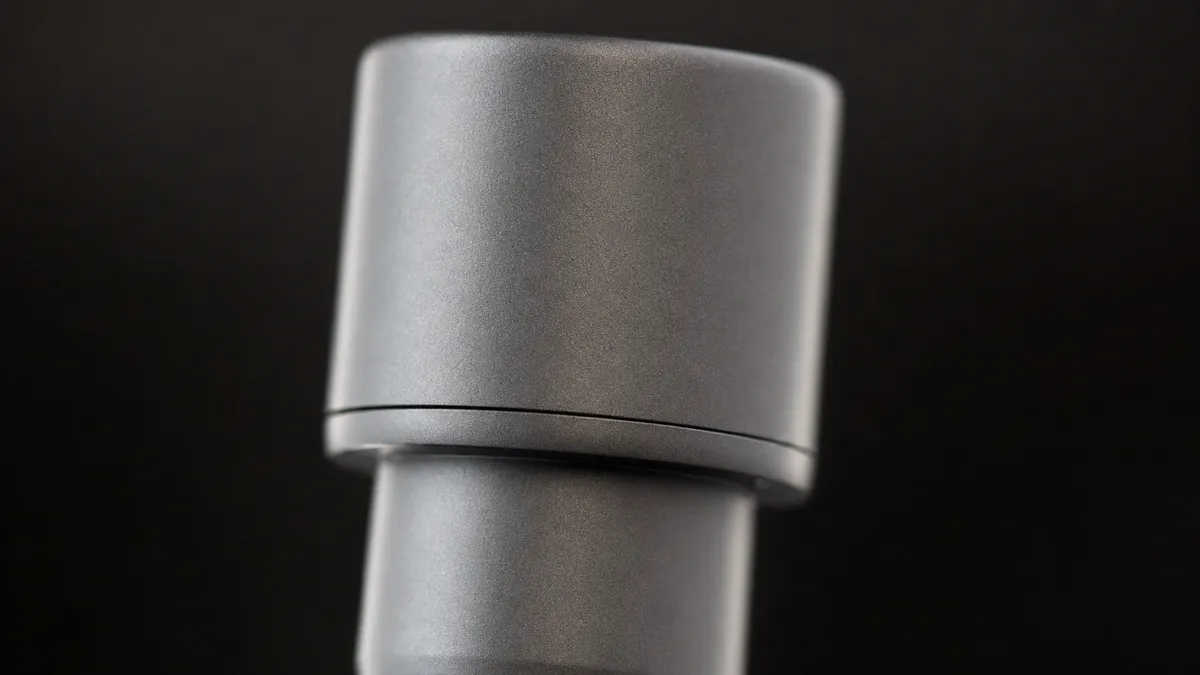 Authentic
 1. Bottle casting and material
Authentic: Dense glass or well-made plastic with no casting bubbles or waves; where the SK-II logo is printed or embossed directly on the bottle, the mark is crisp and even. Weight is an in-hand check and isn't judged from a photo.
Fake: Visible bubbles and waves in the glass, thin, hollow-looking plastic, a blurry or undersized logo mark on the bottle.
2. Fine print quality
Authentic: Under camera zoom, the letters of small text on the box and label read as a solid, even fill with crisp edges.
Fake: A halftone dot pattern instead of a solid fill, blurry or jagged letter edges – a typical sign of inkjet-printed replica packaging.
3. Logo and box print
Authentic: The SK-II logo on the box is printed evenly, with correct kerning and symmetrical placement; box edges and flaps are clean.
Fake: A shifted or "drifting" logo, uneven kerning, thin cardboard with crumpled or unevenly glued flaps.
4. Lid fit
Authentic: The lid or dispenser seats evenly, with no visible gap or skew against the bottle neck.
Fake: A visible gap or skew in the lid on camera, an uneven seam between lid and neck.
5. Shrink band on the neck
Authentic: Where the model includes a shrink band, it's wrapped evenly, with no wrinkles or cuts, and sits flush around the neck.
Fake: A crumpled, skewed, or partially torn band with a factory-fresh appearance, or an uneven wrap with visible gaps.
6. Batch code and its match
Authentic: A batch code is present on both the box and the base or side of the bottle and matches between them; the code confirms a production batch, not authenticity directly.
Fake: Different codes on box and bottle, no code at all where one should be, or markings that look wiped or relabeled.
Where to inspect
The key zones to photograph and check on this type of item – a schematic, not a product photo.
- 1Cap and fit
- 2Label printing
- 3Batch code on base
- 4Pump / applicator
- 5Glass and moulding
How to photograph your SK-II for a check
Shoot in daylight, avoid glare, keep focus sharp. You need 5 angles:
- 1 Full bottle next to its box
- 2 Lid/dispenser and its fit, close-up
- 3 SK-II logo on the bottle or box, close-up
- 4 Fine print on the label at maximum camera zoom
- 5 Batch code on the box and on the bottle
How to read the result
The AI returns a verdict with a confidence score:
- 75–100% – Authentic: high confidence the item is genuine.
- 60–74% – Likely authentic: probably genuine with minor concerns.
- 40–59% – Uncertain: the photos are not conclusive – retake or add angles.
- 25–39% – Likely fake: several red flags.
- 0–24% – Fake: clear signs of a replica.
Check your SK-II right now
Snap photos of your item and get an AI verdict with a confidence score in about a minute.
FAQ
The box text is in Japanese and I bought SK-II elsewhere – is that fake?
No, that's not a fake sign. SK-II is a Japanese brand sold across a wide range of countries, and packaging for the domestic Japanese market and for export is legitimately laid out differently: language, extra stickers, and required text depend on the destination country's rules. Judge the quality of the print itself – crisp fonts and no halftone dot pattern in the fine text – not which languages appear.
The bottle has one language and the box has another (or more text). Is that normal?
Yes, that's a common, legitimate setup for export stock: localization can touch only part of the packaging, for example an added sticker on the box while the bottle stays in English. A language mismatch between bottle and box, on its own, doesn't indicate a fake – look at the print quality of each element and whether the batch code matches.
What does a batch code on SK-II actually prove?
A batch code confirms a production batch, not authenticity directly, and we won't give an exact code format here since formats and decoding change. What matters is that the code is present and matches on the box and the bottle; a barcode, meanwhile, is something a replica can copy literally, so it proves nothing on its own.
Is one photo enough for an accurate verdict?
No. No single tell gives a 100% guarantee from one photo. A reliable verdict comes from the combination: bottle casting quality, fine print, lid fit, shrink band, and a matching batch code. The app tells you which angles to shoot and scores the risk across the full set of signals.