Guides · Cosmetics
How to Tell if Dior Beauty Is Real or Fake (2026)
Dior makeup and fragrance are counterfeited at scale – from Rouge Dior lipsticks and 5 Couleurs palettes to scents like Sauvage. Replicas usually trip over the packaging print, the batch code, and the build quality of the bottle or case. This isn’t just about money: counterfeit cosmetics and fragrance can contain unsafe ingredients, so it pays to check carefully. Here’s what you can actually judge from photos versus what only an in-hand check can tell you.
Real vs fake Dior Beauty: comparison table
Data current as of July 2026. Replicas evolve, so judge by the combination of signs – never a single one.
| Sign | Authentic | Fake |
|---|---|---|
| Packaging print and fonts | Crisp, fine “Dior” and “Christian Dior” lettering, a clean logo, and neat box printing with no halo; rich colors on sturdy card stock. | Blurry or overly bold letters, a shifted or distorted logo, a halo around the characters, dull print, and thin card stock. |
| Batch code and match | Normally the code is present on both the box and the product (for fragrance, on the bottle too) and matches, with even printing. Genuine units have exceptions: miniatures and gift formats often carry no code, on some runs the code is printed only on the film, and factory mismatches happen; a code rubbed off through use is not a sign of a fake. A calculator only shows the production date and does not confirm authenticity. | A code printed crookedly, drifting, or stamped over the factory print; a mismatch between box and product is a reason to question the seller and look harder at the other tells. |
| Rouge Dior (lipstick) | A cap with the signature cannage (quilted-diamond) pattern – even, crisp diamonds and a seat with no visible gap or skew. The current refillable couture case (from 2020-21) closes magnetically; earlier releases and several variants of the line close with a plain crisp click, which is normal. The base carries markings with the shade designation and batch code; the Dior star appears on the bullet and on the cases of certain limited editions. The refill is sold without a case. | A smooth or crudely molded cap, shallow smeared cannage relief, a visible gap and skew in the cap, smeared markings on the base, and a shade code that doesn’t match the box. |
| 5 Couleurs (palette) | A flat, distortion-free mirror, neatly printed shade names, a quality applicator, a case that closes tightly, and a crisp logo print. | A warped or “wavy” mirror, smudged shade names, a cheap applicator, a lid with a visible gap, and faded printing. |
| Fragrance cellophane and atomizer | Factory cellophane wrapped tight with clean seams; the spray head seats evenly on the bottle with no skew or cracks. How the fragrance actually sprays is an in-hand check – not visible in a photo and not part of the verdict. | Loose, wrinkled cellophane or signs of resealing; a spray head that sits skewed, gapped, or visibly cracked at the base. |
| Glass, liquid, and stickers | Even glass with no flow lines, a cap that seats straight with no visible gap, burrs, or flash (weight is an in-hand check and can’t be judged from a photo), and a liquid color that matches the expected shade. The factory print is even; importer stickers with local ingredient text are applied by the distributor and may sit slightly skewed or bubbled – that is not a sign of a fake, so compare the factory print, not the sticker. | Cloudy glass with bubbles and flow lines, a cap with a visible gap or skewed seat and burrs, an off-looking liquid color, and blurry or shifted factory print. |
The difference is in the details – drag the slider
Typical differences in workmanship: stitching consistency, edge finishing, detail quality. Left – factory quality, right – common replica flaws.
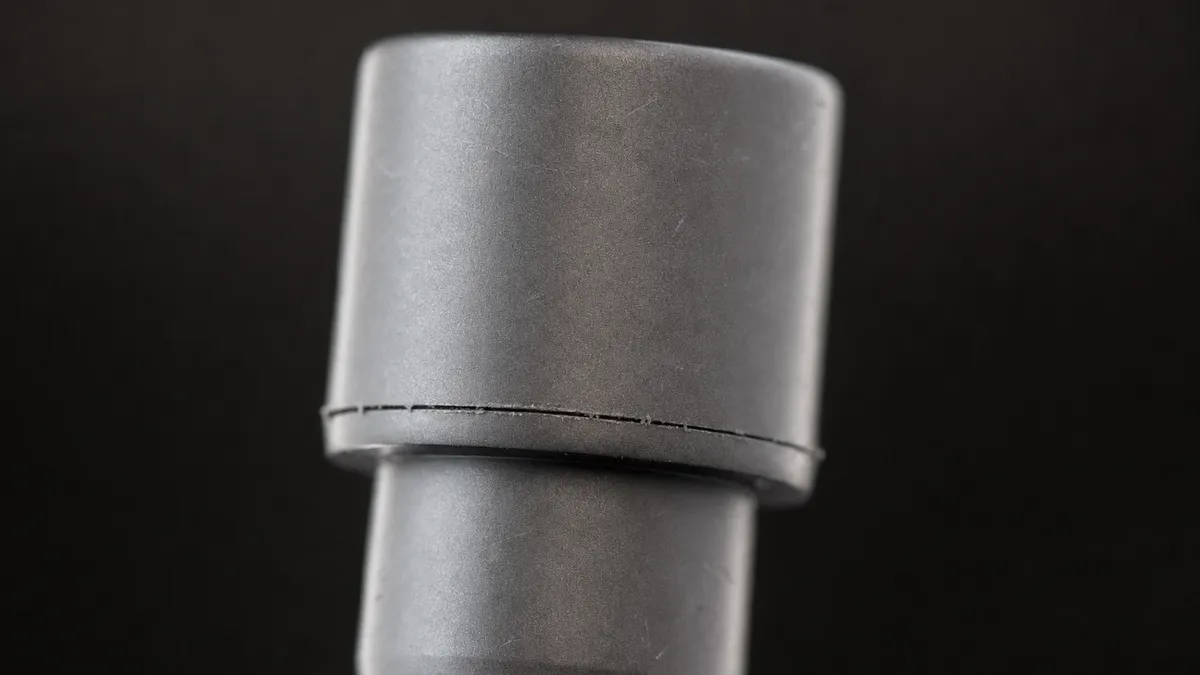 Replica
 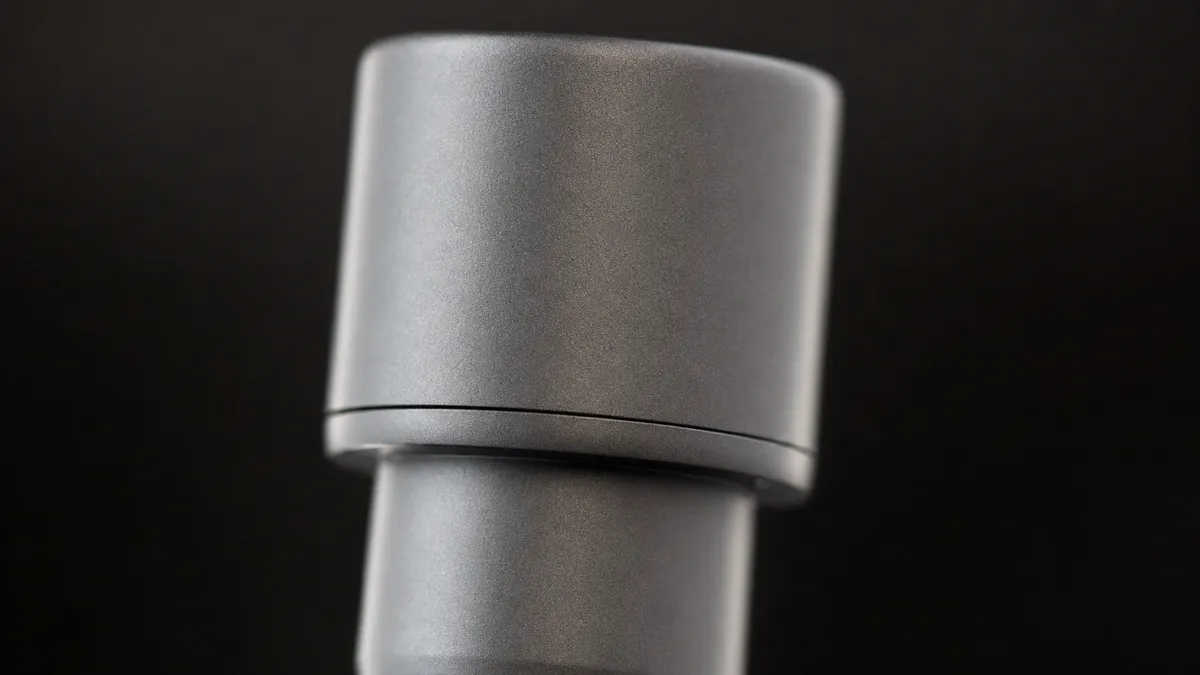 Authentic
 1. Packaging print and fonts
Authentic: Crisp, fine “Dior” and “Christian Dior” lettering, a clean logo, and neat box printing with no halo; rich colors on sturdy card stock.
Fake: Blurry or overly bold letters, a shifted or distorted logo, a halo around the characters, dull print, and thin card stock.
2. Batch code and match
Authentic: Normally the code is present on both the box and the product (for fragrance, on the bottle too) and matches, with even printing. Genuine units have exceptions: miniatures and gift formats often carry no code, on some runs the code is printed only on the film, and factory mismatches happen; a code rubbed off through use is not a sign of a fake. A calculator only shows the production date and does not confirm authenticity.
Fake: A code printed crookedly, drifting, or stamped over the factory print; a mismatch between box and product is a reason to question the seller and look harder at the other tells.
3. Rouge Dior (lipstick)
Authentic: A cap with the signature cannage (quilted-diamond) pattern – even, crisp diamonds and a seat with no visible gap or skew. The current refillable couture case (from 2020-21) closes magnetically; earlier releases and several variants of the line close with a plain crisp click, which is normal. The base carries markings with the shade designation and batch code; the Dior star appears on the bullet and on the cases of certain limited editions. The refill is sold without a case.
Fake: A smooth or crudely molded cap, shallow smeared cannage relief, a visible gap and skew in the cap, smeared markings on the base, and a shade code that doesn’t match the box.
4. 5 Couleurs (palette)
Authentic: A flat, distortion-free mirror, neatly printed shade names, a quality applicator, a case that closes tightly, and a crisp logo print.
Fake: A warped or “wavy” mirror, smudged shade names, a cheap applicator, a lid with a visible gap, and faded printing.
5. Fragrance cellophane and atomizer
Authentic: Factory cellophane wrapped tight with clean seams; the spray head seats evenly on the bottle with no skew or cracks. How the fragrance actually sprays is an in-hand check – not visible in a photo and not part of the verdict.
Fake: Loose, wrinkled cellophane or signs of resealing; a spray head that sits skewed, gapped, or visibly cracked at the base.
6. Glass, liquid, and stickers
Authentic: Even glass with no flow lines, a cap that seats straight with no visible gap, burrs, or flash (weight is an in-hand check and can’t be judged from a photo), and a liquid color that matches the expected shade. The factory print is even; importer stickers with local ingredient text are applied by the distributor and may sit slightly skewed or bubbled – that is not a sign of a fake, so compare the factory print, not the sticker.
Fake: Cloudy glass with bubbles and flow lines, a cap with a visible gap or skewed seat and burrs, an off-looking liquid color, and blurry or shifted factory print.
Popular Dior Beauty models
Model-by-model checks – what to look at on each:
Where to inspect
The key zones to photograph and check on this type of item – a schematic, not a product photo.
- 1Cap and fit
- 2Label printing
- 3Batch code on base
- 4Pump / applicator
- 5Glass and moulding
How to photograph your Dior Beauty for a check
Shoot in daylight, avoid glare, keep focus sharp. You need 5 angles:
- 1 Full box with the logo
- 2 “Christian Dior” print close-up
- 3 Batch code on the box
- 4 Batch code on the product or bottle base
- 5 Cap, applicator, or atomizer close-up
How to read the result
The AI returns a verdict with a confidence score:
- 75–100% – Authentic: high confidence the item is genuine.
- 60–74% – Likely authentic: probably genuine with minor concerns.
- 40–59% – Uncertain: the photos are not conclusive – retake or add angles.
- 25–39% – Likely fake: several red flags.
- 0–24% – Fake: clear signs of a replica.
Check your Dior Beauty right now
Snap photos of your item and get an AI verdict with a confidence score in about a minute.
FAQ
What can you check from photos, and what can’t you?
From photos, the AI reads the packaging, print and fonts, the logo, and whether the batch code is present and matches on the box and product. Scent, texture, and wear can only be judged in hand – those are offline checks. And this isn’t a lab ingredient test: the app compares outward tells against a reference, it doesn’t analyze the formula.
The product has no batch code, or it doesn’t match the box – is it fake?
Not necessarily. Normally the code is present on both the box and the product (for fragrance, on the bottle too) and matches, but genuine units have exceptions: miniatures and gift formats often ship without a code, on some runs the code is printed only on the cellophane, factory box/product mismatches happen, and inkjet codes rub off with use. A mismatch is a reason to question the seller and look harder at the other tells. And remember: a valid batch code doesn’t confirm authenticity – the calculator only reads the production date, warns about possible errors and an incomplete database, and fakes copy codes.
What should I check on a Rouge Dior lipstick?
Look at the quality of the cannage pattern on the cap, a cap that seats with no visible gap or skew, the markings on the base of the case, and whether the shade code on the case matches the box. The magnetic closure belongs to the current refillable couture case (from 2020-21); earlier releases and several variants of the line close with a plain crisp click, which is normal. The Dior star is a feature of certain limited editions, not a mandatory marking, and the refill is sold without a case at all. Compare against official photos of your exact release.
The cellophane is torn or missing – does that mean it’s fake?
Not necessarily: testers and unboxed products may have no cellophane. But loose, wrinkled film or signs of resealing are suspicious. In that case, rely on the print, the batch code, and the quality of the bottle or case rather than the cellophane alone.