Guides · Cosmetics
How to Tell if Charlotte Tilbury Makeup Is Real or Fake (2026)
Charlotte Tilbury is one of the most counterfeited prestige beauty brands, and its signature rose-gold Art-Deco packaging makes fakes look tempting. But counterfeit cosmetics aren’t just wasted money: replicas can contain unsafe ingredients, so verifying protects your skin as well as your wallet. From photos, the easiest tells are the packaging, the print, and the batch code – that’s where replicas consistently fall short.
Real vs fake Charlotte Tilbury: comparison table
Data current as of July 2026. Replicas evolve, so judge by the combination of signs – never a single one.
| Sign | Authentic | Fake |
|---|---|---|
| Print and Art-Deco motif | Crisp, even fonts, a cleanly engraved Art-Deco motif in rose-gold/nude tones, and the correct Charlotte Tilbury logo font with no distortion. | Blurry or pixelated printing, smudged letters, the wrong logo font, and a coarse or washed-out motif with uneven engraving lines. |
| Batch code | A batch code printed on both the box and the product, with the characters matching each other, neatly printed or embossed. | No batch code on the packaging or product, codes on the box and product that don’t match, or characters that are smudged or stuck on crookedly. |
| Seal and cellophane | The factory cellophane wrap is pulled tight and applied evenly, with a clean seam and a seal that doesn’t lift. | A loose wrap with bubbles, overlaps, or signs of being re-sealed, and a crooked seal that peels off easily. |
| Lipstick mechanism and cap | An engraved rose-gold “CT” cap, a twist mechanism assembled with no visible skew, and a correctly shaped lipstick bullet. Weight is an in-hand check and can’t be judged from a photo. | A dull or crooked “CT” engraving, a visibly skewed twist mechanism, and a misshapen bullet. |
| Pump and applicator | The pump/dispenser seats snugly and evenly on the neck, the applicator is neat, and the plastic and metal look appropriately premium. How the pump dispenses when pressed is an in-hand check and isn’t judged from photos. | A visibly skewed or gapped pump seat, residue stains around the dispenser, a rough applicator, cheap-looking plastic, and burrs or flashing on the parts. |
| Shade code and box match | The shade code on the product matches the name and code on the box; the box itself is sturdy, with clean edges and quality printing. | A shade code or name on the product that doesn’t match the box, thin flimsy card, crooked edges, and pale printing. |
The difference is in the details – drag the slider
Typical differences in workmanship: stitching consistency, edge finishing, detail quality. Left – factory quality, right – common replica flaws.
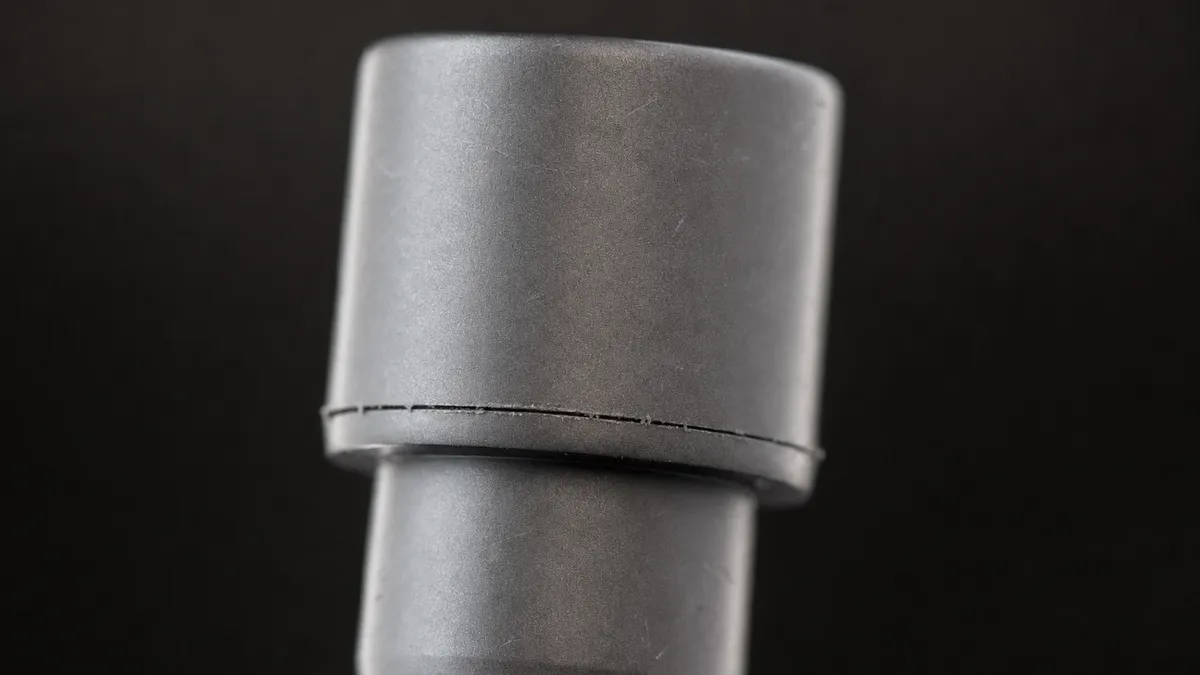 Replica
 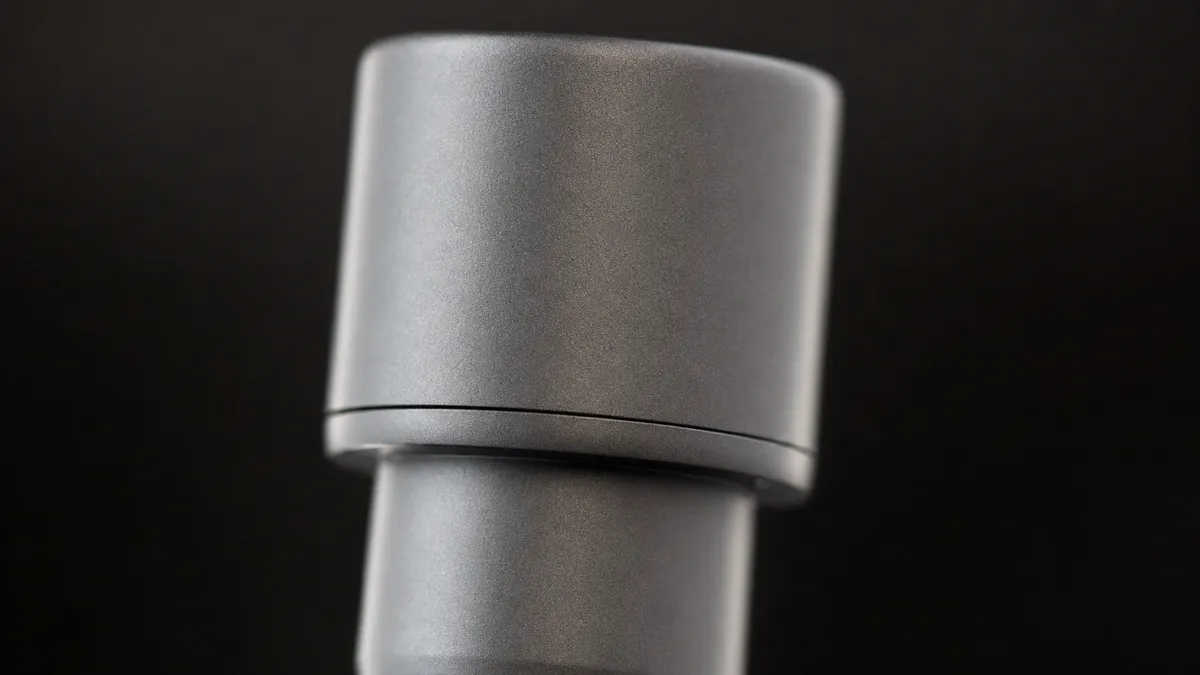 Authentic
 1. Print and Art-Deco motif
Authentic: Crisp, even fonts, a cleanly engraved Art-Deco motif in rose-gold/nude tones, and the correct Charlotte Tilbury logo font with no distortion.
Fake: Blurry or pixelated printing, smudged letters, the wrong logo font, and a coarse or washed-out motif with uneven engraving lines.
2. Batch code
Authentic: A batch code printed on both the box and the product, with the characters matching each other, neatly printed or embossed.
Fake: No batch code on the packaging or product, codes on the box and product that don’t match, or characters that are smudged or stuck on crookedly.
3. Seal and cellophane
Authentic: The factory cellophane wrap is pulled tight and applied evenly, with a clean seam and a seal that doesn’t lift.
Fake: A loose wrap with bubbles, overlaps, or signs of being re-sealed, and a crooked seal that peels off easily.
4. Lipstick mechanism and cap
Authentic: An engraved rose-gold “CT” cap, a twist mechanism assembled with no visible skew, and a correctly shaped lipstick bullet. Weight is an in-hand check and can’t be judged from a photo.
Fake: A dull or crooked “CT” engraving, a visibly skewed twist mechanism, and a misshapen bullet.
5. Pump and applicator
Authentic: The pump/dispenser seats snugly and evenly on the neck, the applicator is neat, and the plastic and metal look appropriately premium. How the pump dispenses when pressed is an in-hand check and isn’t judged from photos.
Fake: A visibly skewed or gapped pump seat, residue stains around the dispenser, a rough applicator, cheap-looking plastic, and burrs or flashing on the parts.
6. Shade code and box match
Authentic: The shade code on the product matches the name and code on the box; the box itself is sturdy, with clean edges and quality printing.
Fake: A shade code or name on the product that doesn’t match the box, thin flimsy card, crooked edges, and pale printing.
Popular Charlotte Tilbury models
Model-by-model checks – what to look at on each:
Where to inspect
The key zones to photograph and check on this type of item – a schematic, not a product photo.
- 1Cap and fit
- 2Label printing
- 3Batch code on base
- 4Pump / applicator
- 5Glass and moulding
How to photograph your Charlotte Tilbury for a check
Shoot in daylight, avoid glare, keep focus sharp. You need 5 angles:
- 1 Full box with the logo
- 2 Close-up of the print and Art-Deco motif
- 3 Batch code on the box
- 4 Batch code on the product
- 5 Cap / mechanism and seal
How to read the result
The AI returns a verdict with a confidence score:
- 75–100% – Authentic: high confidence the item is genuine.
- 60–74% – Likely authentic: probably genuine with minor concerns.
- 40–59% – Uncertain: the photos are not conclusive – retake or add angles.
- 25–39% – Likely fake: several red flags.
- 0–24% – Fake: clear signs of a replica.
Check your Charlotte Tilbury right now
Snap photos of your item and get an AI verdict with a confidence score in about a minute.
FAQ
Why does the check focus on packaging and print rather than the ingredients?
A photo check assesses what’s visible: print quality, the Art-Deco motif, fonts, whether the batch code is present and matching, the seal, and the mechanism. Scent and texture can only be judged in hand, and the app is not a lab ingredient test. Even so, the packaging and print expose most fakes before you ever open the product.
What do I do with the batch code?
Confirm the code is present and matches on both the box and the product, then run it through a calculator like CheckFresh or CheckCosmetic to read the manufacture date. A missing code, a box-vs-product mismatch, or an unreadable date is a reason to be cautious.
How accurate is a photo check for cosmetics?
Accuracy depends on the quality and number of photos. LegitCheck AI cross-references the tells across all your angles and returns a verdict with a confidence score, and flags “uncertain” rather than guessing when the photos don’t support a call. It’s a fast screening tool, not a legally binding authentication.
The seller has a store receipt – is that enough?
No. Receipts and screenshots are faked more often than the makeup itself, and they aren’t tied to a specific item. Judge the product itself: the print, the motif, the batch code, the seal, and the mechanism.