Guides · Cosmetics
How to Tell if Your Pat McGrath Is Real or Fake (2026)
Pat McGrath Labs is known for lavish, often limited-edition packaging – the gilded cases of the Mothership palette series, heavy lipstick tubes – and the design varies a lot between releases. So "it doesn't look like what I saw online" isn't a verdict on its own: find documented photos of your exact release first, then compare. From photos, the most reliable things to check are the casting and print quality, a cap that seats with no gap, and the batch code – not a general impression that "it looks lavish, so it must be real."
Real vs fake Pat McGrath: comparison table
Data current as of July 2026. Replicas evolve, so judge by the combination of signs – never a single one.
| Sign | Authentic | Fake |
|---|---|---|
| Decorative case casting and relief | Crisp, deep relief in the pattern and engraving on the case, with clean edges and part seams and no flash or burrs. | Smeared, shallow, or "melted"-looking relief, rough part seams, and visible flash along the edges. |
| Mothership and similar palette closures | The lid seats snugly, with no visible gap or skew around the whole perimeter. | A visible gap or skew in the lid in the photo, or an uneven seam line between the body and the lid. |
| "PAT McGRATH LABS" logo print | Crisp, even printing or embossing with consistent letter weight and correct kerning, with no blur or shift. | Blurry or drifting lettering, off kerning, and dull or misaligned printing. |
| Lipstick tube (e.g., from the Lust or LuxeTrance lines) | An even metallic-finish body with no dents or signs of cheap casting, a clean seam between the cap and body, and crisp engraving or printing of the name and logo. | Cheap-looking, thin metallic plastic, a rough seam between parts, and blurry or missing print of the name. |
| Outer box printing | Sturdy cardboard, crisp printing with no blur, even embossing wherever the design calls for it, and clean edges and flaps. | Thin cardboard, blurry or faded printing, uneven edges, and missing or smudged embossing where the design calls for it. |
| Batch code on the product base or box | The code is present, printed evenly, with no signs of relabeling or a smudged factory print; it only decodes a production date. | The code is missing where it should be, or printed unevenly, shifted, and laid over the factory print. |
The difference is in the details – drag the slider
Typical differences in workmanship: stitching consistency, edge finishing, detail quality. Left – factory quality, right – common replica flaws.
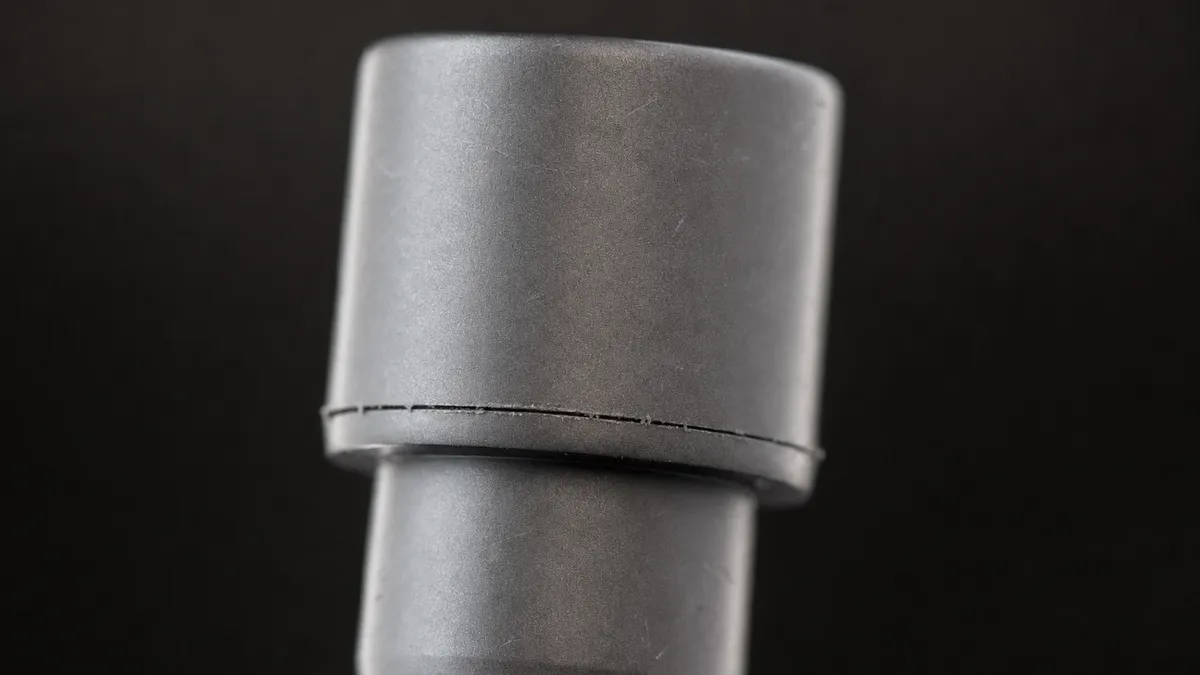 Replica
 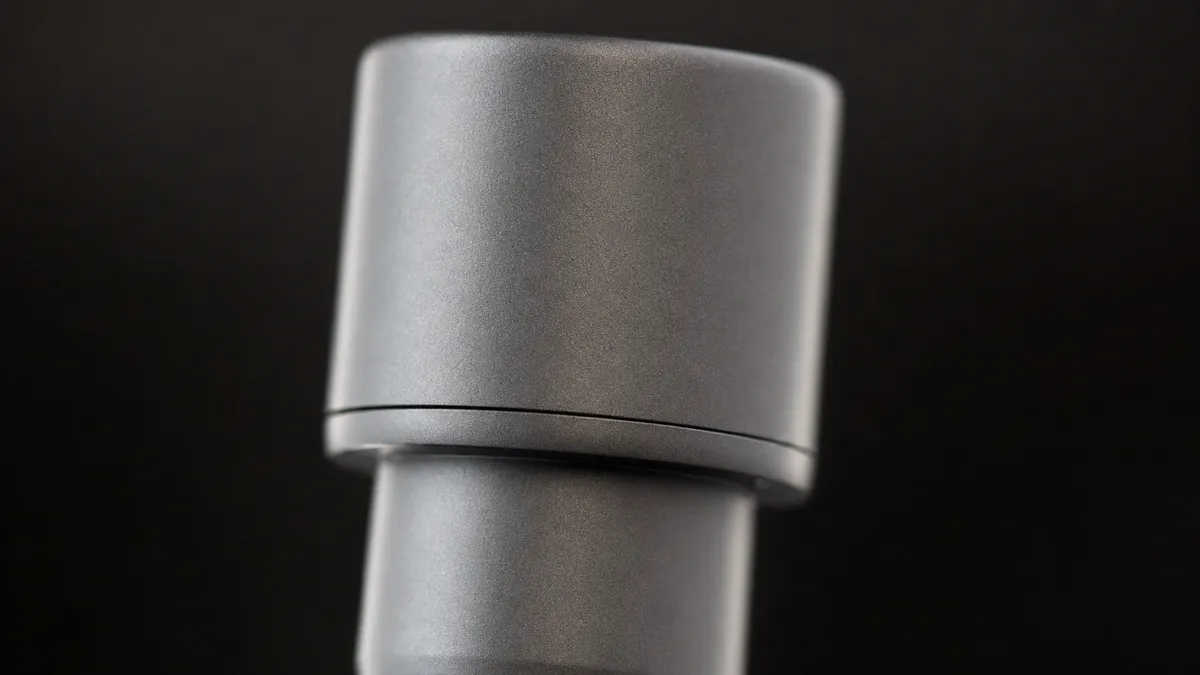 Authentic
 1. Decorative case casting and relief
Authentic: Crisp, deep relief in the pattern and engraving on the case, with clean edges and part seams and no flash or burrs.
Fake: Smeared, shallow, or "melted"-looking relief, rough part seams, and visible flash along the edges.
2. Mothership and similar palette closures
Authentic: The lid seats snugly, with no visible gap or skew around the whole perimeter.
Fake: A visible gap or skew in the lid in the photo, or an uneven seam line between the body and the lid.
3. "PAT McGRATH LABS" logo print
Authentic: Crisp, even printing or embossing with consistent letter weight and correct kerning, with no blur or shift.
Fake: Blurry or drifting lettering, off kerning, and dull or misaligned printing.
4. Lipstick tube (e.g., from the Lust or LuxeTrance lines)
Authentic: An even metallic-finish body with no dents or signs of cheap casting, a clean seam between the cap and body, and crisp engraving or printing of the name and logo.
Fake: Cheap-looking, thin metallic plastic, a rough seam between parts, and blurry or missing print of the name.
5. Outer box printing
Authentic: Sturdy cardboard, crisp printing with no blur, even embossing wherever the design calls for it, and clean edges and flaps.
Fake: Thin cardboard, blurry or faded printing, uneven edges, and missing or smudged embossing where the design calls for it.
6. Batch code on the product base or box
Authentic: The code is present, printed evenly, with no signs of relabeling or a smudged factory print; it only decodes a production date.
Fake: The code is missing where it should be, or printed unevenly, shifted, and laid over the factory print.
Where to inspect
The key zones to photograph and check on this type of item – a schematic, not a product photo.
- 1Cap and fit
- 2Label printing
- 3Batch code on base
- 4Pump / applicator
- 5Glass and moulding
How to photograph your Pat McGrath for a check
Shoot in daylight, avoid glare, keep focus sharp. You need 5 angles:
- 1 Full case/tube
- 2 "PAT McGRATH LABS" logo close-up
- 3 Lid/closure close-up
- 4 Full box and its print
- 5 Batch code on the product base or box
How to read the result
The AI returns a verdict with a confidence score:
- 75–100% – Authentic: high confidence the item is genuine.
- 60–74% – Likely authentic: probably genuine with minor concerns.
- 40–59% – Uncertain: the photos are not conclusive – retake or add angles.
- 25–39% – Likely fake: several red flags.
- 0–24% – Fake: clear signs of a replica.
Check your Pat McGrath right now
Snap photos of your item and get an AI verdict with a confidence score in about a minute.
FAQ
The design doesn't look like what I saw online – is it fake?
Not necessarily. Pat McGrath Labs is known for lavish packaging that varies a lot between releases and limited editions. Before drawing a conclusion, find documented photos of your exact release – "it doesn't look like something else online" isn't a verdict on its own.
How do I check a limited release with almost no photos online?
In that case, rely on general quality signals: crisp case casting and relief, a lid that seats with no gap, clean logo printing, and a present batch code. If doubt remains, it's worth asking the seller for extra photos from different angles and in good lighting.
Is the batch code the only proof of authenticity?
No. A batch code only decodes a production date and doesn't confirm authenticity on its own – fakes copy it too. It's just one checkpoint alongside case casting, lid fit, and logo printing.
What's the fastest Pat McGrath tell?
The combination of "crisp case casting and relief + a lid that seats snugly with no gap + clean logo printing." These usually suffer together on replicas. But one photo never gives a guarantee – compare against documented photos of your exact release.