Air Jordan · Authentication
Jordan 5 Retro: real vs fake
Fire Red and Grape trade well above retail on the resale market, and every Jordan 5 retro arrives with a wave of replicas in tow. Fortunately the 5 is packed with hard-to-fake details: copies are exposed by a dull 3M reflective tongue (on releases where 3M is specced), uneven shark teeth on the midsole, and a cloudy translucent outsole.
What to check on the Jordan 5 Retro
Model-specific zones – on top of the brand-level signs.
3M reflective tongue
The retail tongue is 3M fabric that flares bright, even silver under camera flash. Replicas reflect dull and patchy. Important: not every release has a 3M tongue – on the Fire Red “Black Tongue” (OG 1990 and the 2025 retro) the tongue is black and doesn’t reflect by design. Confirm whether 3M belongs on your release from documented photos of that exact drop, not from the model as a whole.
Midsole shark teeth
The signature teeth, inspired by the P-51 Mustang fighter, are sharp on retail pairs with even spacing and clean paint edges. Fake teeth are rounded, the paint bleeds past the outlines, and the tooth angle wanders.
Translucent outsole
Through the 5’s icy sole the traction pattern should stay readable – authentic plastic is clean with a light, even tint. Cheap replica molding betrays itself with trapped air bubbles and milky swirls along the edges.
Lace locks
Authentic lace locks have a tuned shape: a symmetrical body, lace holes of equal diameter, and a firm slide that stays put instead of creeping down. Replicas fit a lightweight toggle that dangles loose and sits crooked on the lacing.
Side and toe mesh
The nylon mesh on the side panels is fine and stiff on retail pairs, seated neatly into its trim. Replica mesh has larger cells and wrinkles or puckers along the edges.
Where to inspect
The key zones to photograph and check on this type of item – a schematic, not a product photo.
- 1Logo shape and placement
- 2Toe box and upper shape
- 3Heel counter and tab
- 4Midsole and stitching
- 5Tongue and size tag
The difference is in the details – drag the slider
Typical differences in workmanship: stitching consistency, edge finishing, detail quality. Left – factory quality, right – common replica flaws.
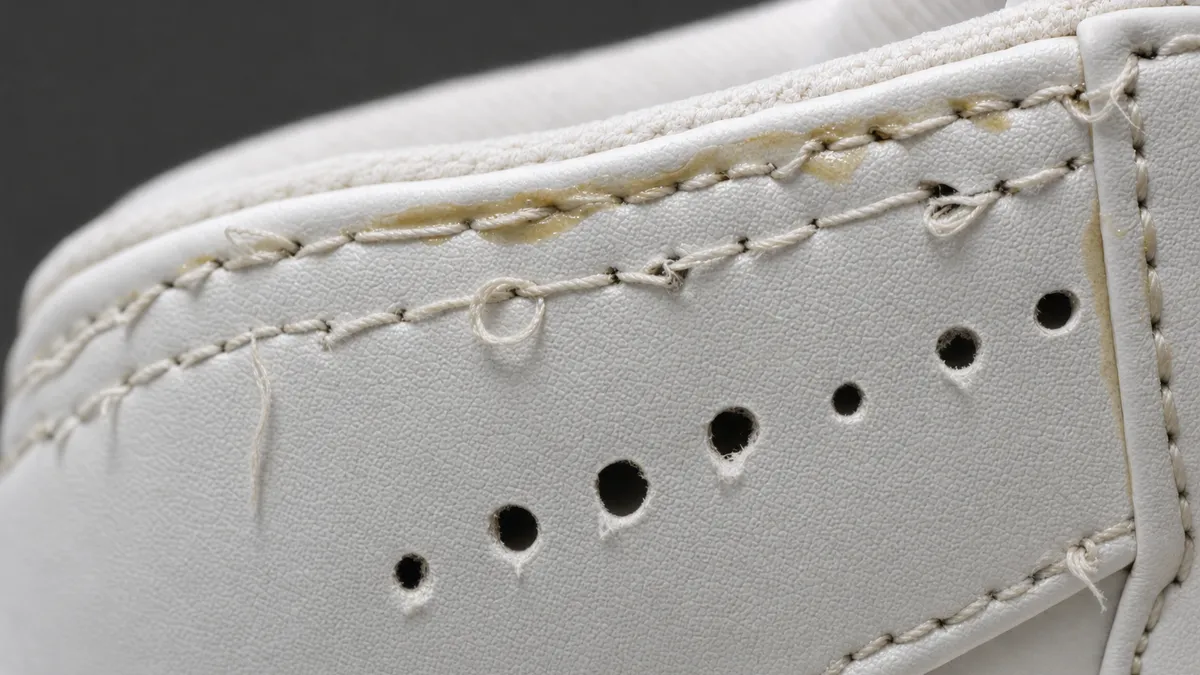 Replica
 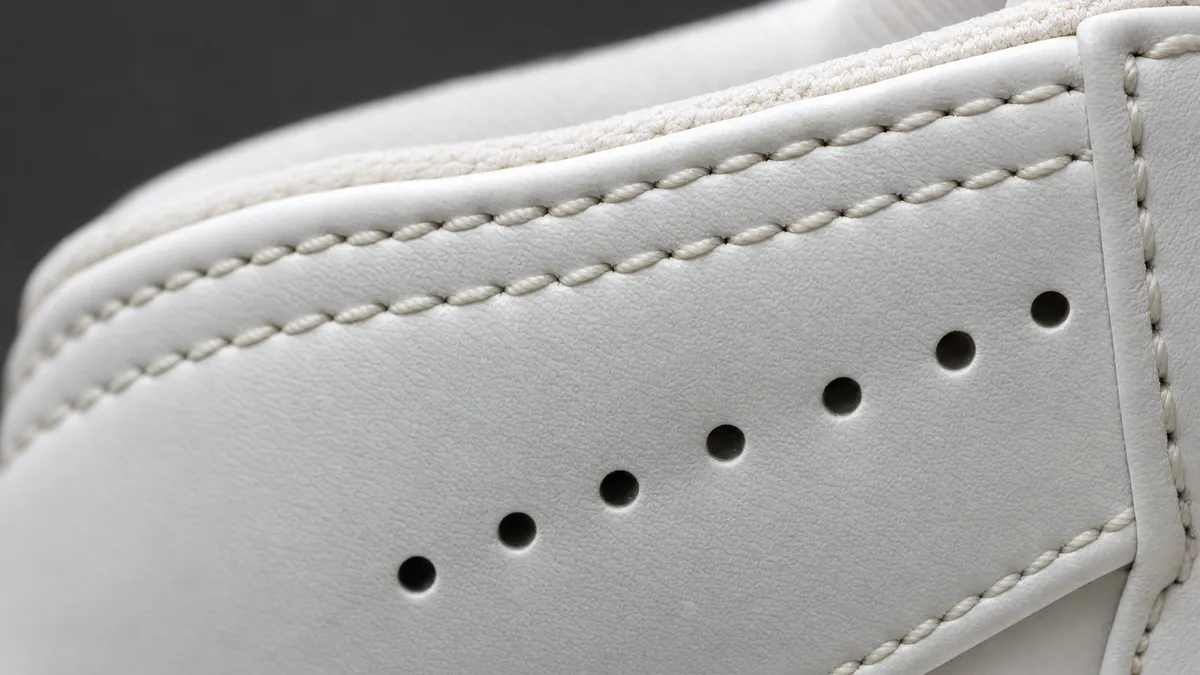 Authentic
 Photo angles for the check
- 1 Overall view
- 2 Logo
- 3 Interior tag
- 4 Outsole
- 5 Box label
Check your Jordan 5 Retro right now
Snap photos of your item and get an AI verdict with a confidence score in about a minute.
FAQ
How do I test a Jordan 5’s 3M tongue at home?
Photograph the pair with flash in a dim room: on releases specced with 3M, an authentic tongue lights up in bright, even silver across its whole surface. A dull, patchy reflection points to a replica – but only if your release is supposed to have a 3M tongue: on black-tongue versions (Fire Red “Black Tongue”) no flash-back at all is correct.
What’s wrong with the shark teeth on fakes?
Replica teeth are usually rounded and uneven in height, with sloppy paint that bleeds past the outline or stops short of the edge. Retail teeth are sharp, uniform, and cleanly masked.
What should I check on a worn Jordan 5’s mesh?
Wear doesn’t change cell size: authentic side mesh stays fine and stiff even after use, only dulling slightly. Oversized cells, edges poking out of the trim, and bubbling mesh are replica signs, not aging.
More Air Jordan models
Other sneakers brands
Check another brand in this category: