Air Jordan · Authentication
Jordan 1 Low: real vs fake
Fake Jordan 1 Lows share a congenital flaw – the toe: the wrong last curls it upward like a boat and breaks the pair’s profile. Ever since the Low outsold the High it has been copied at scale, collabs and women’s colorways above all, but the upturned nose, bloated shape, and a coarse heel Wings logo read even in phone photos.
What to check on the Jordan 1 Low
Model-specific zones – on top of the brand-level signs.
Toe box shape
The retail toe box is low and elongated, hugging the ground in a smooth line. The classic replica defect is a bloated toe that curls upward like a boat – obvious in a side-profile photo.
Heel Wings logo
The Low carries a Wings logo on the heel (on retail pairs the outline is stitched evenly and the feathers read separately); on most Low releases the Jumpman sits on the tongue, while OG-spec versions carry a Nike Air tongue tag instead. Match logo placement to your specific release. On replicas the outline is loose and the figure collapses into a blot.
Swoosh and its tail
On the low-cut silhouette the Swoosh reads longer: its tail stretches toward the heel and terminates at a precise point. Fake tails are either chopped short or run onto the heel panel.
Profile and midsole height
The Low’s midsole keeps an even height along its full length, with no jacked-up heel. Replicas often run thicker at the back, making the pair look tilted forward.
Thin, lightly padded tongue
The Low tongue is thin and barely padded; the material depends on the release – nylon on OG-spec pairs, leather or synthetic on many general releases. Judge the thickness and how the label sits rather than the material itself. Replicas frequently fit an overly thick, quilted tongue borrowed from a Mid pattern.
Where to inspect
The key zones to photograph and check on this type of item – a schematic, not a product photo.
- 1Logo shape and placement
- 2Toe box and upper shape
- 3Heel counter and tab
- 4Midsole and stitching
- 5Tongue and size tag
The difference is in the details – drag the slider
Typical differences in workmanship: stitching consistency, edge finishing, detail quality. Left – factory quality, right – common replica flaws.
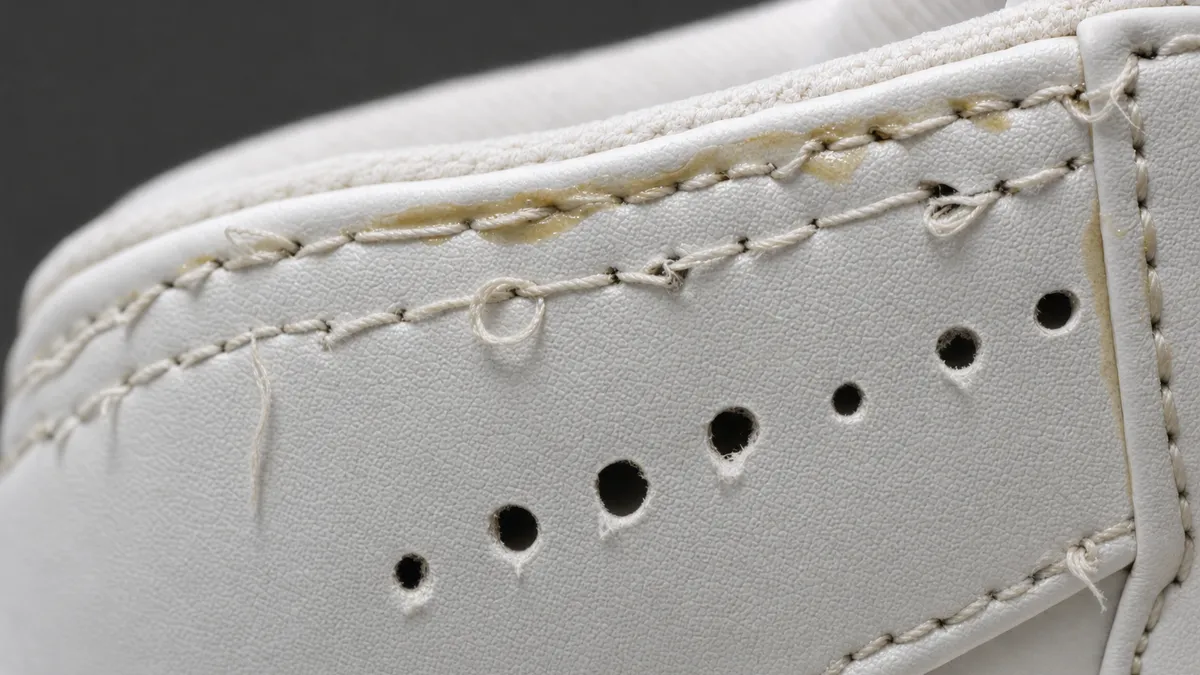 Replica
 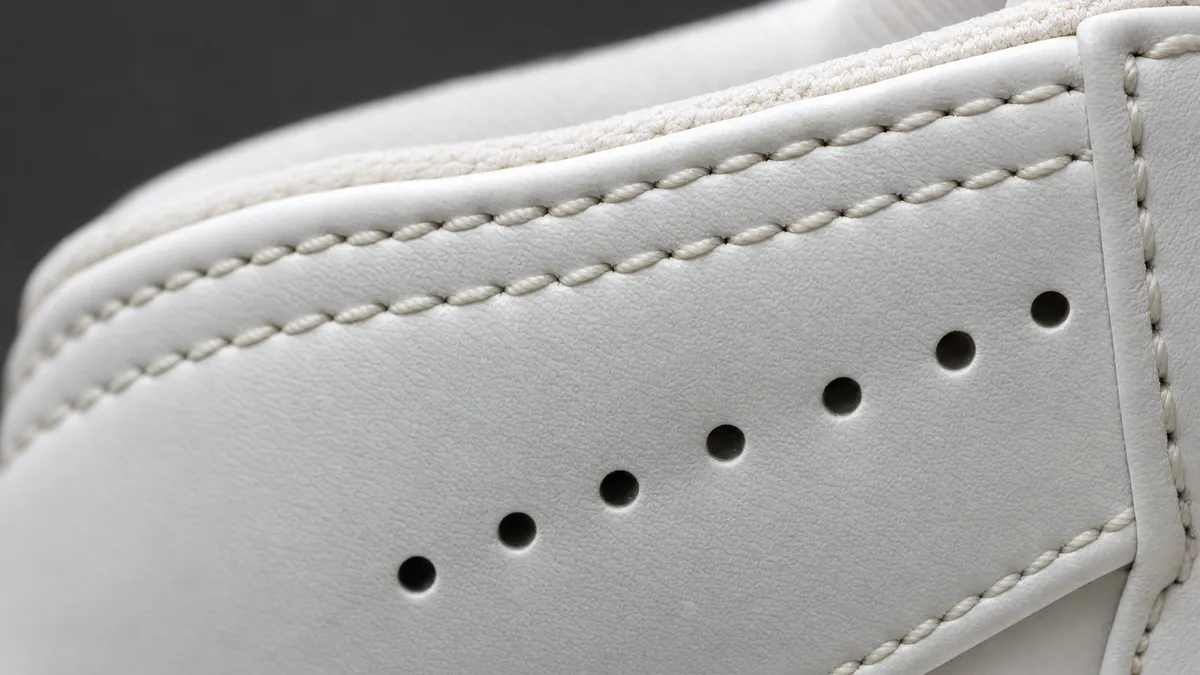 Authentic
 Photo angles for the check
- 1 Overall view
- 2 Logo
- 3 Interior tag
- 4 Outsole
- 5 Box label
Check your Jordan 1 Low right now
Snap photos of your item and get an AI verdict with a confidence score in about a minute.
FAQ
Why do fake Jordan 1 Lows have an upturned toe?
Rep factories use the wrong last and a stiffer toe cap, so the toe curls upward during molding. A retail toe box stays low and elongated even after wear.
Is checking Jordan 1 Low collabs (Travis Scott, etc.) any different?
The core zones are the same – toe, Swoosh, heel – but collabs add their own elements: reversed Swooshes, extra logos, special materials. Those details are usually copied even worse than base colorways, so close-up photos are decisive.
Is one side photo enough to check a Low?
No: a side shot covers the toe and Swoosh, but the heel Wings logo, tongue, and insole need their own frames. The more angles LegitCheck AI gets, the higher the verdict accuracy.
More Air Jordan models
Other sneakers brands
Check another brand in this category: