Air Jordan · Authentication
Jordan 1 Mid: real vs fake
The classic mistake of factories copying the Jordan 1 Mid is building it on a High or Low last: the cut lands at the wrong height and the silhouette is instantly off. Add a sloppy tongue Jumpman and lumpy collar padding, and you have the full profile of a replica posing as “a regular store pair.” Photos of those zones are enough for an AI verdict.
What to check on the Jordan 1 Mid
Model-specific zones – on top of the brand-level signs.
Mid cut height
The Mid sits noticeably lower than the High but higher than the Low; compare the cut proportion against photos of your own release. Replicas are often built on a High or Low last, leaving the cut noticeably taller or shorter than retail.
Jumpman on the tongue
Unlike the OG High with its Nike Air tag, standard Mids carry an embroidered Jumpman on the tongue – but SE versions come with padded (“fat tongue” 2023), fleece, hemp, or knit tongues and different labels, so match it to your release. Retail embroidery is dense with clearly defined limbs; on fakes the figure bloats and the fingers and ball merge together.
Wings stamp sits higher
Because of the mid cut, the Wings logo sits closer to the collar edge. Check position as well as sharpness – fake stamps frequently drift down or toward the heel.
Insole Jumpman print
The retail insole logo is printed dead center with dense ink that doesn’t crack under a light bend. Replica prints look washed out, sit off-center, or start peeling before the shoe is even worn.
Collar padding
The Mid collar is soft but not inflated: foam is distributed evenly and the edge seam runs straight. Replicas suffer from lumpy padding and a wavy collar seam.
Where to inspect
The key zones to photograph and check on this type of item – a schematic, not a product photo.
- 1Logo shape and placement
- 2Toe box and upper shape
- 3Heel counter and tab
- 4Midsole and stitching
- 5Tongue and size tag
The difference is in the details – drag the slider
Typical differences in workmanship: stitching consistency, edge finishing, detail quality. Left – factory quality, right – common replica flaws.
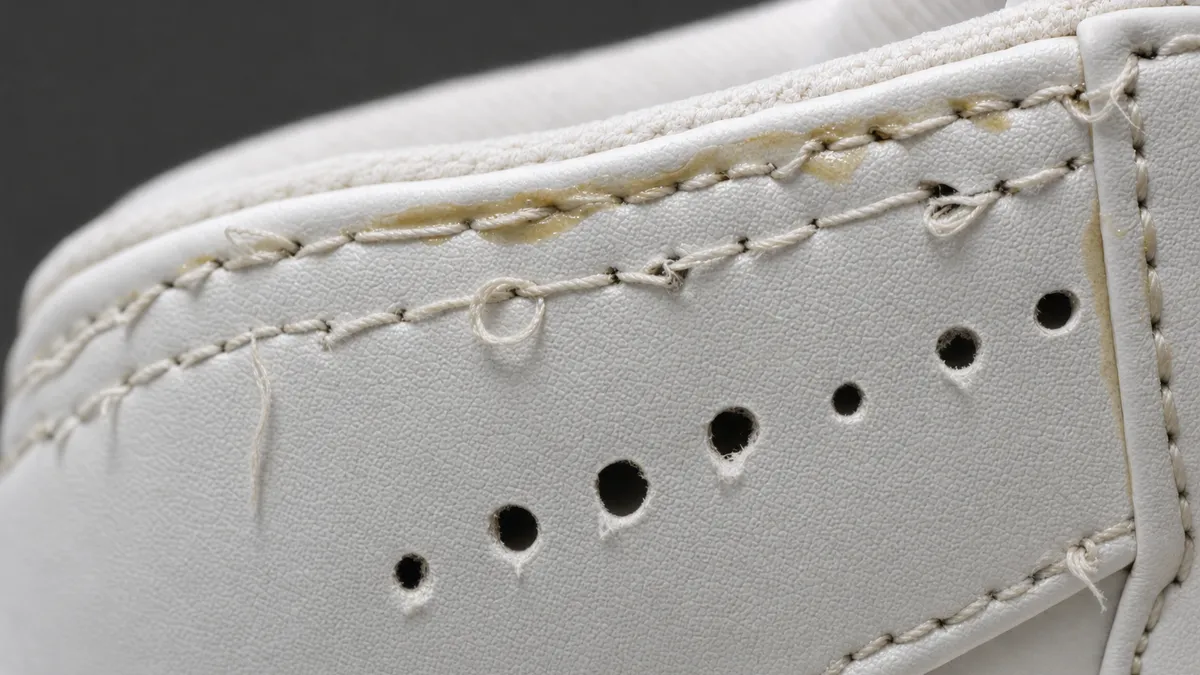 Replica
 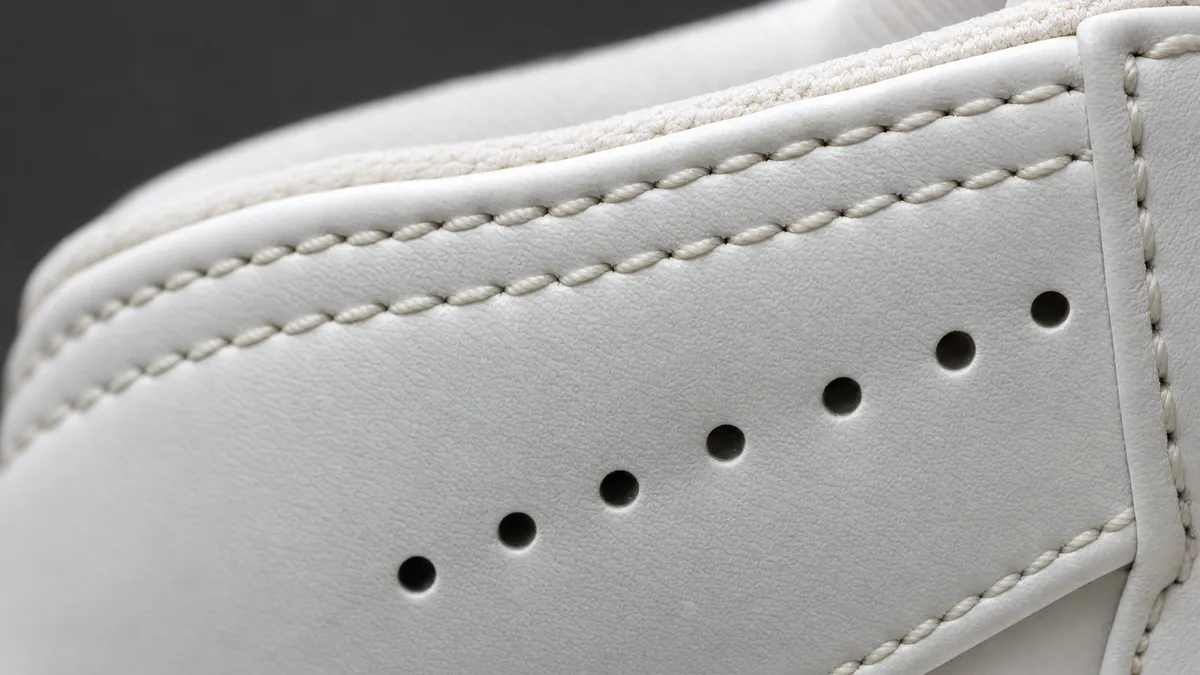 Authentic
 Photo angles for the check
- 1 Overall view
- 2 Logo
- 3 Interior tag
- 4 Outsole
- 5 Box label
Check your Jordan 1 Mid right now
Snap photos of your item and get an AI verdict with a confidence score in about a minute.
FAQ
Are Jordan 1 Mids really faked more than Highs?
By volume, yes – going by what sellers and guide authors report: the Mid is always available at a moderate retail price, so a fake is easy to pass off as “a regular store pair.” Buyers scrutinize Mids far less than hyped Highs, and replica sellers exploit that.
Should a Mid have a Nike Air tag or a Jumpman on the tongue?
Standard Jordan 1 Mids have an embroidered Jumpman on the tongue; the Nike Air tag belongs to OG Highs. SE versions, though, can ship with padded, fleece, or otherwise different tongues carrying different labels, so check against the specific release. A base “Mid” showing a Nike Air tongue tag is a red flag worth a full recheck.
Which photos of a Jordan 1 Mid do I need for a check?
A side profile (showing cut height and Swoosh), a close-up of the Wings stamp, the tongue Jumpman, and the insole. LegitCheck AI evaluates the model’s key zones from these angles.
More Air Jordan models
Other sneakers brands
Check another brand in this category: