Air Jordan · Authentication
Jordan 3 Retro: real vs fake
The Jordan 3 Retro gets counterfeited for its grail colorways – White Cement and Black Cement – where the value lives in the signature elephant print. That print is exactly what exposes replicas: flat, blurry, with an obviously repeating pattern. Copies also fail on the visible Air window and the leather grain.
What to check on the Jordan 3 Retro
Model-specific zones – on top of the brand-level signs.
Elephant print
Authentic elephant print is visually raised and deep: grey veins vary in thickness and the pattern never repeats across adjacent panels. Replica print is flat, the lines run uniform, and the pattern visibly duplicates.
Visible Air unit
The retail heel Air window is clear and seated flush in the midsole, and the service markings on the unit are small and fine. On replicas the window is often larger than spec and the letters and numbers on the unit run noticeably thicker and bigger; fake windows also come cloudy, pre-yellowed from the factory, or seated with gaps.
Upper material and texture
On most retros the upper panels use grainy tumbled leather with a naturally irregular texture, but the material depends on the release (suede on the Palomino, plus denim and nubuck versions). Compare the texture against documented photos of your exact release. Replicas substitute synthetic leather with a monotonous stamped grain that glares in photos.
Tongue Jumpman
The embroidered tongue Jumpman on retail pairs holds exact proportions with dense stitch fill. On fakes the figure tends to “squat” – legs too short, ball larger than spec.
Heel branding
Depending on the release, the heel carries Nike Air or a Jumpman – always match it to the specific drop. Fake Nike Air embossing runs small and shallow, and fake Jumpman embroidery is coarse.
Where to inspect
The key zones to photograph and check on this type of item – a schematic, not a product photo.
- 1Logo shape and placement
- 2Toe box and upper shape
- 3Heel counter and tab
- 4Midsole and stitching
- 5Tongue and size tag
The difference is in the details – drag the slider
Typical differences in workmanship: stitching consistency, edge finishing, detail quality. Left – factory quality, right – common replica flaws.
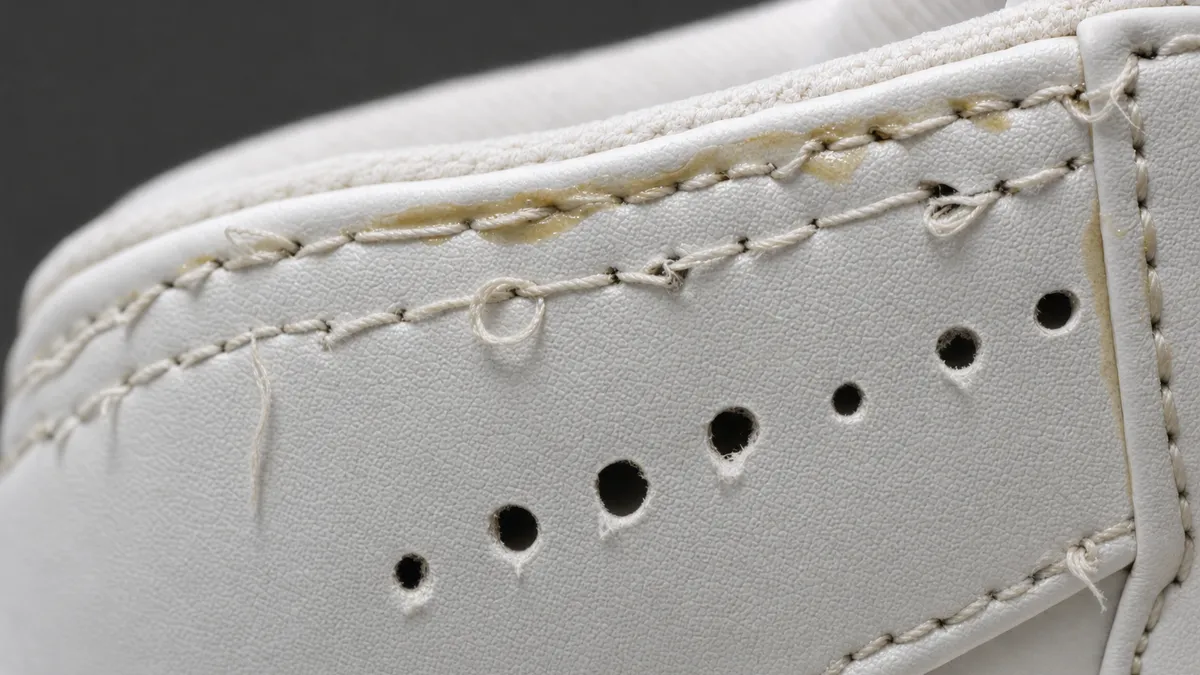 Replica
 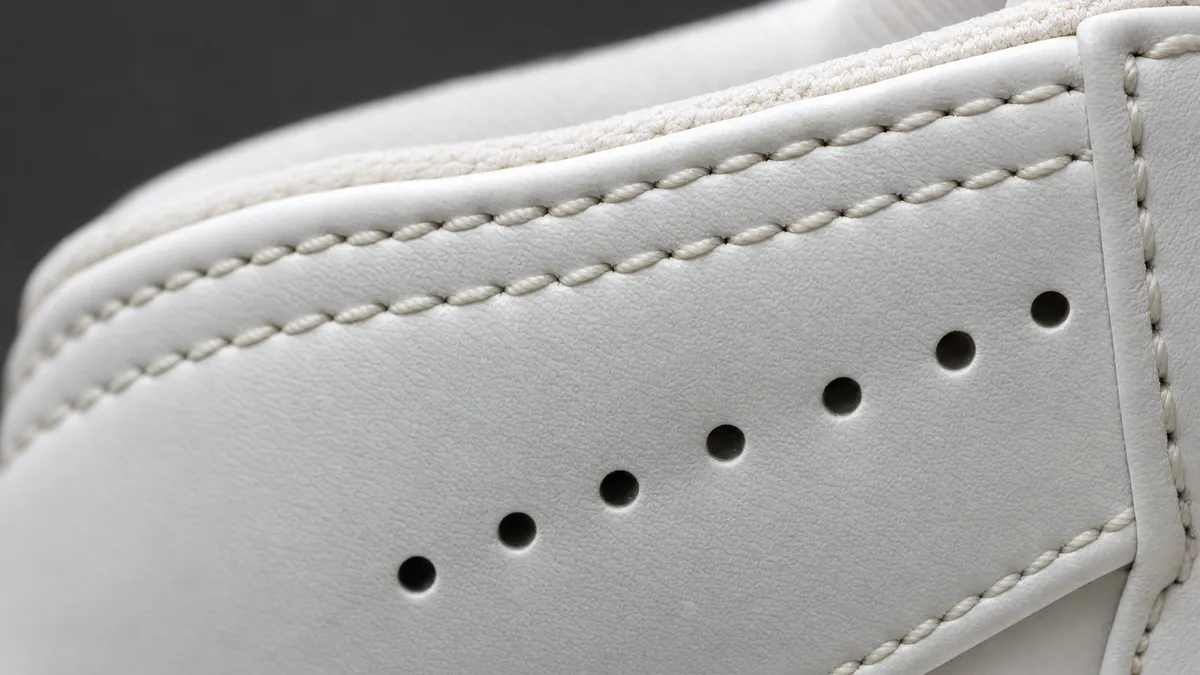 Authentic
 Photo angles for the check
- 1 Overall view
- 2 Logo
- 3 Interior tag
- 4 Outsole
- 5 Box label
Check your Jordan 3 Retro right now
Snap photos of your item and get an AI verdict with a confidence score in about a minute.
FAQ
How do I tell real elephant print from fake?
Check depth and repetition: authentic print is raised, its veins vary in width, and the pattern never mirrors itself. Fake print sits flat like a sticker, with uniform lines and obvious pattern repeats on the toe and heel.
Should a Jordan 3 have Nike Air or a Jumpman on the heel?
It depends on the release: ’88-spec retros (like White Cement Reimagined) ship with Nike Air on the heel, while many other retros use the Jumpman. A logo that doesn’t match the specific release is a reliable fake tell.
Which Jordan 3 colorways are faked most often?
White Cement and Black Cement account for the bulk of replicas, followed by Fire Red and the collabs. The more hyped the release, the more carefully the elephant print and Air window deserve inspection before purchase.
More Air Jordan models
Other sneakers brands
Check another brand in this category: