Air Jordan · Authentication
Jordan 4 Retro: real vs fake
Tinker Hatfield released the Jordan 4 in 1989, giving the silhouette its signature wing clips and molded panel netting – and those complex parts have tripped up replica factories for decades. Drops like Military Black sell out instantly, and the aftermarket fills with copies betrayed by crooked clips and rough plastic lace hardware.
What to check on the Jordan 4 Retro
Model-specific zones – on top of the brand-level signs.
Side panel netting
The signature netting on retail pairs is a stiff molded mesh with uniform, evenly sized cells. Replica netting runs larger or smaller than spec and looks like soft cloth mesh with no molded, raised cell structure.
Wing clips (lace cages)
The plastic wings flanking the laces sit at a precise angle on retail pairs, with smooth molding and no flashing. Fake clips are often skewed, with differently shaped holes and rough edges from cheap molds.
Lace cage and loops
The upper lace loops meet the collar with exact geometry – spacing is controlled to the millimeter. On replicas the loops wander in height and the plastic is a different shade.
Heel tab
The molded heel-tab loop stands vertical and holds its shape on retail pairs. On fakes it slumps sideways, and the logo embossed on it is small and illegible.
Tongue and its logo
A thick quilted tongue with an embroidered Jumpman (or Flight logo on the relevant retros) is a Jordan 4 signature. Replica tongues run thinner, with puffy, loose embroidery.
Where to inspect
The key zones to photograph and check on this type of item – a schematic, not a product photo.
- 1Logo shape and placement
- 2Toe box and upper shape
- 3Heel counter and tab
- 4Midsole and stitching
- 5Tongue and size tag
The difference is in the details – drag the slider
Typical differences in workmanship: stitching consistency, edge finishing, detail quality. Left – factory quality, right – common replica flaws.
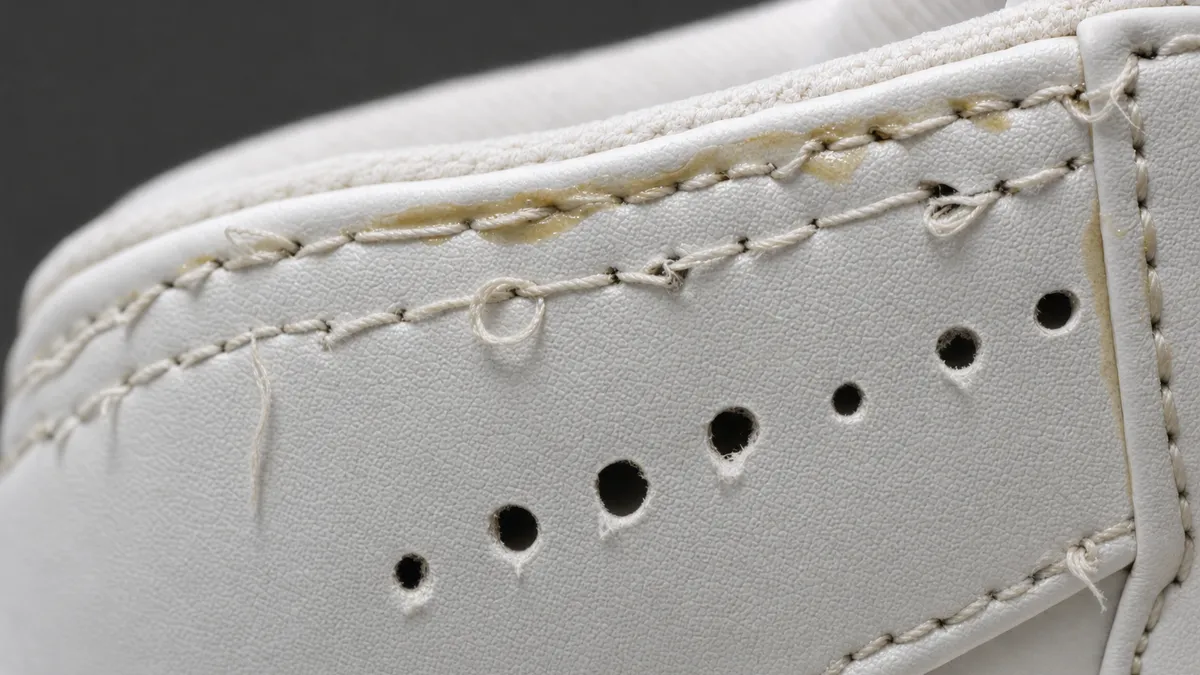 Replica
 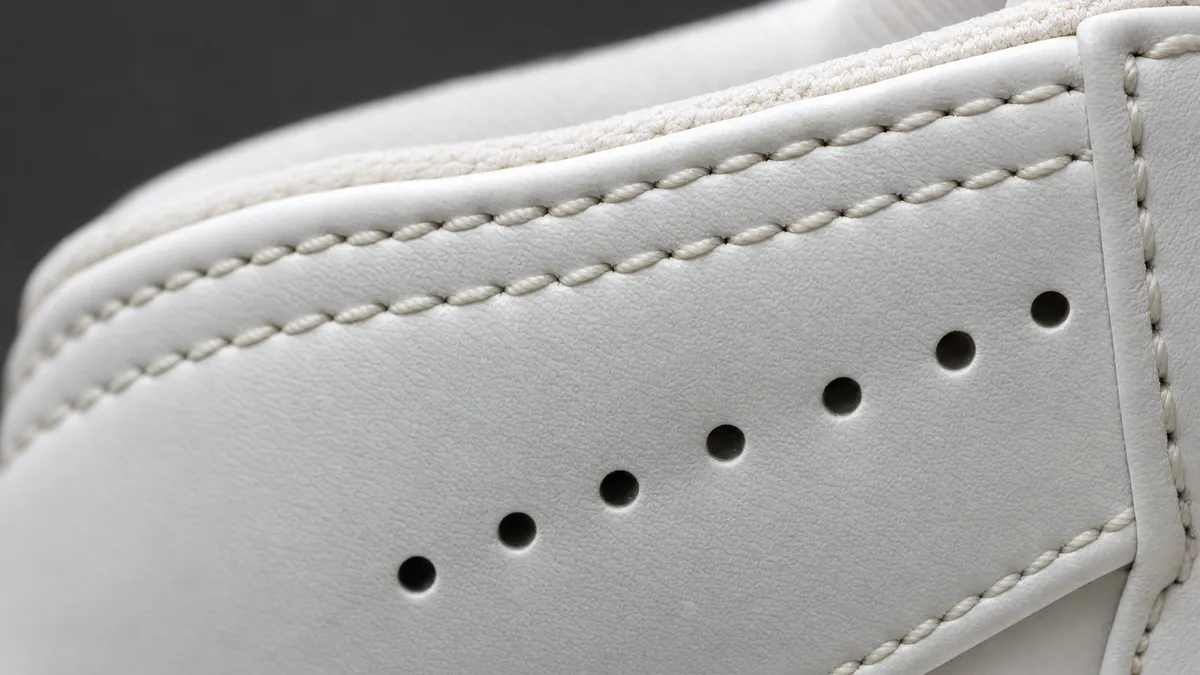 Authentic
 Photo angles for the check
- 1 Overall view
- 2 Logo
- 3 Interior tag
- 4 Outsole
- 5 Box label
Check your Jordan 4 Retro right now
Snap photos of your item and get an AI verdict with a confidence score in about a minute.
FAQ
Why are the wing clips the number one check zone on a Jordan 4?
They’re a complex molded part with precise hole geometry and mounting angle that’s hard to copy cheaply. The slightest deviation in clip shape, flashing along the edge, or a different tilt instantly exposes a replica.
How do I check the netting on Jordan 4 panels?
Shoot the side panel close up in daylight: retail cells are uniform and the mesh looks stiff and molded. If cell sizes drift or the netting creases like fabric, you’re looking at a fake.
Do check zones differ between Jordan 4 colorways?
The core is the same: netting, clips, lace cage, heel tab. But panel materials change per release (nubuck, leather, canvas), so compare texture against photos of your exact release – LegitCheck AI factors in the model you specify.
More Air Jordan models
Other sneakers brands
Check another brand in this category: