Guides · Luxury Shoes
How to Tell if Christian Louboutin Shoes Are Real or Fake (2026)
Christian Louboutin is defined by one thing above all – the lacquered red sole – and that’s exactly what fakes copy most. The catch is that the true “Louboutin red” is hard to match, and the brand’s standards for font, insole, and heel geometry give you a set of consistent tells. Here’s what to check first.
Real vs fake Christian Louboutin: comparison table
Data current as of July 2026. Replicas evolve, so judge by the combination of signs – never a single one.
| Sign | Authentic | Fake |
|---|---|---|
| Red sole shade | A rich, slightly cool red with a subtle blue undertone – the signature “Louboutin red,” consistent across the whole sole. | An orange-scarlet, crimson, or overly bright “fire-engine” red; an uneven tone, with different shades at the toe and heel. |
| Lacquer and its wear | A glossy lacquer coat that naturally scratches and rubs off with use – a scuffed red sole on a worn pair is normal. | A matte, “rubbery,” or suspiciously flawless finish; paint that goes on in streaks, bubbles, or flakes off. |
| Sole printing | “Christian Louboutin” and the size printed in the correct thin font, cleanly centered and in the right spot; the red runs all the way to the heel tip. | Bold or crooked letters, a wrong font and spacing, a shifted or smudged print, or a wrong/“bare” heel tip. |
| Insole and logo | “Christian Louboutin” (often “…Paris”) and “Made in Italy” in an even font with correct spacing; a crisp logo and lettering that doesn’t wander. On the country line: it varies by factory, not by authenticity – besides Italy, Louboutin legitimately produces in Spain, Portugal and France, so “Made in Spain” on the insole is nothing to worry about. | A drifting font, wrong spacing, a crooked or faded logo, spelling errors, or “Made in China.” |
| Geometry and heel | A recognizable model shape and heel height: So Kate/Pigalle 120 is a 120 mm ultra-thin stiletto, Kate 100 is 100 mm; a graceful arch and clean toe. | A thick or crooked heel, wrong height or pitch, a “puffy” or distorted toe, a flat arch, and a rough sole fit. |
| Materials and spikes | Even stitching and quality leather/patent; on spiked models the studs are a uniform shape, evenly placed, and sit flush at the base with no visible gap. | Crooked stitching, cheap-looking material with an obviously synthetic sheen; studs of uneven shape, spaced unevenly, visibly lifting off the surface or falling off. |
The difference is in the details – drag the slider
Typical differences in workmanship: stitching consistency, edge finishing, detail quality. Left – factory quality, right – common replica flaws.
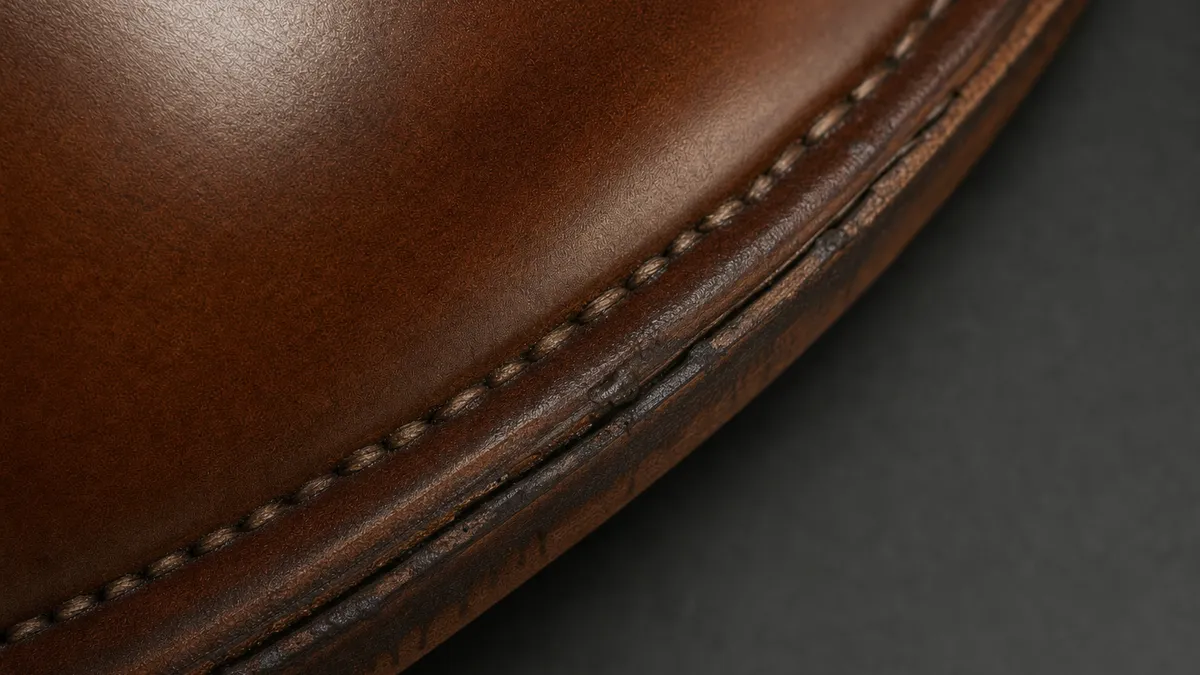 Replica
 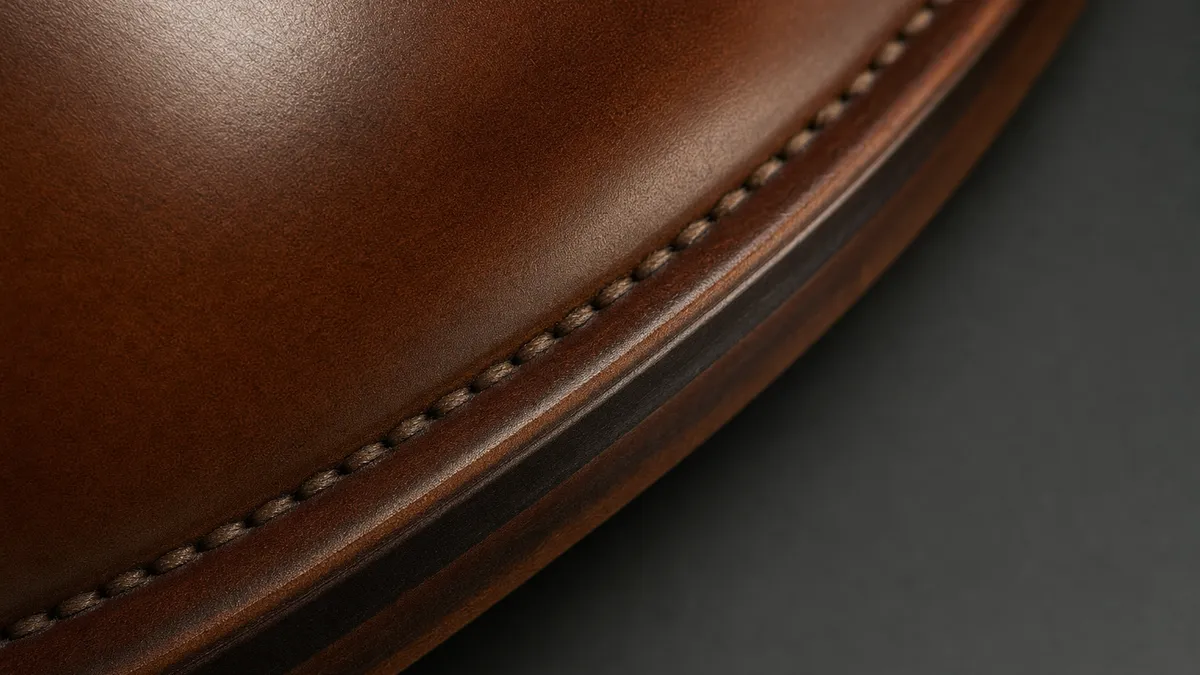 Authentic
 1. Red sole shade
Authentic: A rich, slightly cool red with a subtle blue undertone – the signature “Louboutin red,” consistent across the whole sole.
Fake: An orange-scarlet, crimson, or overly bright “fire-engine” red; an uneven tone, with different shades at the toe and heel.
2. Lacquer and its wear
Authentic: A glossy lacquer coat that naturally scratches and rubs off with use – a scuffed red sole on a worn pair is normal.
Fake: A matte, “rubbery,” or suspiciously flawless finish; paint that goes on in streaks, bubbles, or flakes off.
3. Sole printing
Authentic: “Christian Louboutin” and the size printed in the correct thin font, cleanly centered and in the right spot; the red runs all the way to the heel tip.
Fake: Bold or crooked letters, a wrong font and spacing, a shifted or smudged print, or a wrong/“bare” heel tip.
4. Insole and logo
Authentic: “Christian Louboutin” (often “…Paris”) and “Made in Italy” in an even font with correct spacing; a crisp logo and lettering that doesn’t wander. On the country line: it varies by factory, not by authenticity – besides Italy, Louboutin legitimately produces in Spain, Portugal and France, so “Made in Spain” on the insole is nothing to worry about.
Fake: A drifting font, wrong spacing, a crooked or faded logo, spelling errors, or “Made in China.”
5. Geometry and heel
Authentic: A recognizable model shape and heel height: So Kate/Pigalle 120 is a 120 mm ultra-thin stiletto, Kate 100 is 100 mm; a graceful arch and clean toe.
Fake: A thick or crooked heel, wrong height or pitch, a “puffy” or distorted toe, a flat arch, and a rough sole fit.
6. Materials and spikes
Authentic: Even stitching and quality leather/patent; on spiked models the studs are a uniform shape, evenly placed, and sit flush at the base with no visible gap.
Fake: Crooked stitching, cheap-looking material with an obviously synthetic sheen; studs of uneven shape, spaced unevenly, visibly lifting off the surface or falling off.
Popular Christian Louboutin models
Model-by-model checks – what to look at on each:
Where to inspect
The key zones to photograph and check on this type of item – a schematic, not a product photo.
- 1Insole branding
- 2Heel and tip
- 3Toe and profile
- 4Heel counter
- 5Stitching and sole
How to photograph your Christian Louboutin for a check
Shoot in daylight, avoid glare, keep focus sharp. You need 5 angles:
- 1 Full red sole
- 2 “Christian Louboutin” and size printed on the sole
- 3 Insole with the logo
- 4 Heel from the side (shape and height)
- 5 Toe and upper stitching
How to read the result
The AI returns a verdict with a confidence score:
- 75–100% – Authentic: high confidence the item is genuine.
- 60–74% – Likely authentic: probably genuine with minor concerns.
- 40–59% – Uncertain: the photos are not conclusive – retake or add angles.
- 25–39% – Likely fake: several red flags.
- 0–24% – Fake: clear signs of a replica.
Check your Christian Louboutin right now
Snap photos of your item and get an AI verdict with a confidence score in about a minute.
FAQ
The red sole is scuffed and scratched – is it a fake?
No. The genuine sole is coated in lacquer that naturally scuffs and scratches with wear – that’s normal on a worn pair. What matters far more is the shade of red, the printing font, and the build quality, not the scuffing itself.
What exact red do real Louboutins use?
It’s a rich, slightly cool red with a subtle blue undertone – the recognizable “Louboutin red.” Fakes usually drift toward orange-scarlet or an overly bright tone. The easiest way to check the shade is against a reference photo – which is what the AI does.
What should I look for in the font?
Both on the sole (“Christian Louboutin” + size) and on the insole (“…Paris,” “Made in Italy”) the font is thin, even, correctly spaced, and in the right place. Bold or crooked letters, wrong spacing, or spelling errors are a red flag. The country on the insole varies by factory – Italy, Spain, Portugal or France – and on its own it decides nothing.
The seller shows the box and dust bag – is that enough?
No. The box, dust bag, and tags get faked along with the shoes. Judge the pair itself: the sole’s shade and lacquer, the printing, the insole, the heel geometry, and the build quality.