Guides · Streetwear
How to Tell if Your Palace Is Real or Fake (2026)
Palace Skateboards is a London skate brand founded in 2009, best known for one recurring mark: the Tri-Ferg, an illusion triangle. Drops release seasonally through the brand’s own shop and select retailers, and the colorway and print placement change from season to season. Replicas almost always trip up on the Tri-Ferg itself – the illusion’s perspective, line thickness, and print registration – rather than on generic brand details. This guide covers how to check Palace pieces from photos, which angles to shoot, and how to tell real fake tells apart from normal seasonal variation.
Real vs fake Palace: comparison table
Data current as of July 2026. Replicas evolve, so judge by the combination of signs – never a single one.
| Sign | Authentic | Fake |
|---|---|---|
| Tri-Ferg geometry | The edges converge in the correct perspective of the impossible figure, the outline holds an even thickness all around, and the text along each edge tracks steadily with no gaps. | The perspective drifts, the line thickness jumps around the outline, and the lettering along an edge loses its line or varies in height. |
| Color registration and print edges | The print layers land precisely on each other with no shift and no light halo, the letter and line edges are crisp, and the ink doesn’t crack at a fold in the fabric. | The print layers drift apart, a gap or bleed shows between colors, and the ink sits in a thick, rubbery layer that cracks at a fold far sooner. Cracks on a long-worn piece are wear, not a verdict. |
| Fabric weight and fit | Dense, heavyweight material that holds its shape and weight, with a cut and fit that matches the garment type and doesn’t look arbitrary. | Thin, loose-knit fabric that sees through or puckers, and a fit that’s narrower or more shapeless than reference. |
| Stitching and bar tacks | Even, dense stitching with no skips along the full length of every seam, and clean bar tacks reinforcing stress points – the pocket, the hood, the shoulder seams. | Stitching that wanders or skips, with bar tacks at stress points missing or placed sloppily. |
| Drawcord, eyelets and ribbing | A dense drawcord with clean tips, evenly punched eyelets, and springy cuff and hem ribbing that snaps back after stretching. The drawcord and eyelets are a hooded-model check – the hoodie. The Tri-Ferg tee, the Basically A Tee and the crewneck have no hood by construction, so no drawcord and no eyelets exist there; only the ribbing part of this check applies to them. | A thin drawcord, coarse tips, crooked or unevenly placed eyelets, and limp, thin ribbing with a loose knit that never snaps back. |
| Interior label and build quality | The neck label is sewn on straight, with crisp printing or weaving of the brand name and no blurry letters, and the label’s stitch quality matches the rest of the garment. | The label sits crooked or is sewn on unevenly, the font is coarser and smeared, and the stitch quality is noticeably below the rest of the piece. |
The difference is in the details – drag the slider
Typical differences in workmanship: stitching consistency, edge finishing, detail quality. Left – factory quality, right – common replica flaws.
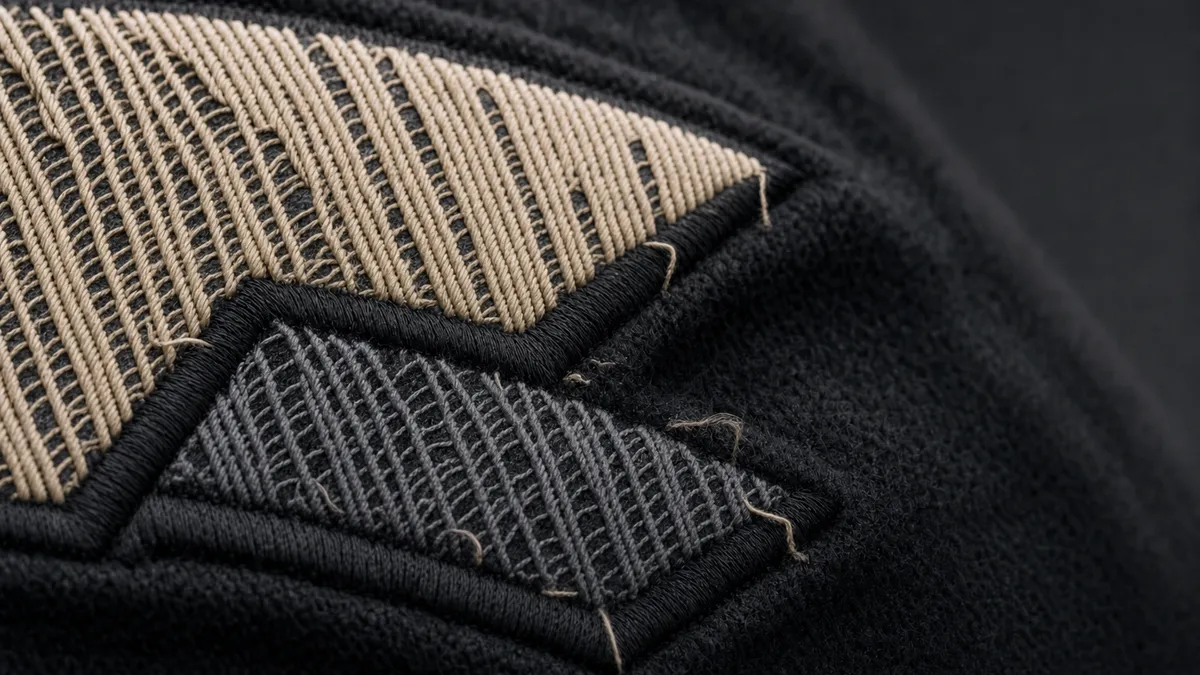 Replica
 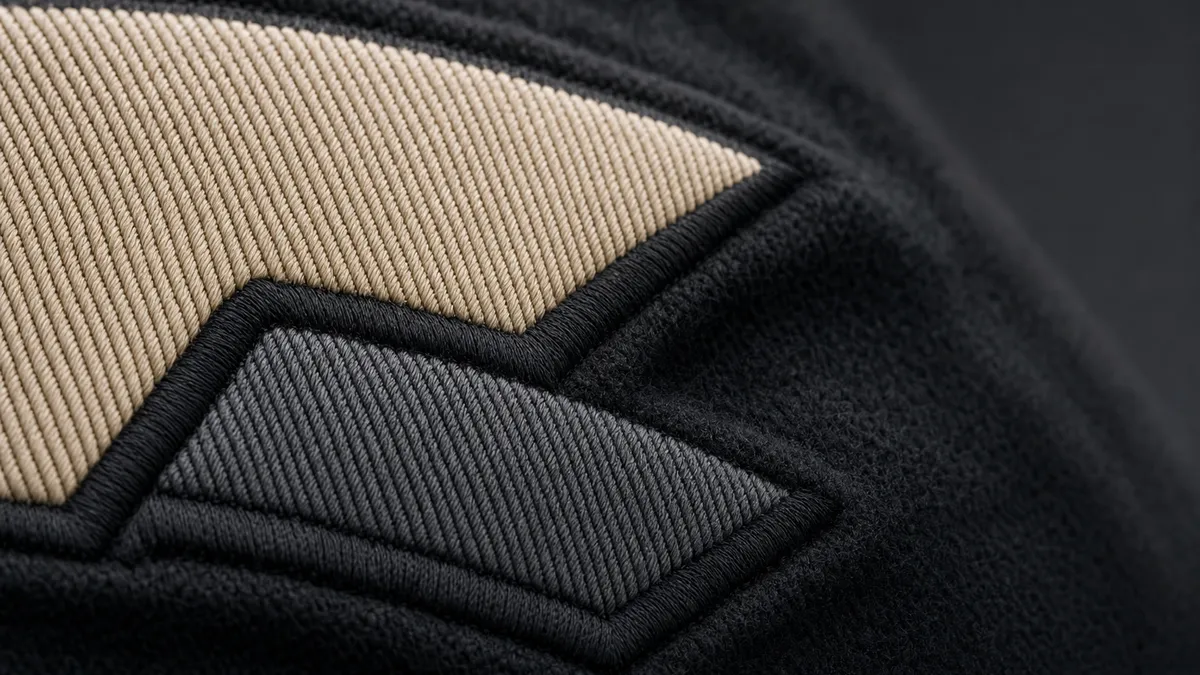 Authentic
 1. Tri-Ferg geometry
Authentic: The edges converge in the correct perspective of the impossible figure, the outline holds an even thickness all around, and the text along each edge tracks steadily with no gaps.
Fake: The perspective drifts, the line thickness jumps around the outline, and the lettering along an edge loses its line or varies in height.
2. Color registration and print edges
Authentic: The print layers land precisely on each other with no shift and no light halo, the letter and line edges are crisp, and the ink doesn’t crack at a fold in the fabric.
Fake: The print layers drift apart, a gap or bleed shows between colors, and the ink sits in a thick, rubbery layer that cracks at a fold far sooner. Cracks on a long-worn piece are wear, not a verdict.
3. Fabric weight and fit
Authentic: Dense, heavyweight material that holds its shape and weight, with a cut and fit that matches the garment type and doesn’t look arbitrary.
Fake: Thin, loose-knit fabric that sees through or puckers, and a fit that’s narrower or more shapeless than reference.
4. Stitching and bar tacks
Authentic: Even, dense stitching with no skips along the full length of every seam, and clean bar tacks reinforcing stress points – the pocket, the hood, the shoulder seams.
Fake: Stitching that wanders or skips, with bar tacks at stress points missing or placed sloppily.
5. Drawcord, eyelets and ribbing
Authentic: A dense drawcord with clean tips, evenly punched eyelets, and springy cuff and hem ribbing that snaps back after stretching. The drawcord and eyelets are a hooded-model check – the hoodie. The Tri-Ferg tee, the Basically A Tee and the crewneck have no hood by construction, so no drawcord and no eyelets exist there; only the ribbing part of this check applies to them.
Fake: A thin drawcord, coarse tips, crooked or unevenly placed eyelets, and limp, thin ribbing with a loose knit that never snaps back.
6. Interior label and build quality
Authentic: The neck label is sewn on straight, with crisp printing or weaving of the brand name and no blurry letters, and the label’s stitch quality matches the rest of the garment.
Fake: The label sits crooked or is sewn on unevenly, the font is coarser and smeared, and the stitch quality is noticeably below the rest of the piece.
Popular Palace models
Model-by-model checks – what to look at on each:
Where to inspect
The key zones to photograph and check on this type of item – a schematic, not a product photo.
- 1Neck label and tags
- 2Print and its printing
- 3Stitching and hem
- 4Shoulder and sleeve seam
- 5Fabric and weight
How to photograph your Palace for a check
Shoot in daylight, avoid glare, keep focus sharp. You need 5 angles:
- 1 Full item (front)
- 2 Tri-Ferg or logo close-up
- 3 Back with print (if any)
- 4 Interior neck label
- 5 Seams, cuffs and ribbing
How to read the result
The AI returns a verdict with a confidence score:
- 75–100% – Authentic: high confidence the item is genuine.
- 60–74% – Likely authentic: probably genuine with minor concerns.
- 40–59% – Uncertain: the photos are not conclusive – retake or add angles.
- 25–39% – Likely fake: several red flags.
- 0–24% – Fake: clear signs of a replica.
Check your Palace right now
Snap photos of your item and get an AI verdict with a confidence score in about a minute.
FAQ
What is the Tri-Ferg and why is it the main thing to check?
The Tri-Ferg is Palace’s signature mark: an illusion triangle modeled on the impossible Penrose triangle, with text running along each edge. It’s the hardest element to reproduce exactly – replicas nearly always break on the perspective, the line thickness, or the print registration, so the Tri-Ferg’s geometry and print quality tell you more than any other detail on the piece.
The Tri-Ferg color on my piece is different from what I saw online – is it fake?
No. Tri-Ferg colorways change from season to season, and the print placement can also differ between drops. Not finding a specific colorway in the first search result doesn’t make a piece fake – cross-check it against documented photos of your specific season’s release.
The care label lists a country of manufacture I don’t recognize – is that a red flag?
No. Palace pieces are made across different manufacturers in different countries, and the wording on the care label can vary from piece to piece even within the same season. The country of manufacture alone neither confirms nor rules out authenticity – focus on the Tri-Ferg geometry, print quality, and construction instead.
Can I authenticate Palace using a code from a receipt or the brand’s website?
There’s no public database for verifying Palace pieces by article number or code. A digital receipt from a store isn’t tied to a specific physical item and is easier to fake than the item itself, so lean on visual tells – the Tri-Ferg, print, fabric, construction, and tags – rather than a code.