Guides · Streetwear
How to Tell if Your Kith Is Real or Fake (2026)
Kith is a New York brand with a wide range – tees and hoodies to jackets and footwear – including its own lines and dozens of collaborations with other brands. Because of that, a genuine Kith piece can carry another brand's logo; that's part of the design, not a red flag. Here's what to actually look at: the quality of the Kith logo itself, fabric weight appropriate to the item type, and the care put into stitching and tags.
Real vs fake Kith: comparison table
Data current as of July 2026. Replicas evolve, so judge by the combination of signs – never a single one.
| Sign | Authentic | Fake |
|---|---|---|
| Kith logo (box logo) | An even application (print or embroidery) with crisp letter edges, correct proportions and letter spacing, and consistent stroke thickness. | Blurred or jagged letter edges, off proportions on the logo, uneven stroke thickness, paint bleed, or loose embroidery with visible gaps in the base fabric. |
| Collaboration branding | The partner brand's logo is applied with the same care as the Kith logo on the same piece – matching print or embroidery quality on both elements. | The partner logo is noticeably rougher or cleaner than the Kith logo on the same item – a quality mismatch between the two elements points to one of them being fake, not the fact of a collaboration itself. |
| Knit fabric weight and quality | For tees and light knits – a dense, even fabric with no see-through patches or pilling, consistent weight across the whole piece. | Fabric that varies in thickness across the garment, see-through patches, or a surface that pills or pulls after a single wear. |
| Outerwear and hoodies | A dense lining and fill on jackets, straight stitching along zippers and pockets, a symmetrical hood, and solid zipper hardware. | Crooked stitching along the zipper, a lopsided hood, cheap thin hardware that sticks or has more play than on the rest of the same piece. |
| Interior tags | Crisp, even lettering on the sewn-in tag, a neat symmetrical stitch on all sides, and a consistent weave density in the tag fabric itself. | Smudged or "loose" lettering, a crooked or partially unstitched tag, or a thin, loosely woven tag fabric that doesn't match the careful stitching on the rest of the item. |
| Stitching and edge finishing | An even, consistent stitch length along every seam, bar tacks at stress points (pockets, cuffs, hem), and clean, symmetrical necklines and cuff ribbing. | Jumpy, uneven stitch length, skipped stitches, missing bar tacks at stress points, or a lopsided, asymmetrical hem and cuffs. |
The difference is in the details – drag the slider
Typical differences in workmanship: stitching consistency, edge finishing, detail quality. Left – factory quality, right – common replica flaws.
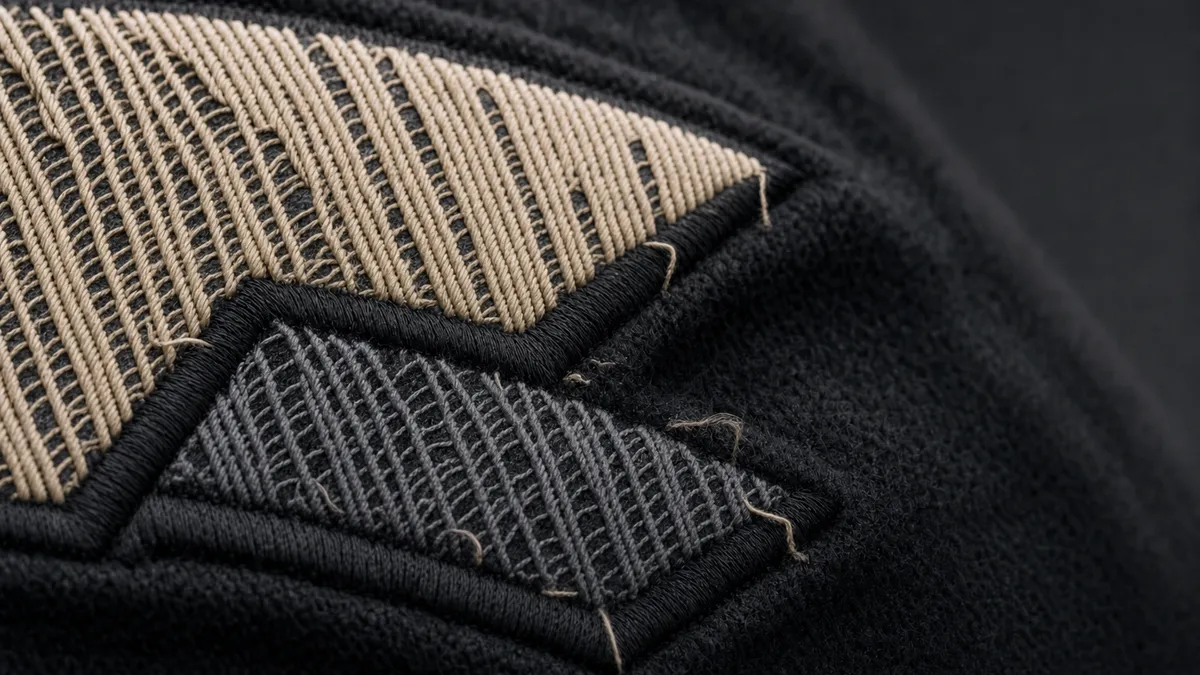 Replica
 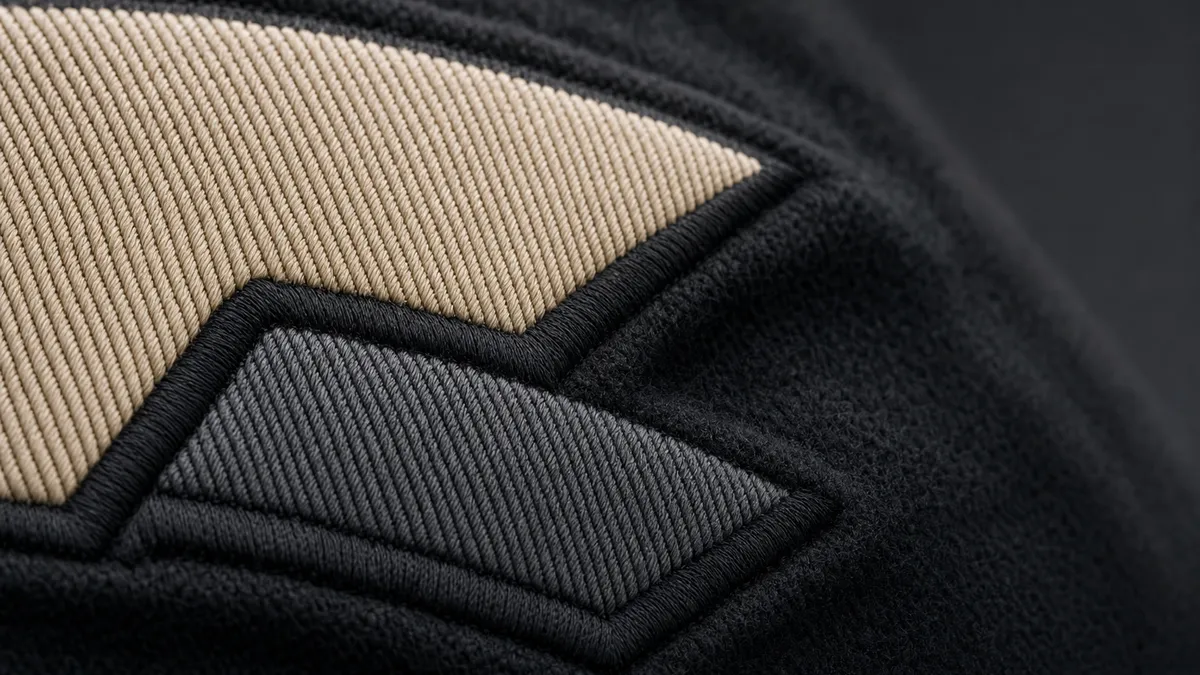 Authentic
 1. Kith logo (box logo)
Authentic: An even application (print or embroidery) with crisp letter edges, correct proportions and letter spacing, and consistent stroke thickness.
Fake: Blurred or jagged letter edges, off proportions on the logo, uneven stroke thickness, paint bleed, or loose embroidery with visible gaps in the base fabric.
2. Collaboration branding
Authentic: The partner brand's logo is applied with the same care as the Kith logo on the same piece – matching print or embroidery quality on both elements.
Fake: The partner logo is noticeably rougher or cleaner than the Kith logo on the same item – a quality mismatch between the two elements points to one of them being fake, not the fact of a collaboration itself.
3. Knit fabric weight and quality
Authentic: For tees and light knits – a dense, even fabric with no see-through patches or pilling, consistent weight across the whole piece.
Fake: Fabric that varies in thickness across the garment, see-through patches, or a surface that pills or pulls after a single wear.
4. Outerwear and hoodies
Authentic: A dense lining and fill on jackets, straight stitching along zippers and pockets, a symmetrical hood, and solid zipper hardware.
Fake: Crooked stitching along the zipper, a lopsided hood, cheap thin hardware that sticks or has more play than on the rest of the same piece.
5. Interior tags
Authentic: Crisp, even lettering on the sewn-in tag, a neat symmetrical stitch on all sides, and a consistent weave density in the tag fabric itself.
Fake: Smudged or "loose" lettering, a crooked or partially unstitched tag, or a thin, loosely woven tag fabric that doesn't match the careful stitching on the rest of the item.
6. Stitching and edge finishing
Authentic: An even, consistent stitch length along every seam, bar tacks at stress points (pockets, cuffs, hem), and clean, symmetrical necklines and cuff ribbing.
Fake: Jumpy, uneven stitch length, skipped stitches, missing bar tacks at stress points, or a lopsided, asymmetrical hem and cuffs.
Where to inspect
The key zones to photograph and check on this type of item – a schematic, not a product photo.
- 1Neck label and tags
- 2Print and its printing
- 3Stitching and hem
- 4Shoulder and sleeve seam
- 5Fabric and weight
How to photograph your Kith for a check
Shoot in daylight, avoid glare, keep focus sharp. You need 5 angles:
- 1 Full item (front)
- 2 Kith logo close-up
- 3 Collaboration branding (if present)
- 4 Interior tag
- 5 Seams, cuffs and hardware
How to read the result
The AI returns a verdict with a confidence score:
- 75–100% – Authentic: high confidence the item is genuine.
- 60–74% – Likely authentic: probably genuine with minor concerns.
- 40–59% – Uncertain: the photos are not conclusive – retake or add angles.
- 25–39% – Likely fake: several red flags.
- 0–24% – Fake: clear signs of a replica.
Check your Kith right now
Snap photos of your item and get an AI verdict with a confidence score in about a minute.
FAQ
My Kith piece has another brand's logo on it – is that fake?
No, not if it's a collaboration – Kith regularly releases joint capsules with other brands, and another brand's logo on a genuine piece is normal. Don't judge by the mere presence of a second logo; judge by how well it's applied. It should match the quality of the Kith logo on the same item.
Does Kith use the same fabric weight on everything?
No. The range is wide – light tees, heavy hoodies, insulated outerwear, footwear. Each item type has its own weight standard, and expecting "heavy" fabric from a basic tee is as wrong as expecting light knit from a winter jacket. Judge weight and construction quality within the specific item type.
Can I authenticate Kith from the tag code alone?
There's no public database to verify authenticity by a tag code, so don't expect a code "lookup" – these codes aren't tied to a specific unit. Judge the tag on craftsmanship instead: crisp lettering, a neat stitch, and the weave quality of the label fabric – then draw a conclusion from the full set of angles.
How accurate is checking Kith from photos with AI?
Accuracy depends on photo quality and quantity. LegitCheck AI cross-references the logo, tags, material and stitching across every angle and returns a verdict with a confidence score, honestly flagging "uncertain" when the photos don't allow a clear call. It's a fast screen, not a legally binding appraisal.