Guides · Streetwear
How to Tell if Your Hellstar Is Real or Fake (2026)
Hellstar is a young American brand known for its large astral and fire-and-stars graphics across hoodies, tees, and pants. Fast-growing popularity has made it a heavily copied name, and quick drop turnover combined with frequent intentionally aged printing makes checking it tricky: what looks like a flaw is often designed into the piece. This guide covers what to look for in print, fabric, and construction quality – and how to avoid mistaking an authentic “vintage” effect for a replica tell.
Real vs fake Hellstar: comparison table
Data current as of July 2026. Replicas evolve, so judge by the combination of signs – never a single one.
| Sign | Authentic | Fake |
|---|---|---|
| Paint density and coverage | A saturated, even paint layer wherever a “vintage” effect isn’t the intent; clean boundaries between colors; precise registration on multi-color graphics. | Pale, patchy, or incomplete coverage outside any intentionally aged zone; smeared color boundaries; graphic layers that don’t line up. |
| Aged print effect | On some releases, cracking, distressing, and a faded look are built in as a deliberate design choice for that specific drop – this is normal, not wear. | A distressed look on a release meant to have a clean, even print (cross-check against release photos), or unevenness that doesn’t match the documented effect in character. |
| Fleece weight | Dense, heavyweight material – holds shape at the shoulders and hood. | Thinner, looser-knit fabric that looks weightless and doesn’t hold volume. |
| Hood, drawcord and eyelets | The hood sits symmetrically, the drawcord is dense, and the eyelets are even and match on both sides. | A crooked hood, a thinner-than-reference drawcord, and eyelets that differ in size or placement. |
| Cuff and hem ribbing | Dense, even ribbing with no sagging, with a shade matching the main fabric. | Slack ribbing with no recovery even on a lightly worn piece, sometimes a shade off the body. On a long-worn piece, stretched ribbing is wear, not a verdict. |
| Stitching and zipper (zip models) | Even stitching with consistent length and bar tacks at stress points, symmetrical pockets; on zip pieces, even teeth of uniform size and no fabric bunching around the closure. Smoothness of the run is an in-hand check, not judged from photos and not counted against the verdict. | Wandering or sparse stitching, missing bar tacks, off-center pockets; uneven zipper teeth and fabric bunched around the closure. |
The difference is in the details – drag the slider
Typical differences in workmanship: stitching consistency, edge finishing, detail quality. Left – factory quality, right – common replica flaws.
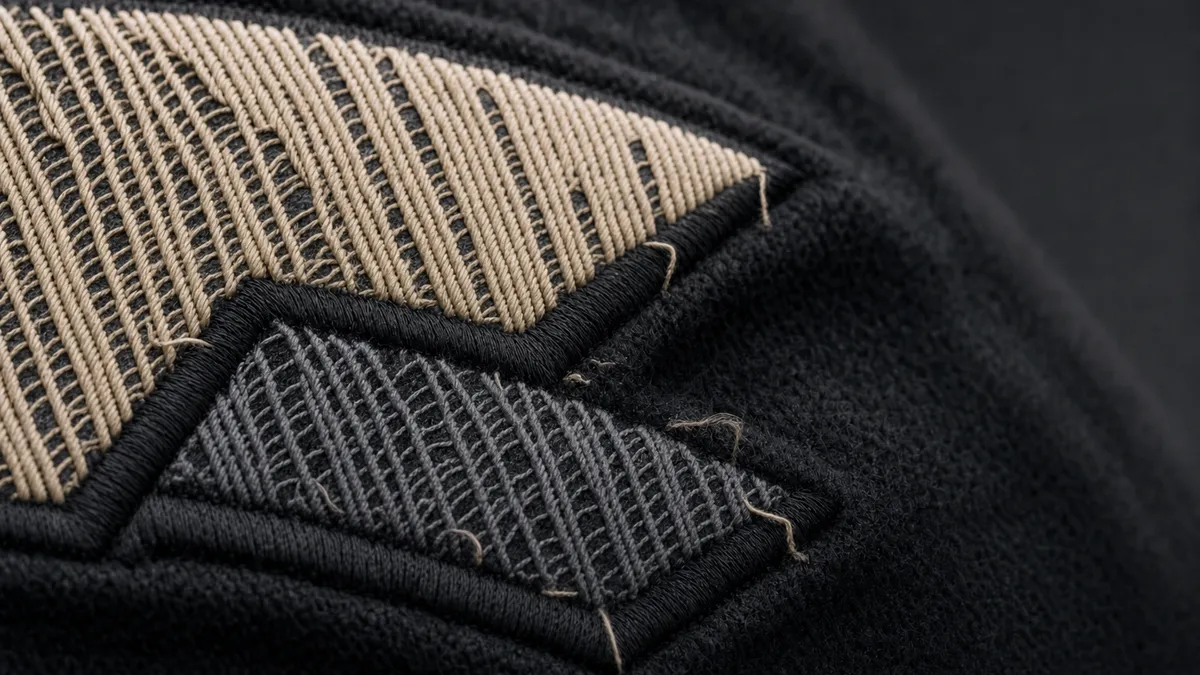 Replica
 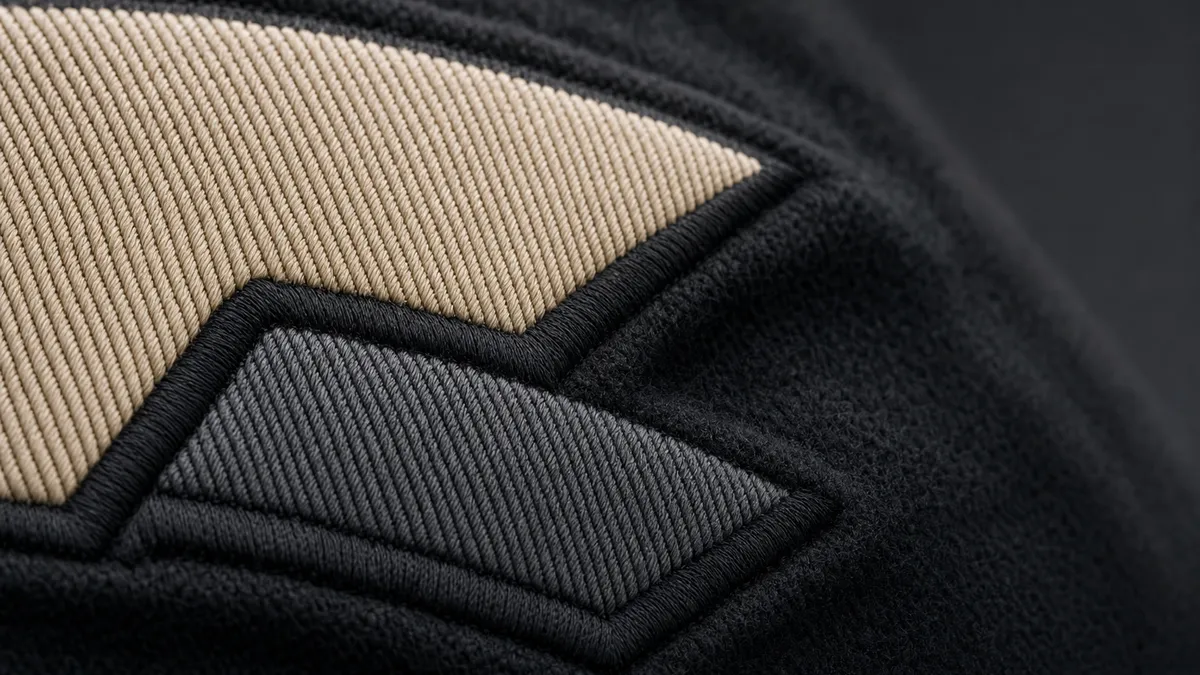 Authentic
 1. Paint density and coverage
Authentic: A saturated, even paint layer wherever a “vintage” effect isn’t the intent; clean boundaries between colors; precise registration on multi-color graphics.
Fake: Pale, patchy, or incomplete coverage outside any intentionally aged zone; smeared color boundaries; graphic layers that don’t line up.
2. Aged print effect
Authentic: On some releases, cracking, distressing, and a faded look are built in as a deliberate design choice for that specific drop – this is normal, not wear.
Fake: A distressed look on a release meant to have a clean, even print (cross-check against release photos), or unevenness that doesn’t match the documented effect in character.
3. Fleece weight
Authentic: Dense, heavyweight material – holds shape at the shoulders and hood.
Fake: Thinner, looser-knit fabric that looks weightless and doesn’t hold volume.
4. Hood, drawcord and eyelets
Authentic: The hood sits symmetrically, the drawcord is dense, and the eyelets are even and match on both sides.
Fake: A crooked hood, a thinner-than-reference drawcord, and eyelets that differ in size or placement.
5. Cuff and hem ribbing
Authentic: Dense, even ribbing with no sagging, with a shade matching the main fabric.
Fake: Slack ribbing with no recovery even on a lightly worn piece, sometimes a shade off the body. On a long-worn piece, stretched ribbing is wear, not a verdict.
6. Stitching and zipper (zip models)
Authentic: Even stitching with consistent length and bar tacks at stress points, symmetrical pockets; on zip pieces, even teeth of uniform size and no fabric bunching around the closure. Smoothness of the run is an in-hand check, not judged from photos and not counted against the verdict.
Fake: Wandering or sparse stitching, missing bar tacks, off-center pockets; uneven zipper teeth and fabric bunched around the closure.
Popular Hellstar models
Model-by-model checks – what to look at on each:
Where to inspect
The key zones to photograph and check on this type of item – a schematic, not a product photo.
- 1Neck label and tags
- 2Print and its printing
- 3Stitching and hem
- 4Shoulder and sleeve seam
- 5Fabric and weight
How to photograph your Hellstar for a check
Shoot in daylight, avoid glare, keep focus sharp. You need 5 angles:
- 1 Full item (front)
- 2 Chest and back graphic close-up
- 3 Hood with drawcord (or zipper zipped and unzipped)
- 4 Cuffs and hem ribbing
- 5 Interior seams and pockets
How to read the result
The AI returns a verdict with a confidence score:
- 75–100% – Authentic: high confidence the item is genuine.
- 60–74% – Likely authentic: probably genuine with minor concerns.
- 40–59% – Uncertain: the photos are not conclusive – retake or add angles.
- 25–39% – Likely fake: several red flags.
- 0–24% – Fake: clear signs of a replica.
Check your Hellstar right now
Snap photos of your item and get an AI verdict with a confidence score in about a minute.
FAQ
Is cracked or faded print on Hellstar a sign of a fake?
Not necessarily. Many Hellstar releases ship with an intentionally aged, distressed, or faded print as a design choice for that specific drop, not wear or a defect. Before drawing a conclusion, cross-check the graphic against documented photos of your specific release rather than judging by unevenness alone.
How do I tell genuine aged printing from poor quality?
Look past the cracking itself: judge paint density and coverage wherever the effect isn’t intended, how clean the boundaries between colors are, and how precisely the layers of a multi-color graphic register. Pale, patchy fill and misaligned layers are signs of poor application regardless of whether the design is meant to look aged.
Does Hellstar have a serial number or code database to check?
There’s no public lookup database for Hellstar by number or tag. Authentication rests on graphic quality, fleece weight, hood construction, the zipper (on zip models), and stitching – plus matching the piece to documented photos of its specific release.
How accurate is checking Hellstar from photos with AI?
Accuracy depends on the quality and number of photos. LegitCheck AI cross-references the tells across every angle – graphic, fabric, construction – and returns a verdict with a confidence score, honestly flagging “uncertain” when the photos don’t allow a clear call. It’s a fast screen, not a legally binding appraisal.