Guides · Streetwear
How to Tell if Your Human Made Is Real or Fake (2026)
Human Made is a Japanese brand known for a distinctive retro aesthetic, but its specific graphics and motifs change from collection to collection. A familiar element missing from a piece out of a different season isn't a fake tell – it's just a design change. Here's what stays consistent: embroidery and print quality, the care put into the signature heart tag, and fabric weight.
Real vs fake Human Made: comparison table
Data current as of July 2026. Replicas evolve, so judge by the combination of signs – never a single one.
| Sign | Authentic | Fake |
|---|---|---|
| Embroidered graphics | Dense, even stitching with no gaps in the woven base fabric visible between threads, consistent fill density across the whole motif, and clean edges. | Sparse or loose stitching with visible fabric gaps under the thread, uneven fill (dense in spots, empty in others), and ragged, blurry edges on the motif. |
| Printed graphics | Crisp edges on print elements, precise layer registration on multicolor designs, and an even paint layer with no cracking at fabric folds. | Blurred or jagged edges on letters and elements, a visible halo around colored areas, misaligned layers on a multicolor print, or paint that cracks or flakes at a fold. |
| Heart logo tag | A neat, symmetrical stitch on all sides of the tag, crisp legible lettering, and consistent, undistorted proportions on the logo. | A crooked or partially unstitched tag, blurry or "swimming" lettering, a distorted heart shape, or thin, loosely woven tag fabric. |
| Fabric weight and quality | A dense, even fabric appropriate to the item type (light tee vs. heavy fleece/hoodie), with consistent thickness and no see-through patches. | Fabric that varies in weight across the garment, see-through or puckering patches, or a clear mismatch between the claimed fabric type and how it actually feels (e.g., "fleece" that reads as thin jersey). |
| Stitching and seam finishing | An even, consistent stitch length along every seam, neat bar tacks at stress points (pockets, cuffs, hem, hood), and symmetrical paired parts. | Jumpy, uneven stitch length, skipped stitches, missing bar tacks at stress points, or noticeable asymmetry between paired parts like pockets or cuffs. |
| Overall graphics and motifs | The design and motifs fit the aesthetic of a specific collection – retro graphics, but with seasonal variation in artwork, color and placement. | Elements from clearly different, style-mismatched releases combined on one piece, or a familiar motif rendered with a technique that doesn't match the quality of the rest of the branding on the same item. |
The difference is in the details – drag the slider
Typical differences in workmanship: stitching consistency, edge finishing, detail quality. Left – factory quality, right – common replica flaws.
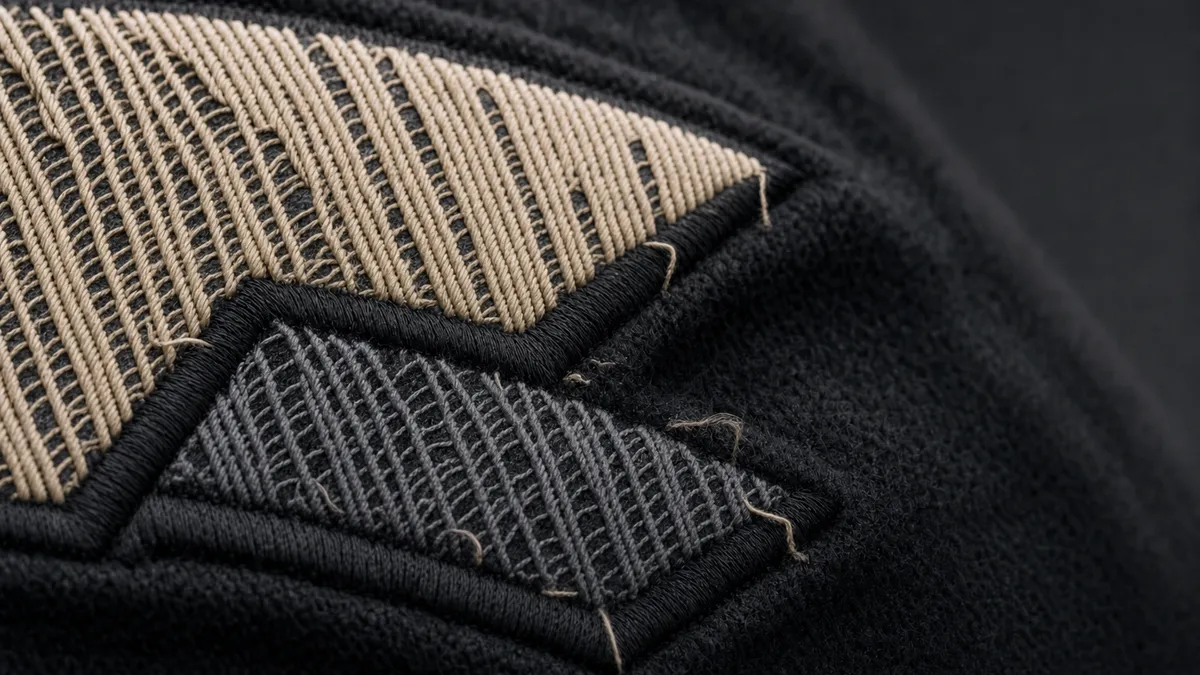 Replica
 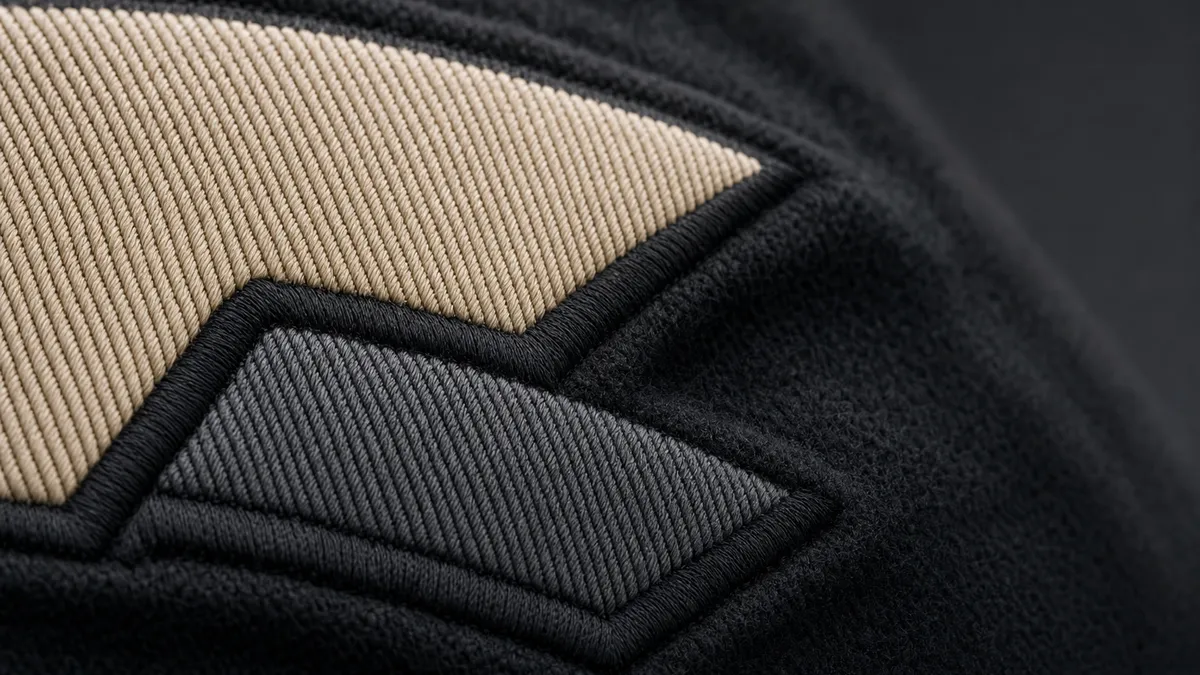 Authentic
 1. Embroidered graphics
Authentic: Dense, even stitching with no gaps in the woven base fabric visible between threads, consistent fill density across the whole motif, and clean edges.
Fake: Sparse or loose stitching with visible fabric gaps under the thread, uneven fill (dense in spots, empty in others), and ragged, blurry edges on the motif.
2. Printed graphics
Authentic: Crisp edges on print elements, precise layer registration on multicolor designs, and an even paint layer with no cracking at fabric folds.
Fake: Blurred or jagged edges on letters and elements, a visible halo around colored areas, misaligned layers on a multicolor print, or paint that cracks or flakes at a fold.
3. Heart logo tag
Authentic: A neat, symmetrical stitch on all sides of the tag, crisp legible lettering, and consistent, undistorted proportions on the logo.
Fake: A crooked or partially unstitched tag, blurry or "swimming" lettering, a distorted heart shape, or thin, loosely woven tag fabric.
4. Fabric weight and quality
Authentic: A dense, even fabric appropriate to the item type (light tee vs. heavy fleece/hoodie), with consistent thickness and no see-through patches.
Fake: Fabric that varies in weight across the garment, see-through or puckering patches, or a clear mismatch between the claimed fabric type and how it actually feels (e.g., "fleece" that reads as thin jersey).
5. Stitching and seam finishing
Authentic: An even, consistent stitch length along every seam, neat bar tacks at stress points (pockets, cuffs, hem, hood), and symmetrical paired parts.
Fake: Jumpy, uneven stitch length, skipped stitches, missing bar tacks at stress points, or noticeable asymmetry between paired parts like pockets or cuffs.
6. Overall graphics and motifs
Authentic: The design and motifs fit the aesthetic of a specific collection – retro graphics, but with seasonal variation in artwork, color and placement.
Fake: Elements from clearly different, style-mismatched releases combined on one piece, or a familiar motif rendered with a technique that doesn't match the quality of the rest of the branding on the same item.
Where to inspect
The key zones to photograph and check on this type of item – a schematic, not a product photo.
- 1Neck label and tags
- 2Print and its printing
- 3Stitching and hem
- 4Shoulder and sleeve seam
- 5Fabric and weight
How to photograph your Human Made for a check
Shoot in daylight, avoid glare, keep focus sharp. You need 5 angles:
- 1 Full item (front)
- 2 Embroidered or printed graphic close-up
- 3 Heart logo tag
- 4 Seams and hood/cuffs
- 5 Inside of the fabric
How to read the result
The AI returns a verdict with a confidence score:
- 75–100% – Authentic: high confidence the item is genuine.
- 60–74% – Likely authentic: probably genuine with minor concerns.
- 40–59% – Uncertain: the photos are not conclusive – retake or add angles.
- 25–39% – Likely fake: several red flags.
- 0–24% – Fake: clear signs of a replica.
Check your Human Made right now
Snap photos of your item and get an AI verdict with a confidence score in about a minute.
FAQ
My Human Made piece is missing a motif I recognize – is it fake?
No. The brand's graphics and prints change from collection to collection, and a familiar element missing from a different season's piece is a normal design change, not a fake tell. Judge the quality of whatever is actually on the piece rather than expecting it to match a motif you already know.
Is Human Made always made in the same country?
Country of manufacture varies for this brand and isn't a standalone authenticity marker. Don't call something fake based on the country listed on the tag alone – judge the embroidery, print and construction quality instead.
Can I authenticate Human Made from the heart tag alone?
Treat the tag as one signal, not the only proof: a neat stitch, crisp lettering, and the weave quality of the label fabric itself. The final call should come from the full picture across every angle – embroidery, print, fabric and stitching.
How accurate is checking Human Made from photos with AI?
Accuracy depends on photo quality and quantity. LegitCheck AI cross-references the embroidery, print, tag and seams across every angle and returns a verdict with a confidence score, honestly flagging "uncertain" when the photos don't allow a clear call. It's a fast screen, not a legally binding appraisal.