Guides · Luxury Accessories
How to Tell if a Cartier Piece Is Real or Fake (2026)
The most counterfeited Cartier products are its jewelry – above all the iconic Love bracelet, along with Juste un Clou, Trinity, and the Love ring. The real thing is dense 18k gold, functional screws, and flawless engraving; fakes almost always fail on weight, screw shape, and the quality of the lettering. Here’s what to check first. The app does not grade gemstones or diamonds – we assess the metal, screws, engraving, hallmarks, weight, and construction.
Real vs fake Cartier: comparison table
Data current as of July 2026. Replicas evolve, so judge by the combination of signs – never a single one.
| Sign | Authentic | Fake |
|---|---|---|
| Love bracelet screws | The screws are functional by design – meant to turn with Cartier’s oval screwdriver (whether they actually do is a hands-on check a photo can’t confirm); the head is the correct shape (not a generic Phillips/flathead), sits flush and aligned, and the slot is clean. | A head of the wrong shape or made for a standard screwdriver, slots that are off-center, uneven, or drift out of alignment around the band, or visible glue residue in the slot. |
| “Cartier” engraving and serial number | Inside – a crisp “Cartier” wordmark and a serial number in the brand’s font, engraved at an even depth in the placement typical for the model; the letters are neat and consistent. On the earliest Love bracelets (1970s) there may be no serial number at all – its absence alone is not a verdict. | Crooked or “bold” lettering, uneven depth, engraving in the wrong spot, or missing. Even a correct-looking serial is no guarantee – serials get copied. |
| Gold mark and assay marks | The 18k mark – “750” and/or “18K” (both are legitimate, and US-market pieces more often carry “18K”) – plus assay and maker’s hallmarks: tiny but crisp, with clean outlines and correctly shaped symbols. On the earliest Love bracelets (1970s) hallmarks and serials may be absent entirely – weigh that with the metal, weight, screws, and finish rather than as a standalone verdict. | A smudged or “floating” hallmark, a wrong-shaped symbol, a crooked position, a stamp punched in too crudely, or no gold mark on a piece whose production year should carry one. |
| Weight and metal density | Noticeable heft – solid 18k gold is dense and settles into the hand with a distinctive weight. | Suspiciously light (hollow or a plated base metal), with a metal that feels “empty” and cheap. |
| Finish and construction | Even polish with no streaks (allowing for age and service polishing), and the bracelet halves closing tightly with no visible gap – within whichever system matches the production year: before 2011 there is no hinge and the screws come out completely, from 2011 the screws stay captive, and hinged versions also exist. Joints are clean, with no casting seams or burrs. The metal colour is uniform across the surface and inside the recesses because the piece is solid gold, not plated. | Casting marks and seams, a visible gap in the hinge or where the halves meet, uneven polish, sharp edges, and thin plating that wears through to reveal a different metal. |
| Model-specific details (Juste un Clou / Trinity) | On Juste un Clou the nail head and tip are realistic and well proportioned; on Trinity the three bands sit evenly nested within one another, with no visible tilt or gap between them. The classic Trinity combines rose, yellow, and white gold, but the catalogue also includes ceramic (white gold with black ceramic) and pavé versions, which have no three gold tones. Establish the variant first, then judge how refined the tones are and how even the bands look. | On Juste un Clou a crude, out-of-proportion head or tip; on Trinity a visible tilt or gap between the bands, with uneven or “painted-looking” metal tones. |
The difference is in the details – drag the slider
Typical differences in workmanship: stitching consistency, edge finishing, detail quality. Left – factory quality, right – common replica flaws.
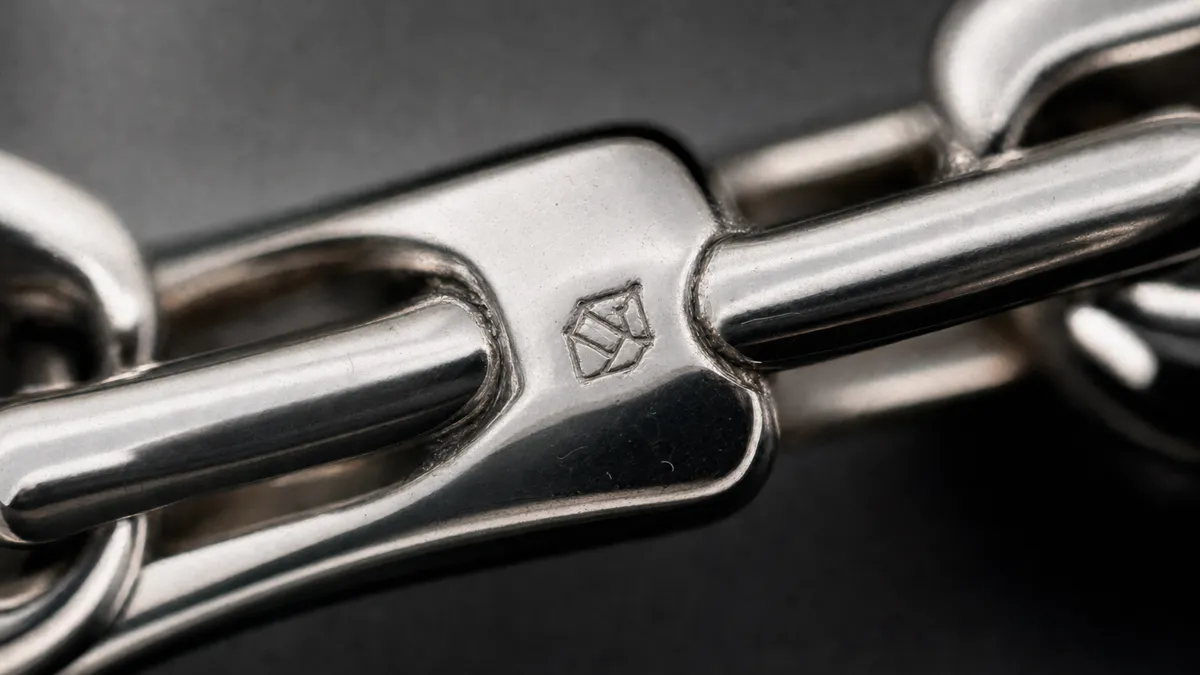 Replica
 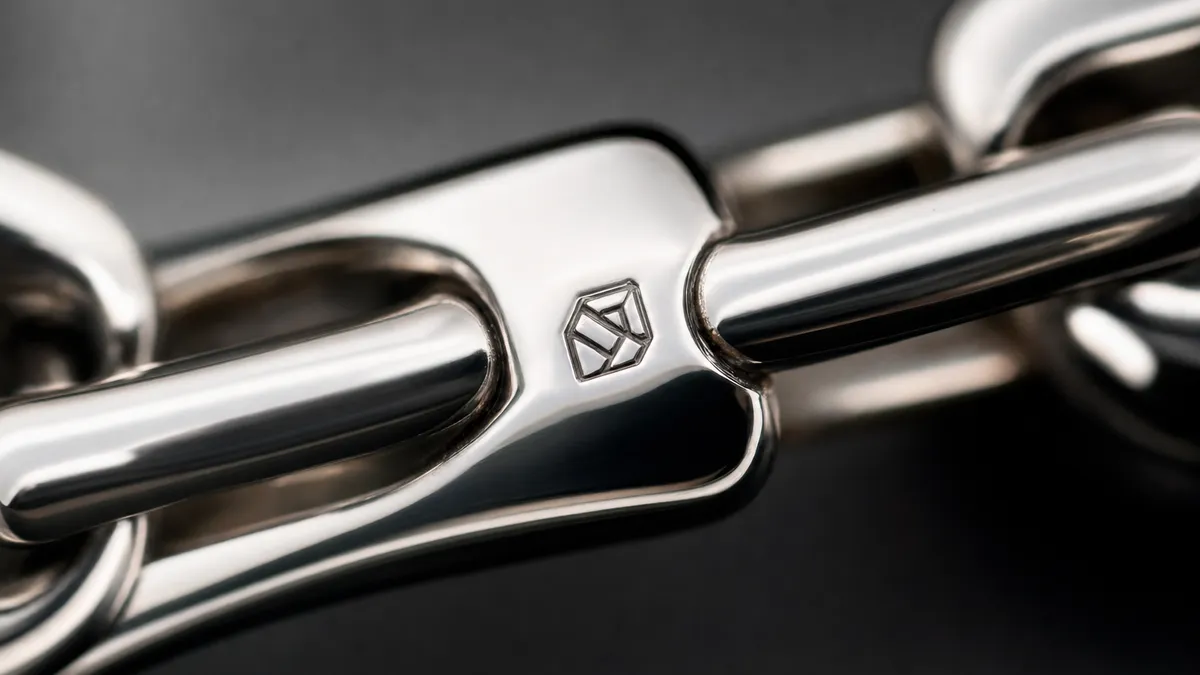 Authentic
 1. Love bracelet screws
Authentic: The screws are functional by design – meant to turn with Cartier’s oval screwdriver (whether they actually do is a hands-on check a photo can’t confirm); the head is the correct shape (not a generic Phillips/flathead), sits flush and aligned, and the slot is clean.
Fake: A head of the wrong shape or made for a standard screwdriver, slots that are off-center, uneven, or drift out of alignment around the band, or visible glue residue in the slot.
2. “Cartier” engraving and serial number
Authentic: Inside – a crisp “Cartier” wordmark and a serial number in the brand’s font, engraved at an even depth in the placement typical for the model; the letters are neat and consistent. On the earliest Love bracelets (1970s) there may be no serial number at all – its absence alone is not a verdict.
Fake: Crooked or “bold” lettering, uneven depth, engraving in the wrong spot, or missing. Even a correct-looking serial is no guarantee – serials get copied.
3. Gold mark and assay marks
Authentic: The 18k mark – “750” and/or “18K” (both are legitimate, and US-market pieces more often carry “18K”) – plus assay and maker’s hallmarks: tiny but crisp, with clean outlines and correctly shaped symbols. On the earliest Love bracelets (1970s) hallmarks and serials may be absent entirely – weigh that with the metal, weight, screws, and finish rather than as a standalone verdict.
Fake: A smudged or “floating” hallmark, a wrong-shaped symbol, a crooked position, a stamp punched in too crudely, or no gold mark on a piece whose production year should carry one.
4. Weight and metal density
Authentic: Noticeable heft – solid 18k gold is dense and settles into the hand with a distinctive weight.
Fake: Suspiciously light (hollow or a plated base metal), with a metal that feels “empty” and cheap.
5. Finish and construction
Authentic: Even polish with no streaks (allowing for age and service polishing), and the bracelet halves closing tightly with no visible gap – within whichever system matches the production year: before 2011 there is no hinge and the screws come out completely, from 2011 the screws stay captive, and hinged versions also exist. Joints are clean, with no casting seams or burrs. The metal colour is uniform across the surface and inside the recesses because the piece is solid gold, not plated.
Fake: Casting marks and seams, a visible gap in the hinge or where the halves meet, uneven polish, sharp edges, and thin plating that wears through to reveal a different metal.
6. Model-specific details (Juste un Clou / Trinity)
Authentic: On Juste un Clou the nail head and tip are realistic and well proportioned; on Trinity the three bands sit evenly nested within one another, with no visible tilt or gap between them. The classic Trinity combines rose, yellow, and white gold, but the catalogue also includes ceramic (white gold with black ceramic) and pavé versions, which have no three gold tones. Establish the variant first, then judge how refined the tones are and how even the bands look.
Fake: On Juste un Clou a crude, out-of-proportion head or tip; on Trinity a visible tilt or gap between the bands, with uneven or “painted-looking” metal tones.
Popular Cartier models
Model-by-model checks – what to look at on each:
Where to inspect
The key zones to photograph and check on this type of item – a schematic, not a product photo.
- 1Hallmark and purity
- 2Engraving
- 3Stone and setting
- 4Prongs and finish
- 5Band profile
How to photograph your Cartier for a check
Shoot in daylight, avoid glare, keep focus sharp. You need 5 angles:
- 1 The full piece
- 2 Love bracelet screws close-up
- 3 “Cartier” engraving and serial number
- 4 Gold mark (“750”/“18K”) and assay marks
- 5 Where the halves meet, hinge, and polish
How to read the result
The AI returns a verdict with a confidence score:
- 75–100% – Authentic: high confidence the item is genuine.
- 60–74% – Likely authentic: probably genuine with minor concerns.
- 40–59% – Uncertain: the photos are not conclusive – retake or add angles.
- 25–39% – Likely fake: several red flags.
- 0–24% – Fake: clear signs of a replica.
Check your Cartier right now
Snap photos of your item and get an AI verdict with a confidence score in about a minute.
FAQ
How do I check the screws on a Cartier Love bracelet?
On the real thing the screws are functional by design: they are meant to turn with Cartier’s oval screwdriver, but whether they actually do is a hands-on test, not something a photo shows. From a photo, judge the head shape: correct (not made for a standard Phillips/flathead driver), evenly aligned, and not drifting off-center – a mismatch there is the classic sign of a replica.
The bracelet has a serial number – does that make it authentic?
No. The serial number and the “Cartier” engraving both get faked, so a valid-looking serial proves nothing on its own. Read it together with the rest: the quality of the font, the depth and placement of the engraving, the 750 hallmark, the weight, and how the screws work. We don’t check the number against a private Cartier database – the piece itself is what’s assessed.
What does the “750” hallmark on Cartier jewelry mean?
“750” is the 18k gold standard (750 parts gold per 1,000). An “18K” stamp is equally legitimate – on US-market pieces it is even more common, and both marks can appear together. On a genuine piece the mark is crisp and clean, usually next to assay marks, and smudged or “floating” symbols are a reason to scrutinize every other tell. One special case: the earliest Love bracelets (1970s) may carry no hallmarks or serial at all, so judge their absence alongside the metal, weight, screws, and finish.
The seller has the box and a certificate – is that enough?
No. Boxes, receipts, and certificates get faked more often than the jewelry itself, and they aren’t tied to a specific item. The piece decides it: the screws, engraving, hallmarks, weight, and finish. The packaging is a nice extra, not proof.