Guides · Luxury Accessories
How to Tell if Your Bulgari Is Real or Fake (2026)
Bulgari is faked most often in its most recognizable lines – B.Zero1, Serpenti, Tubogas. Replicas almost always fall short on precision: the hallmark comes out smudged, the polish is rougher, and a stone sits crooked in its setting. Here are the key visual tells – without relying on serial numbers or any destructive test that can’t be done from a photo.
Real vs fake Bulgari: comparison table
Data current as of July 2026. Replicas evolve, so judge by the combination of signs – never a single one.
| Sign | Authentic | Fake |
|---|---|---|
| Hallmark | The “BVLGARI” hallmark and, where applicable, a metal purity mark are struck crisply, deeply, and evenly, in the spot typical for the model. Which hallmarks appear and exactly where depends on the market and year of production – there is no single “correct” template that applies to every piece. | A hallmark that’s smudged, undersized, crooked, or struck with visible burrs; lettering of uneven height or the wrong font. |
| Polish and facets | The metal surface and edges of the piece are polished evenly, with smooth transitions, no tool marks, waviness, or matte patches where a mirror finish is expected. | Uneven polish with visible streaks, abrasive scratches, rough or uneven facets, and inconsistent shine across matching parts. |
| Link symmetry | On chains and bracelets, links are a consistent size and shape, evenly spaced, with no misalignment and no obvious solder seams. | Links that vary in size or shape, uneven spacing, a chain that doesn’t run straight, and rough blobs of solder at the joints. |
| Solder quality | Joints between parts (links, mounts, clasp) are soldered cleanly, with a neat, barely visible seam and no porosity or excess metal. | A thick, rough, or porous solder seam, visible metal overflow beyond the joint, and marks of after-the-fact filing. |
| Stone setting | Any inlay or stone sits flush and level in its setting with no visible gap between the stone and the metal; prongs or the bezel edge are neat and symmetrical. | A stone that sits crooked, proud, or sunken, a visible gap or traces of glue, and prongs that are bent or unevenly placed. |
| Logo engraving | A “BVLGARI” engraving on the piece (for example, on a ring’s band or a case) is even in depth and letter spacing, with letters of consistent size. | Engraving of uneven depth, letters that vary in size or height, and inconsistent spacing between characters. |
The difference is in the details – drag the slider
Typical differences in workmanship: stitching consistency, edge finishing, detail quality. Left – factory quality, right – common replica flaws.
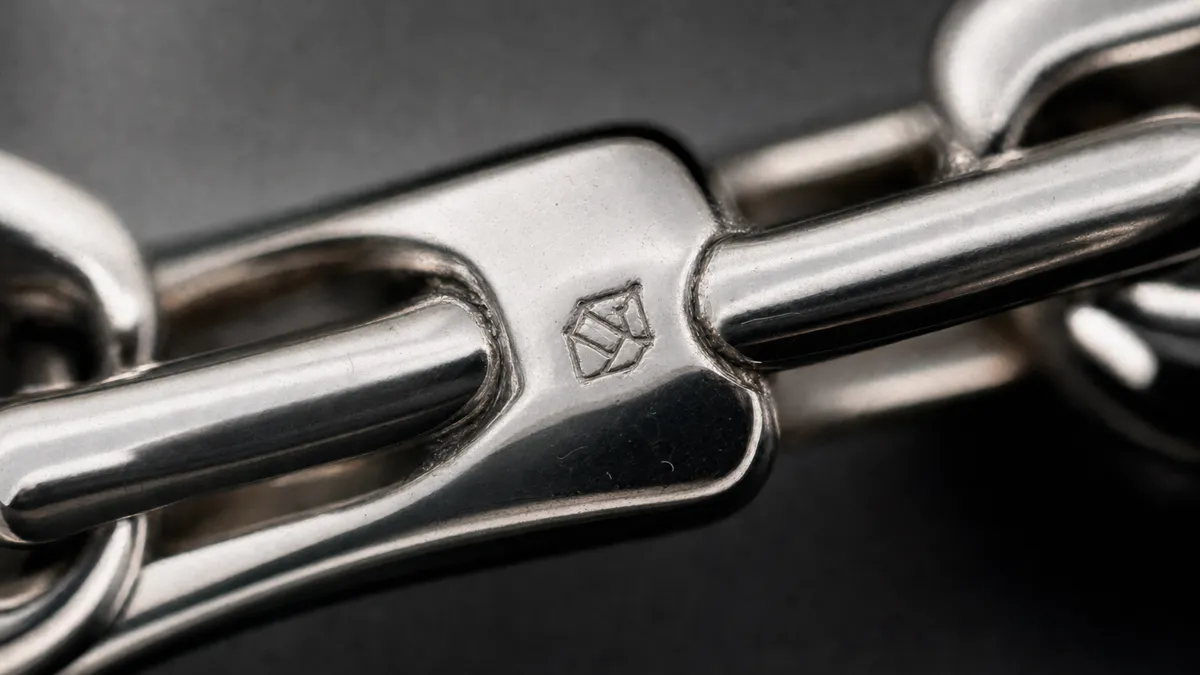 Replica
 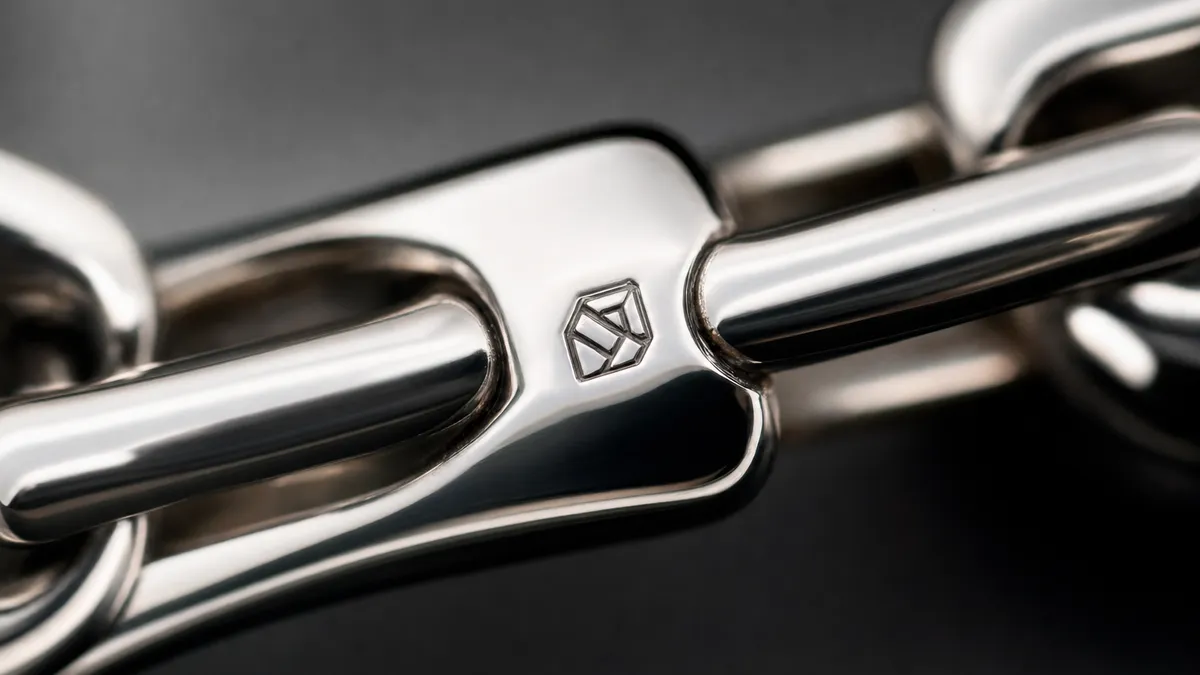 Authentic
 1. Hallmark
Authentic: The “BVLGARI” hallmark and, where applicable, a metal purity mark are struck crisply, deeply, and evenly, in the spot typical for the model. Which hallmarks appear and exactly where depends on the market and year of production – there is no single “correct” template that applies to every piece.
Fake: A hallmark that’s smudged, undersized, crooked, or struck with visible burrs; lettering of uneven height or the wrong font.
2. Polish and facets
Authentic: The metal surface and edges of the piece are polished evenly, with smooth transitions, no tool marks, waviness, or matte patches where a mirror finish is expected.
Fake: Uneven polish with visible streaks, abrasive scratches, rough or uneven facets, and inconsistent shine across matching parts.
3. Link symmetry
Authentic: On chains and bracelets, links are a consistent size and shape, evenly spaced, with no misalignment and no obvious solder seams.
Fake: Links that vary in size or shape, uneven spacing, a chain that doesn’t run straight, and rough blobs of solder at the joints.
4. Solder quality
Authentic: Joints between parts (links, mounts, clasp) are soldered cleanly, with a neat, barely visible seam and no porosity or excess metal.
Fake: A thick, rough, or porous solder seam, visible metal overflow beyond the joint, and marks of after-the-fact filing.
5. Stone setting
Authentic: Any inlay or stone sits flush and level in its setting with no visible gap between the stone and the metal; prongs or the bezel edge are neat and symmetrical.
Fake: A stone that sits crooked, proud, or sunken, a visible gap or traces of glue, and prongs that are bent or unevenly placed.
6. Logo engraving
Authentic: A “BVLGARI” engraving on the piece (for example, on a ring’s band or a case) is even in depth and letter spacing, with letters of consistent size.
Fake: Engraving of uneven depth, letters that vary in size or height, and inconsistent spacing between characters.
Where to inspect
The key zones to photograph and check on this type of item – a schematic, not a product photo.
- 1Hallmark and purity
- 2Engraving
- 3Stone and setting
- 4Prongs and finish
- 5Band profile
How to photograph your Bulgari for a check
Shoot in daylight, avoid glare, keep focus sharp. You need 5 angles:
- 1 The full piece
- 2 Close-up of the hallmark
- 3 Polish and edge detail on the piece
- 4 Chain or bracelet links (if applicable)
- 5 Stone setting in its bezel
How to read the result
The AI returns a verdict with a confidence score:
- 75–100% – Authentic: high confidence the item is genuine.
- 60–74% – Likely authentic: probably genuine with minor concerns.
- 40–59% – Uncertain: the photos are not conclusive – retake or add angles.
- 25–39% – Likely fake: several red flags.
- 0–24% – Fake: clear signs of a replica.
Check your Bulgari right now
Snap photos of your item and get an AI verdict with a confidence score in about a minute.
FAQ
Can I verify a Bulgari piece by its serial number?
There is no public database for checking Bulgari jewelry by serial number, and the number format itself isn’t standardized or published by the brand. Such a number is among the easiest things a replica can reproduce, so the verdict should rest on the overall visual picture: the hallmark, polish, symmetry, and stone setting.
My piece has a different set of hallmarks than another Bulgari item I’ve seen – is that suspicious?
Not necessarily. Which hallmarks appear and where depends on the market the piece was made for and the year the collection was produced. There is no single hallmark template across every Bulgari item, so compare against a reference from the same period and market rather than any other piece you happen to own.
Should I test the metal with acid, a magnet, or listen to how the clasp sounds?
No. Those checks either damage the piece, aren’t reliable to do at home, or simply can’t be judged from a photo at all. The clasp action, the piece’s weight, and its sound are hands-on checks that a photo-based verdict doesn’t take into account. Judge the hallmark, polish, solder, and stone setting from the images instead.
The seller has the box and certificate – is that enough?
No. The box and certificate are faked separately from the piece and aren’t tied to a specific item. Judge the jewelry itself: the crispness of the hallmark, the quality of the polish and solder, link symmetry, and how the stone sits in its setting.