Cartier · Authentication
Clash de Cartier Ring: real vs fake
The Clash de Cartier Ring is a dense rhythm of studs, spikes, and beads, where everything rides on the sharpness and symmetry of fine relief. Replicas blur these elements and botch the finish and hallmarks. Shoot the pattern up close in LegitCheck AI so the app can read the metal, relief, and engraving.
What to check on the Clash de Cartier Ring
Model-specific zones – on top of the brand-level signs.
Crispness of studs and spikes
The motif is made of small studs, spikes, and beads: on the original each element is sharp, symmetrical, and uniform in shape. Melted, rounded, or mismatched pieces are a clear replica tell.
Even rhythm and pattern symmetry
Elements are spaced at a constant pitch, the rows are straight, and the pattern reads rhythmically around the whole circumference. Broken spacing, crooked rows, and “floating” geometry are typical of fakes.
Even surface finish
The polish is uniform and the recesses between elements are clean, with no casting marks or leftover roughness. Patchy shine and grime trapped in the relief are not typical of the original.
Engraving and gold mark
The inner band carries “Cartier”, a serial number, and the 18k mark: “750” and/or “18K” (both are legitimate, and US-market pieces more often carry “18K”), alongside assay and maker’s hallmarks. The engraving is deep and even; shallow engraving or a completely missing gold mark puts the metal in doubt.
Solid-gold weight
A dense relief motif in 18k gold feels heavy and solid – weight is a hands-on check, not a photo one. A suspiciously light ring points to the wrong alloy or a hollow casting.
Where to inspect
The key zones to photograph and check on this type of item – a schematic, not a product photo.
- 1Hallmark and purity
- 2Engraving
- 3Stone and setting
- 4Prongs and finish
- 5Band profile
The difference is in the details – drag the slider
Typical differences in workmanship: stitching consistency, edge finishing, detail quality. Left – factory quality, right – common replica flaws.
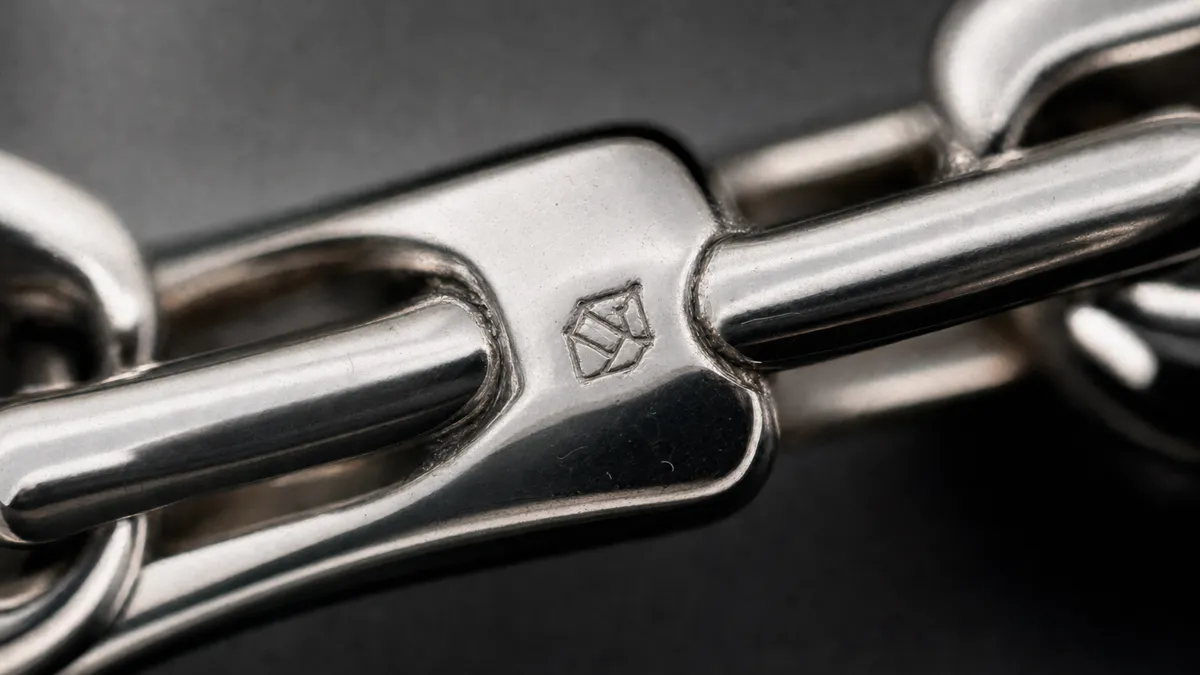 Replica
 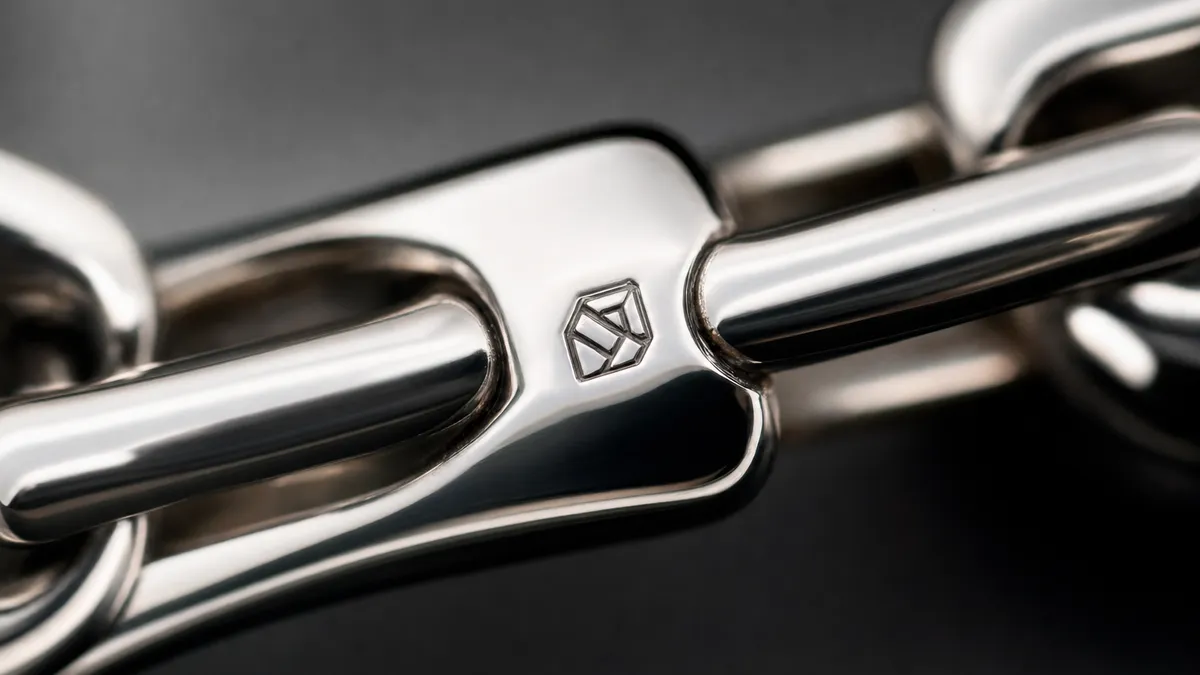 Authentic
 Photo angles for the check
- 1 Overall view
- 2 Logo / tag
- 3 Details & stitching
- 4 Material
Check your Clash de Cartier Ring right now
Snap photos of your item and get an AI verdict with a confidence score in about a minute.
FAQ
What should I look at in the Clash de Cartier pattern?
The sharpness and symmetry of the fine elements: studs, spikes, and beads should be crisp, uniform, and spaced at an even pitch. A melted or uneven relief gives away a replica.
Where are the hallmarks located?
On the inner side of the band: “Cartier”, a serial number, and the gold mark (“750” and/or “18K”). There is no public Cartier serial database, so a number cannot be “decoded” – judge the quality and depth of the engraving instead.
More Cartier models
Other luxury accessories brands
Check another brand in this category: