Cartier · Authentication
Love Bracelet: real vs fake
The Love Bracelet is the Cartier icon with functional screws, tightened onto the wrist with the brand’s oval screwdriver. Its screw motif, solid-gold heft, and inner engraving expose a replica faster than anything else. Photograph it from every angle in LegitCheck AI – the app reads the metal, screws, and hallmarks from your shots.
What to check on the Love Bracelet
Model-specific zones – on top of the brand-level signs.
Functional flathead screws
On an authentic bracelet the screws are functional – by design they are meant to turn with Cartier’s oval screwdriver (whether they actually do is a hands-on check a photo can’t confirm, and not being able to run it doesn’t lower the verdict). The heads are flat, with a crisp correctly-shaped slot, and align evenly around the motif. Slots that look filled in, decorative-looking heads, or wrong-shaped screws are a blatant replica tell.
Cartier engraving and serial inside
The inner face of the band carries the “Cartier” signature and an individual serial number. The font is deep, even, and uniform in height, with no wobble. Thin, shallow, or uneven engraving with varying character depth is typical of fakes. On the earliest Love bracelets (1970s) there may be no serial number at all – weigh that together with the other tells rather than as a verdict on its own.
750 hallmark and gold marks
Look for the 18k mark: “750” and/or “18K” (both are legitimate, and US-market pieces more often carry “18K”), alongside assay and maker’s hallmarks struck cleanly and legibly. On the earliest Love bracelets (1970s) hallmarks and serial numbers may be absent entirely, so judge their absence together with the metal, weight, screws, and finish quality rather than as a standalone verdict. Blurry or crooked hallmarks cast doubt on the metal.
Solid-gold weight and density
The Love Bracelet is noticeably heavy: solid gold gives a distinctive dense heft in the hand. A suspiciously light, hollow, or “tinny” bracelet almost always points to the wrong alloy or a hollow counterfeit. Weight is a hands-on check, not something a photo can show.
Construction by production year
Before 2011 the bracelet is two halves with two screws that come out completely – there is no hinge. From 2011 the screws stay captive in the band (a U-shaped retainer inside), and hinged versions also exist. Check how tightly the halves close within whichever system matches the production year: visible gaps, uneven meeting of the halves, or a skewed seam signals crude assembly.
Edge and surface finish
The band edges are even, the polish is uniform, and the transition between polished and matte zones is clean – allowing for age and service polishing, since a worn bracelet will show micro-scratches and slightly softened edges. Surface ripples, casting marks near the edges, and patchy shine show up on replicas.
Where to inspect
The key zones to photograph and check on this type of item – a schematic, not a product photo.
- 1Hallmark and purity
- 2Engraving
- 3Stone and setting
- 4Prongs and finish
- 5Band profile
The difference is in the details – drag the slider
Typical differences in workmanship: stitching consistency, edge finishing, detail quality. Left – factory quality, right – common replica flaws.
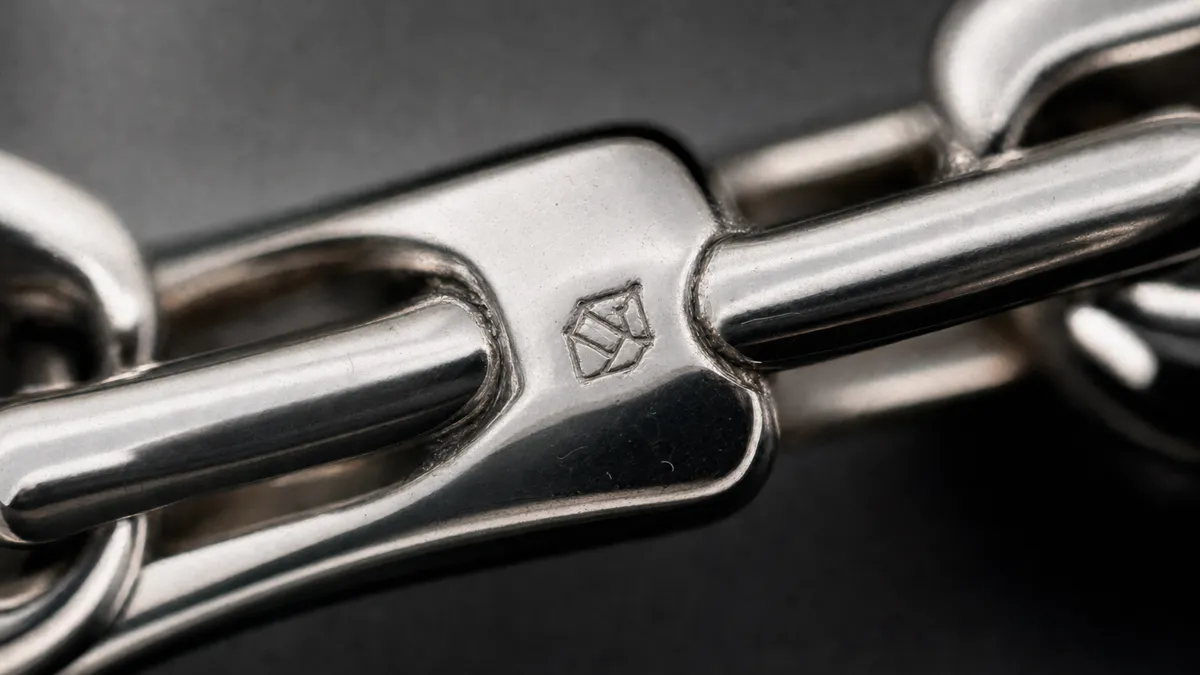 Replica
 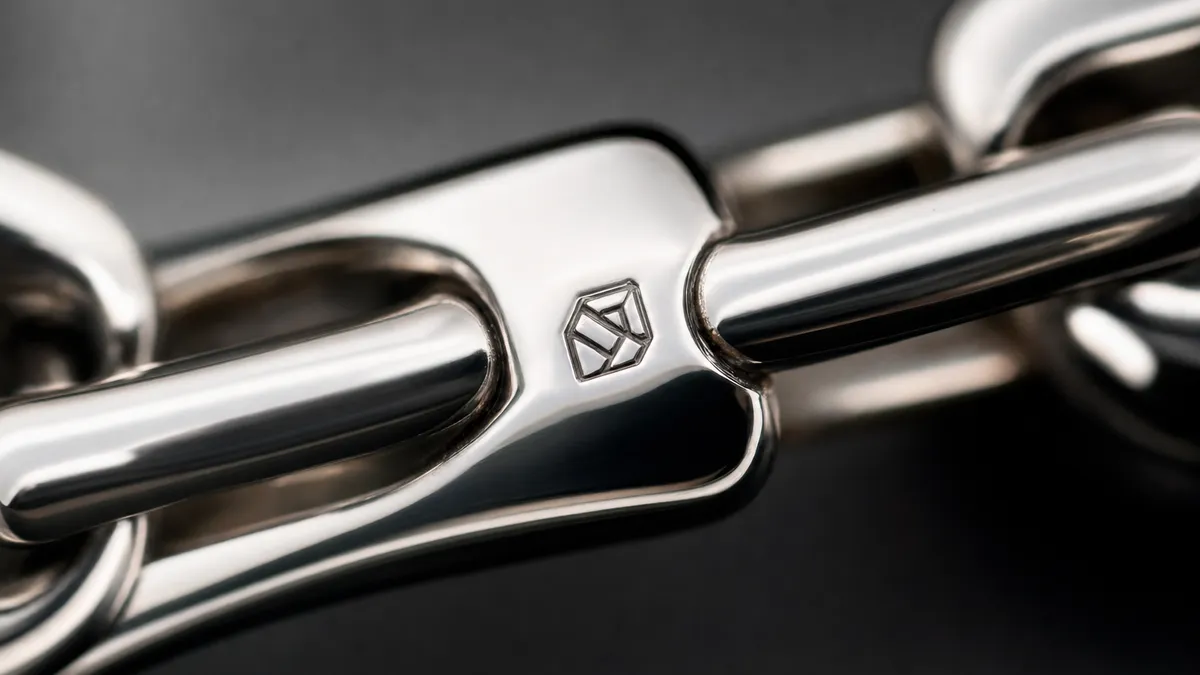 Authentic
 Photo angles for the check
- 1 Overall view
- 2 Logo / tag
- 3 Details & stitching
- 4 Material
Check your Love Bracelet right now
Snap photos of your item and get an AI verdict with a confidence score in about a minute.
FAQ
How do I check that the Love Bracelet screws are real?
On the original the screws are functional by design: they are meant to tighten and loosen with Cartier’s oval screwdriver, but whether they actually do is a hands-on test, not something a photo shows. From a photo, judge the head shape: flat, with a clean, correctly shaped slot. Visible glue residue in the slot or wrong-shaped heads are a red flag.
Where are the engraving and serial number located?
The “Cartier” signature, the serial number, and the gold mark (“750” and/or “18K”) sit on the inner face of the band. There is no public Cartier serial database, so a number cannot be “decoded” – judge the quality and depth of the engraving instead. Note that the earliest Love bracelets (1970s) may carry no serial or hallmarks at all.
Do the box and certificate prove authenticity?
No. The box, screwdriver, and certificate are easily copied and prove nothing on their own. Rely on the metal, weight, screws, engraving, and hallmarks of the bracelet itself.
More Cartier models
Other luxury accessories brands
Check another brand in this category: