Nike · Authentication
Nike Dunk Low: real vs fake
The black-and-white Panda turned the Dunk Low into a mass phenomenon: huge print runs, constant restocks – and a parallel stream of replicas sold as “a regular store pair.” Born in 1985 as a college basketball shoe, the Dunk is checked through Swoosh proportions, tongue thickness and the fit of the silhouette.
What to check on the Nike Dunk Low
Model-specific zones – on top of the brand-level signs.
Swoosh proportions
The authentic Swoosh tapers smoothly into a long, sharp tail with an even curve. On fakes the tail is often too thick or too short, and the bottom arc sags. Compare both shoes – the Swooshes should mirror each other exactly.
Tongue thickness and padding
A Dunk Low tongue is relatively thin and flat with moderate padding. Replicas tend toward an overly puffy tongue or a completely flat one; on the real pair the nylon logo tag is sewn dead center.
Toe box shape and height
The genuine Dunk toe sits low and slopes gently, keeping the silhouette close to the ground. An upturned or bloated toe is a typical mistake of factories copying the last.
NIKE heel embroidery
The “NIKE” heel embroidery is dense, with letters of equal height, even spacing and no loose threads. Crooked letters and sparse stitching are a common fake tell.
Panel layering and stitching
Dunk leather panels overlap in a strict order, with two straight parallel stitch rows at a consistent stitch length. Irregular stitch length and wavy rows expose a replica.
Where to inspect
The key zones to photograph and check on this type of item – a schematic, not a product photo.
- 1Logo shape and placement
- 2Toe box and upper shape
- 3Heel counter and tab
- 4Midsole and stitching
- 5Tongue and size tag
The difference is in the details – drag the slider
Typical differences in workmanship: stitching consistency, edge finishing, detail quality. Left – factory quality, right – common replica flaws.
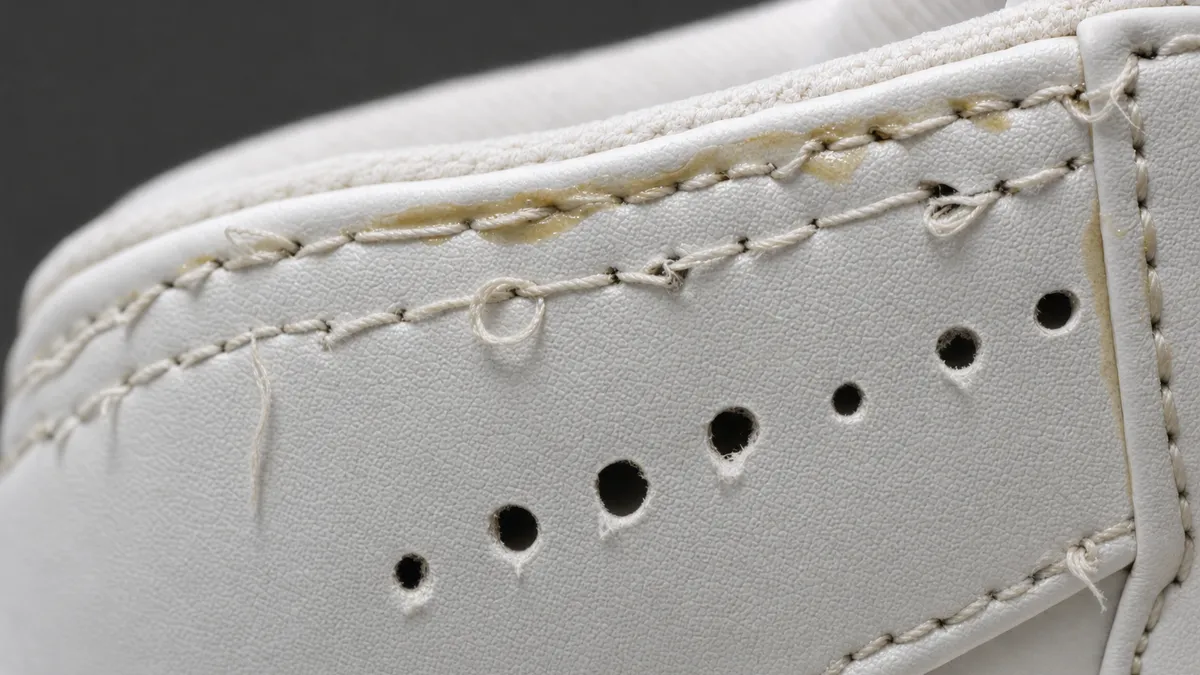 Replica
 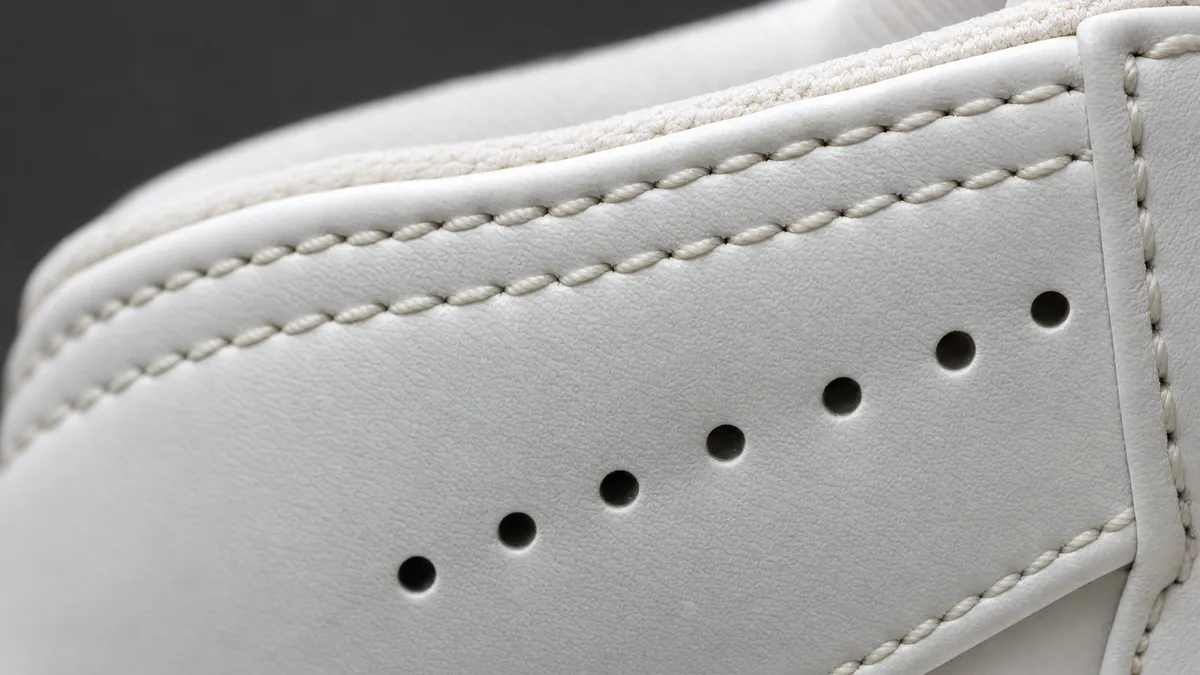 Authentic
 Photo angles for the check
- 1 Overall view
- 2 Logo
- 3 Interior tag
- 4 Outsole
- 5 Box label
Check your Nike Dunk Low right now
Snap photos of your item and get an AI verdict with a confidence score in about a minute.
FAQ
Are Panda Dunks faked more than other colorways?
Yes – the black-and-white Panda is one of the highest-volume and most-copied Dunk Low colorways. The checks stay the same: Swoosh proportions, tongue, heel embroidery. For mass colorways verification matters even more.
How does a Dunk Low differ from an SB Dunk when authenticating?
An SB Dunk has a noticeably thicker, densely padded tongue and a removable Zoom Air insole, while a regular Dunk Low has a thin tongue. If a pair sold as a regular Dunk shows a puffy tongue with no SB branding, treat it as a warning sign. Keep in mind the insole is easy to swap or lose, so its absence on a used pair means nothing – judge by the tongue and the branding.
Can I spot a fake by the Swoosh alone?
One sign is never a verdict, but the Dunk Swoosh is very telling: factories struggle to reproduce the tail taper and curve precisely. It is safer to photograph both sides, the tongue and the heel – the combination of signals gives an accurate result.
More Nike models
Other sneakers brands
Check another brand in this category: