Nike · Authentication
Cortez: real vs fake
The 1972 Cortez was Nike’s first running shoe and remains one of the brand’s simplest constructions, which is why replicas look convincing at first glance. The difference hides in the foam heel wedge, the herringbone tread and the Swoosh edge stitching.
What to check on the Cortez
Model-specific zones – on top of the brand-level signs.
Foam heel wedge
The signature Cortez foam wedge lifts the heel: on the original the wedge has a smooth, precisely tuned profile and identical height on both shoes. A wedge that is too flat or humped points to a wrong last.
Herringbone tread
The herringbone outsole on an authentic pair is molded deep and even, with the rows running unbroken along the full length. A shallow, smeared or misaligned pattern exposes a replica.
Swoosh with contrast stitching
The Cortez Swoosh is sewn with a stitch line at a constant offset from the edge along the whole contour, ending in a sharp tail tip. Check the Swoosh angle symmetry across the pair – fakes often differ shoe to shoe.
Toe cap stitching
The toe overlay on the original is attached with two straight parallel stitch rows at a consistent stitch length. Wavy stitching and puckered toe material are a frequent fake defect.
Silhouette proportions
The Cortez is low and elongated: the original toe lifts slightly and the topline flows smoothly. A shortened last and a boat-like upturned nose are a typical replica-factory mistake.
Where to inspect
The key zones to photograph and check on this type of item – a schematic, not a product photo.
- 1Logo shape and placement
- 2Toe box and upper shape
- 3Heel counter and tab
- 4Midsole and stitching
- 5Tongue and size tag
The difference is in the details – drag the slider
Typical differences in workmanship: stitching consistency, edge finishing, detail quality. Left – factory quality, right – common replica flaws.
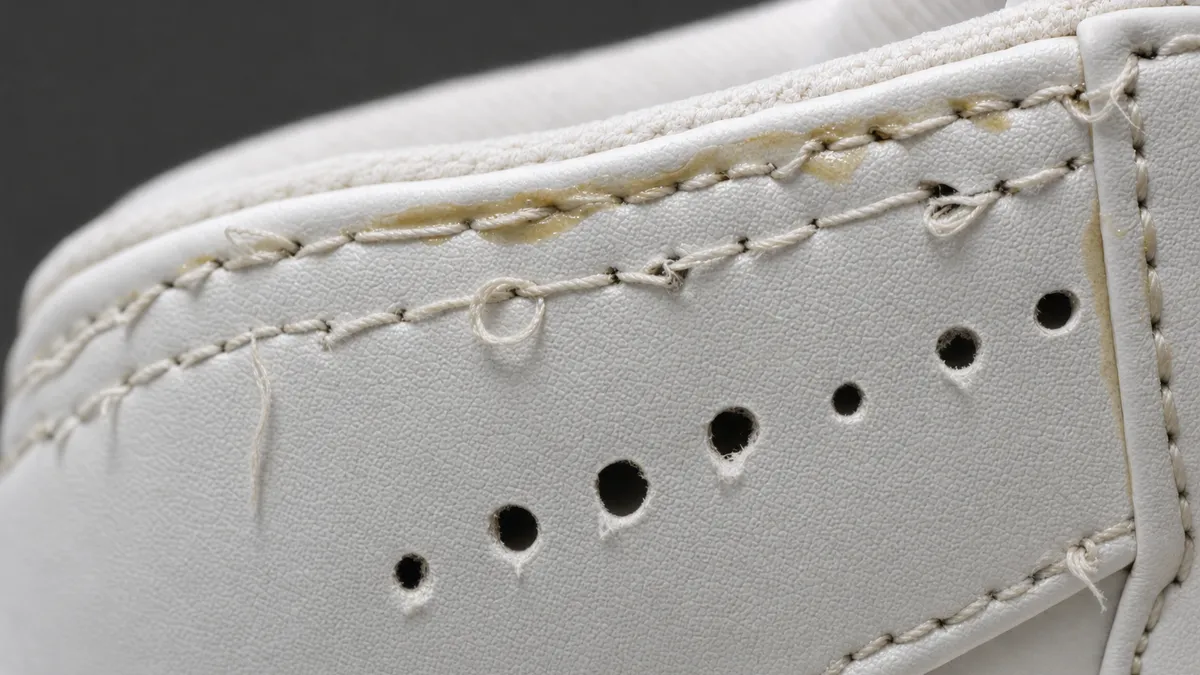 Replica
 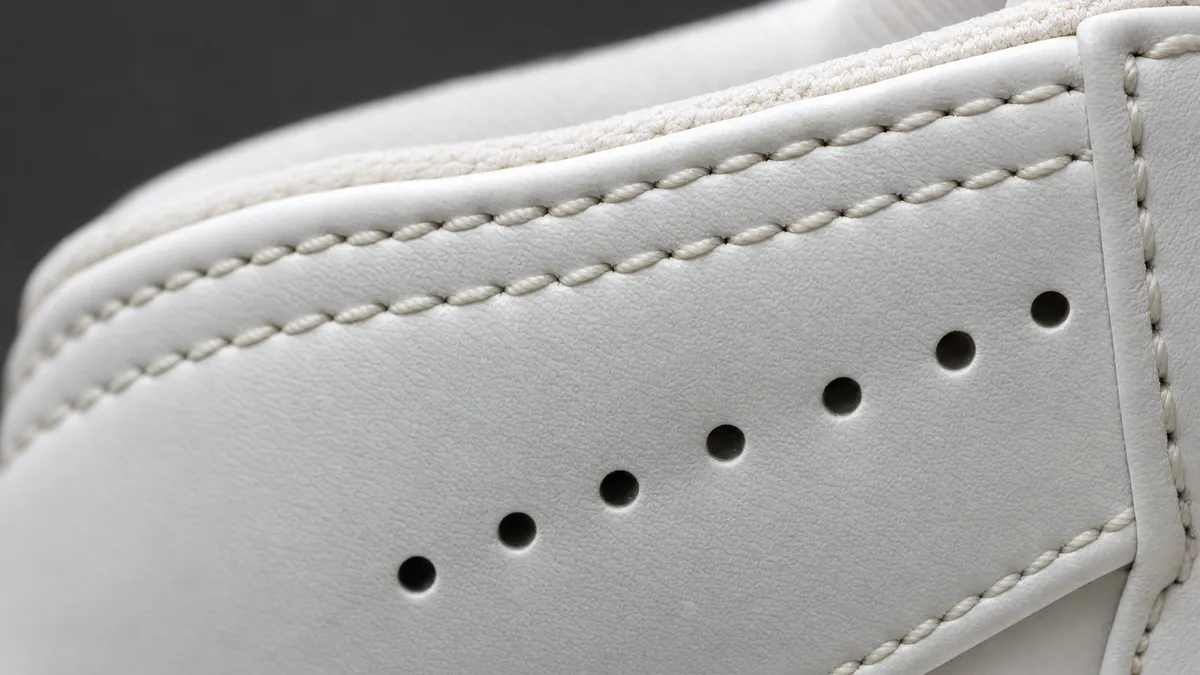 Authentic
 Photo angles for the check
- 1 Overall view
- 2 Logo
- 3 Interior tag
- 4 Outsole
- 5 Box label
Check your Cortez right now
Snap photos of your item and get an AI verdict with a confidence score in about a minute.
FAQ
Are leather and nylon Cortez checked the same way?
The core zones are identical: heel wedge, herringbone tread, Swoosh and proportions. The difference is the upper material: on the leather version inspect the density and grain of the leather; on the nylon version, the evenness of the weave and the quality of the suede overlays.
Why do fake Cortez often look humped at the heel?
Replica factories rarely copy the last and the foam wedge profile precisely – they either simplify it or make it taller for visual effect. Comparing the heel profile from the side against reference photos is a quick way to filter such pairs out.
More Nike models
Other sneakers brands
Check another brand in this category: