Nike · Authentication
Air Max 90: real vs fake
The Air Max 90 launched in 1990 as the Air Max III and became an icon thanks to its visible Air window framed in bright TPU. That exact zone – the window, its segments and the plastic frame – is what most often exposes a fake, because precise molding is hard and expensive to copy.
What to check on the Air Max 90
Model-specific zones – on top of the brand-level signs.
Air window segments
The authentic visible Air window is clear, with crisp, even internal dividers of equal thickness. On fakes the window is cloudy or yellowed out of the box, the segments are crooked, or their count does not match the original.
TPU frame around the window
The plastic frame around the Air unit is molded smoothly, with even paint and no bleed onto the clear section. Plastic flash, stepped joints and paint on the window are typical replica defects.
Ribbed midsole segments
The ribs on the midsole around the heel run at an equal pitch and identical depth. On fakes the pitch drifts, and the ribs are either smoothed over or cut too crudely.
Layered toe panels
The AM90 toe is built from several overlapping panels (mudguard, suede/leather, mesh) with a clean boundary between layers. On fakes the panels are thinner, the boundary collapses and the stitching puckers the material.
Nike Air heel logo
The Nike Air branding on the heel keeps exact proportions: the Swoosh is not tilted up and the letters are not stretched. A warped mini-Swoosh on the heel is a quick fake marker.
Where to inspect
The key zones to photograph and check on this type of item – a schematic, not a product photo.
- 1Logo shape and placement
- 2Toe box and upper shape
- 3Heel counter and tab
- 4Midsole and stitching
- 5Tongue and size tag
The difference is in the details – drag the slider
Typical differences in workmanship: stitching consistency, edge finishing, detail quality. Left – factory quality, right – common replica flaws.
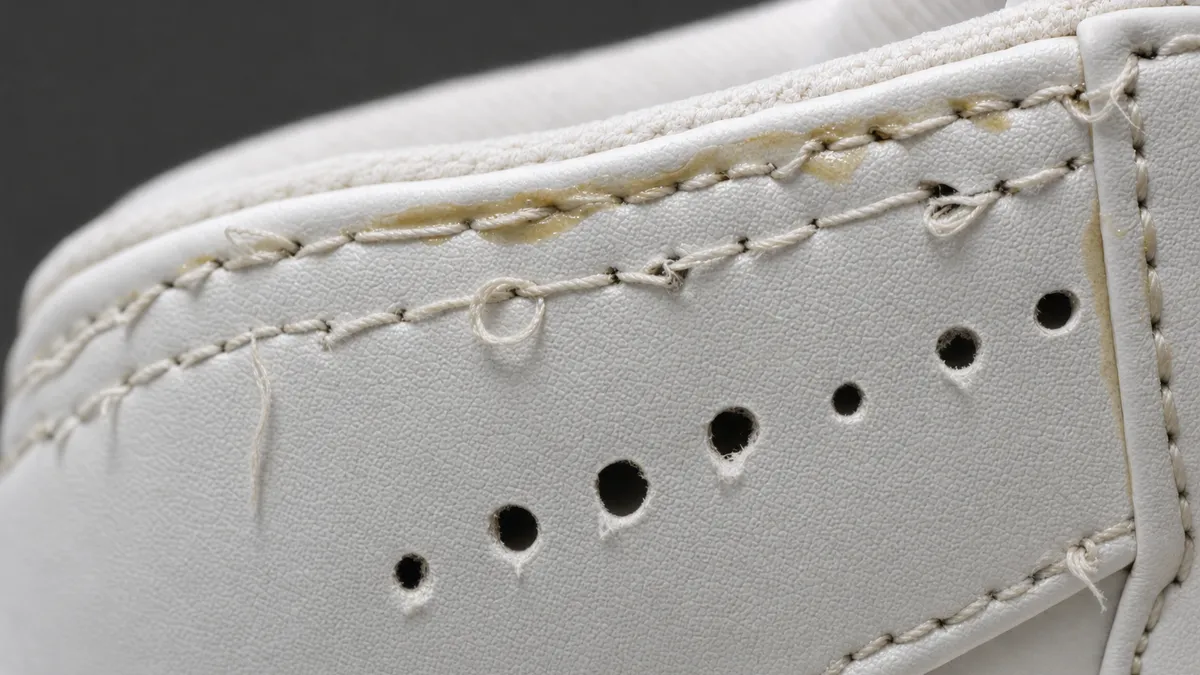 Replica
 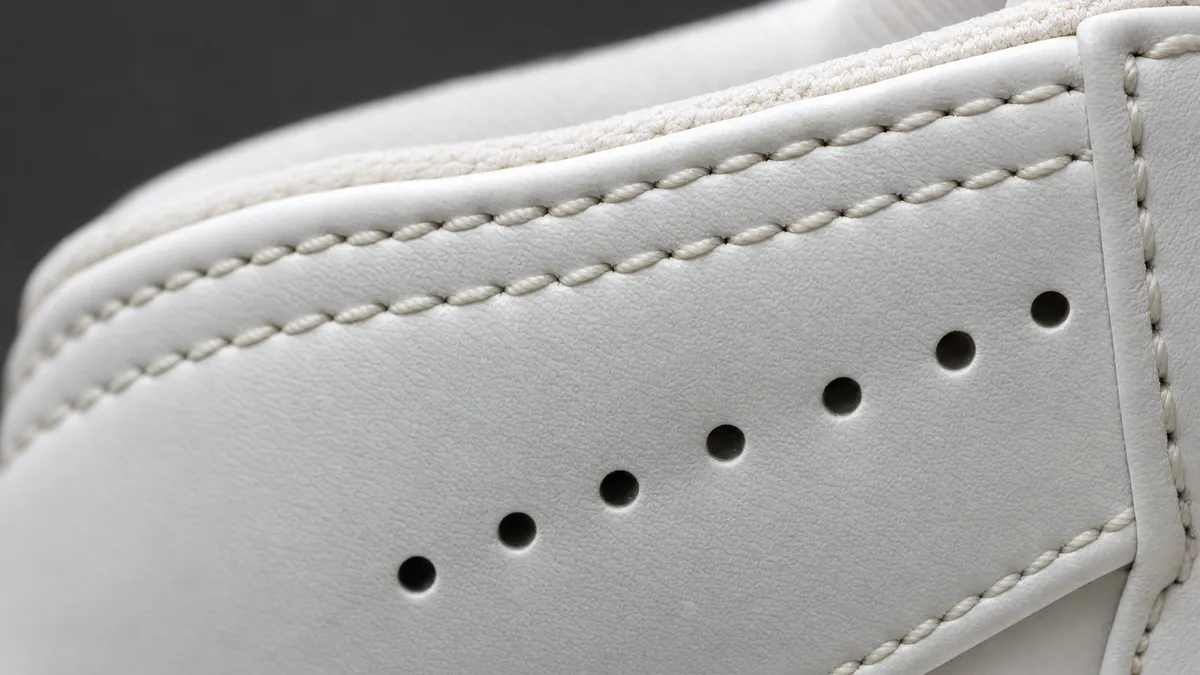 Authentic
 Photo angles for the check
- 1 Overall view
- 2 Logo
- 3 Interior tag
- 4 Outsole
- 5 Box label
Check your Air Max 90 right now
Snap photos of your item and get an AI verdict with a confidence score in about a minute.
FAQ
The Air window on my pair looks slightly cloudy – is it fake?
Not by itself: on worn or older pairs the window can haze or yellow with age. It becomes suspicious when a cloudy window on a brand-new pair combines with crooked segments and an uneven TPU frame – that points to a replica.
What should I photograph first on an Air Max 90?
A close-up of the Air window from the side (segments and frame), the heel with the Nike Air logo, the layered toe panels and the outsole. These four angles give the AI the most model-specific signals.
More Nike models
Other sneakers brands
Check another brand in this category: