Guides · Toys & Figures
How to Tell if LEGO Is Real or Fake (2026)
LEGO is one of the most copied construction toys in the world, and it gets copied in two different ways: outright counterfeits that imitate the LEGO logo and packaging, and legally sold compatible-brick sets from other brands with their own branding – those are not the same thing. The genuine article rests on four things: crisp box printing, clean part molding with no burrs or flash, accurate minifigure printing, and neatly aligned stickers. Country-of-origin markings and plastic shade between batches prove nothing on their own – both vary normally on genuine sets.
Real vs fake LEGO: comparison table
Data current as of July 2026. Replicas evolve, so judge by the combination of signs – never a single one.
| Sign | Authentic | Fake |
|---|---|---|
| Box print quality | Crisp small text with no dot-pattern graininess, saturated color, coating that holds up on the folds. | Pixelated or blurry small text, washed-out color, coating that cracks on the folds. |
| Part molding quality | Clean geometry, even edges, minimal flash at the mold parting lines. | Visible burrs, uncleaned sprue marks, a visibly rough, porous plastic surface. |
| Minifigure printing | Even print layers, crisp color edges on the face and costume details. This check only works on sets with minifigures. Technic sets – the Bugatti Chiron among them – contain none by design, so their absence there says nothing about authenticity. | Smeared print, shifted layers, partially missing coverage. |
| Stickers and alignment | Precisely cut to the outline, sitting flush against the molded detail with no bubbling. | Blurry print, uneven cutting, visible shift off the outline. |
| Part-fit tightness (offline check) | Genuine pieces seat tightly with no play – this is only judged by building the set by hand, and being unable to check it from a photo does not lower the verdict. | This is an offline check only possible by building the set by hand. Fit tightness is not assessed from photos, and its absence does not affect the verdict – judge print, molding and box quality instead. |
| Country of origin and plastic shade | Parts are molded at several factories in different countries, so the country marking varies; plastic shade differs slightly between batches, and white/clear plastic yellows over time from light – all of this is normal. | Not a test: don't treat a specific country, an exact shade, or yellowed plastic as a fake tell. |
The difference is in the details – drag the slider
Typical differences in workmanship: stitching consistency, edge finishing, detail quality. Left – factory quality, right – common replica flaws.
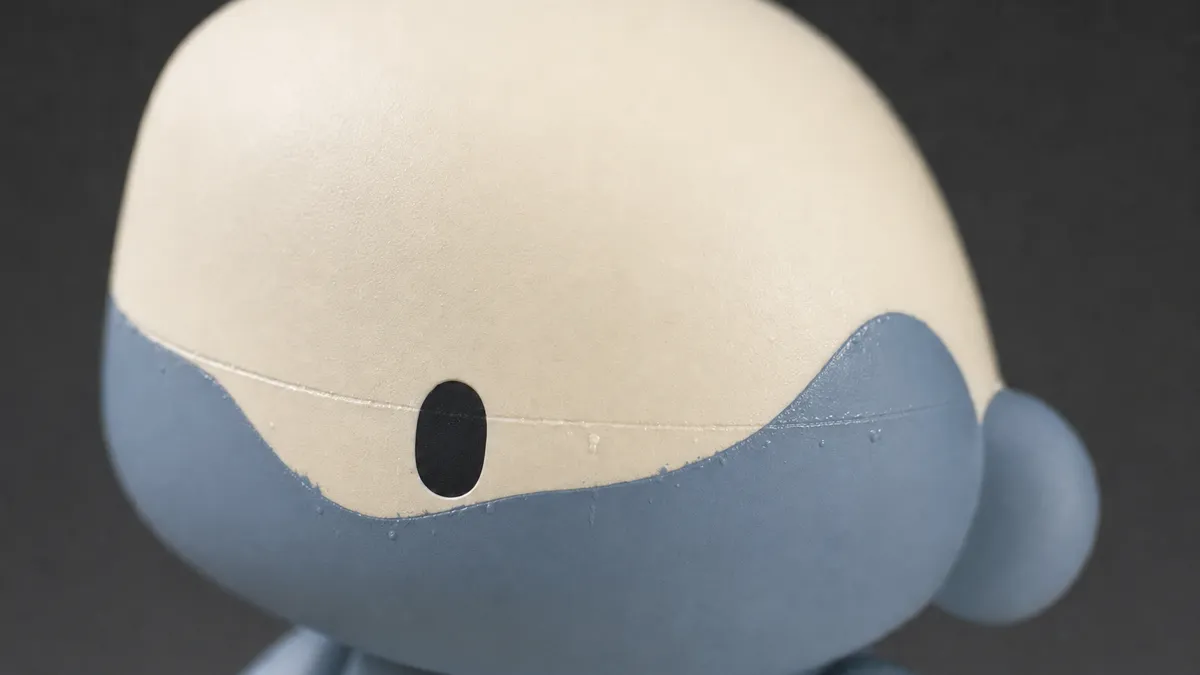 Replica
  Authentic
 1. Box print quality
Authentic: Crisp small text with no dot-pattern graininess, saturated color, coating that holds up on the folds.
Fake: Pixelated or blurry small text, washed-out color, coating that cracks on the folds.
2. Part molding quality
Authentic: Clean geometry, even edges, minimal flash at the mold parting lines.
Fake: Visible burrs, uncleaned sprue marks, a visibly rough, porous plastic surface.
3. Minifigure printing
Authentic: Even print layers, crisp color edges on the face and costume details. This check only works on sets with minifigures. Technic sets – the Bugatti Chiron among them – contain none by design, so their absence there says nothing about authenticity.
Fake: Smeared print, shifted layers, partially missing coverage.
4. Stickers and alignment
Authentic: Precisely cut to the outline, sitting flush against the molded detail with no bubbling.
Fake: Blurry print, uneven cutting, visible shift off the outline.
5. Part-fit tightness (offline check)
Authentic: Genuine pieces seat tightly with no play – this is only judged by building the set by hand, and being unable to check it from a photo does not lower the verdict.
Fake: This is an offline check only possible by building the set by hand. Fit tightness is not assessed from photos, and its absence does not affect the verdict – judge print, molding and box quality instead.
6. Country of origin and plastic shade
Authentic: Parts are molded at several factories in different countries, so the country marking varies; plastic shade differs slightly between batches, and white/clear plastic yellows over time from light – all of this is normal.
Fake: Not a test: don't treat a specific country, an exact shade, or yellowed plastic as a fake tell.
Popular LEGO models
Model-by-model checks – what to look at on each:
Where to inspect
The key zones to photograph and check on this type of item – a schematic, not a product photo.
- 1Box printing
- 2Window and blister
- 3Paint and face
- 4Build and stand
- 5COA and sticker
How to photograph your LEGO for a check
Shoot in daylight, avoid glare, keep focus sharp. You need 5 angles:
- 1 Full box, close-up of the small print
- 2 A single part or a stickered panel
- 3 A minifigure close-up (sets with minifigures)
- 4 The built model
- 5 A parts bag and its number
How to read the result
The AI returns a verdict with a confidence score:
- 75–100% – Authentic: high confidence the item is genuine.
- 60–74% – Likely authentic: probably genuine with minor concerns.
- 40–59% – Uncertain: the photos are not conclusive – retake or add angles.
- 25–39% – Likely fake: several red flags.
- 0–24% – Fake: clear signs of a replica.
Check your LEGO right now
Snap photos of your item and get an AI verdict with a confidence score in about a minute.
FAQ
What's the fastest LEGO tell?
The combination of "box print quality + minifigure printing." The real thing gives crisp small text, saturated color, and even print with no layer shift, while copies give themselves away with pixelated text and smeared face printing. It's the first thing to compare against official release photos. Minifigure printing is only checkable in sets that include minifigures; Technic sets have none.
Is a compatible-brick set from another brand a LEGO fake?
No. There is a legitimate, separate category of compatible-brick construction toys sold honestly under their own branding, not as LEGO. A counterfeit is specifically something that copies the LEGO logo and packaging to pass as genuine – conflating the two is not accurate.
Can I verify authenticity from the set number or barcode?
No, there is no public database to look up a set by number – the number on the box isn't tied to an individual unit, and a barcode is copied literally by replicas. Judge the signals that are actually visible in photos: print, molding, stickers.
Is yellowed plastic or a different grey shade a red flag?
No. White and clear plastic yellows over time from light exposure, and colored plastic shade varies slightly between batches and factories even on genuine LEGO sets. That is age and manufacturing variation, not a fake tell.