LEGO · Authentication
Creator Expert Titanic: real vs fake
The Titanic is one of the longest LEGO sets ever produced, built from many repeating hull sections, so consistent molding and matching black-and-white tone across the whole length stand out clearly. A genuine set holds even section geometry and crisp printing on the portholes and deck details. Upload photos of the box, a hull section and deck details to LegitCheck AI to get the zones checked in about a minute.
What to check on the Creator Expert Titanic
Model-specific zones – on top of the brand-level signs.
Hull section geometry and fit
On the genuine set, adjacent hull sections join tightly with no visible step in the outer plating. Copies can show a gap or a height mismatch at the section joints.
Porthole and deck detail printing
Small printed parts – portholes, plaques, rigging details – have a crisp edge and even black color on the genuine set. Fakes often show smeared or incomplete printing on these pieces.
Box print quality
The genuine box prints sharp, with saturated hull color in the illustration and crisp small text. Fakes lose detail in the artwork and show pixelated text.
Large panel molding quality
On a freshly built genuine set, the long flat hull panels are even, with no molding sink marks on the visible face. A genuine panel can develop a slight bow over time – from heat, sunlight or prolonged storage under load – and that is an age effect, not a fake tell. On copies, sink marks and surface irregularities are usually visible right out of the box.
Black and white tone consistency along the length
A genuine set can show slight tone variation in the black and white plastic between sections molded at different times – that is not a fake tell. Print sharpness and molding quality matter more than an exact visual tone match.
Stand and nameplate
The nameplate on the genuine stand prints evenly with no text misalignment. On copies the nameplate text can be smeared or off-center.
Where to inspect
The key zones to photograph and check on this type of item – a schematic, not a product photo.
- 1Box printing
- 2Window and blister
- 3Paint and face
- 4Build and stand
- 5COA and sticker
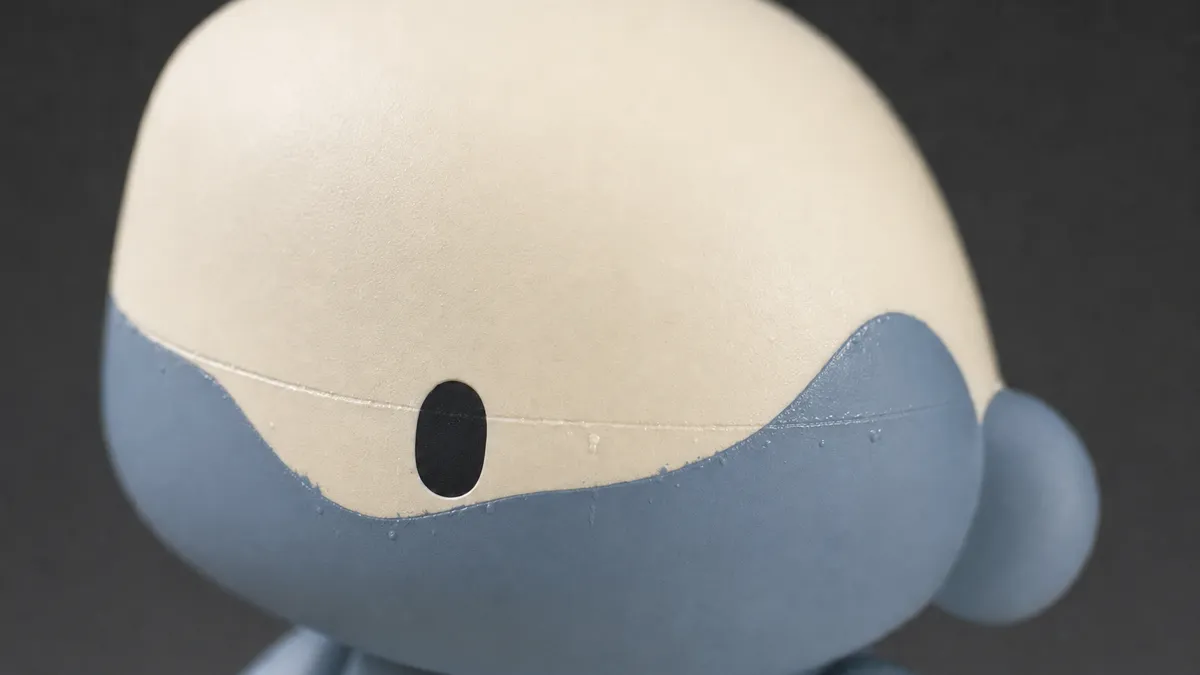
The difference is in the details – drag the slider
Typical differences in workmanship: stitching consistency, edge finishing, detail quality. Left – factory quality, right – common replica flaws.
 Replica
  Authentic
 Photo angles for the check
- 1 Overall view
- 2 Logo / tag
- 3 Details & stitching
- 4 Material
Check your Creator Expert Titanic right now
Snap photos of your item and get an AI verdict with a confidence score in about a minute.
FAQ
Do differently toned black hull sections mean it's fake?
Not necessarily. Plastic molded at different times can vary slightly in tone even on a genuine set. Joint evenness and molding quality are more telling than an exact tone match.
Can I check the set if it's only partially built?
Yes. Photograph a completed hull section close up, the printed deck details, and the box – that is enough for a photo-based check.
Which matters more, the box or the parts themselves?
Both matter and work best together. Box print quality is a fast first signal, while part molding and printing quality give the more reliable verdict.
More LEGO models
Other toys & figures brands
Check another brand in this category: