Guides · Streetwear
How to Tell if Your Rhude Is Real or Fake (2026)
Rhude is Rhuigi Villaseñor’s Los Angeles brand that grew from the cult Bandana Tee into full-blown luxury streetwear — and on the resale market it gets copied at scale: bandana and racing-graphic tees, Traxedo track pants, and track shorts with contrast piping. The good news: replicas almost always fall apart on the RHUDE logo typography, the print cleanliness, and the fabric quality. This guide covers the key tells, the right angles to shoot, and how to check a piece from photos in about a minute.
Real vs fake Rhude: comparison table
Data current as of July 2026. Replicas evolve, so judge by the combination of signs — never a single one.
| Sign | Authentic | Fake |
|---|---|---|
| RHUDE logo typography | The RHUDE wordmark uses the brand font: calibrated letter weight, exact kerning, and an even print or embroidery application. | Letters run wider or thinner than reference, spacing wanders, the print smears or the embroidery is loose — the letterforms don’t match. |
| Bandana print and graphics | The paisley pattern is symmetrical and crisp, fine text in the racing graphics is legible, and color layers register exactly. | The pattern is shifted or drifting, fine elements blur together, print layers are misregistered, and outlines are muddy. |
| Fabric and weight | Heavyweight, dense cotton on the tees and smooth, expensive material with the right drape on the track pieces — a luxury streetwear tier. | Thin, loose-knit fabric, the cheap plastic shine of low-grade synthetics, and a piece that feels lighter and poorer than reference. |
| Piping and tuxedo stripes | The contrast piping on the shorts and the satin Traxedo stripes run uniform in width along the full length, sewn straight with clean corners and joins. | Tape of variable width, waves and twists along the edge, rough joins at the corners, and a stripe that wanders off the seam. |
| Woven label and care tag | A woven neck label with crisp logo weaving is attached straight; the care tag printing is clean and matches documented references for the release. | Loose weaving, drifting letters, a crookedly sewn label, smeared care-tag printing, or a format that doesn’t match reference. |
| Stitching and construction | Straight, dense seams with no skips, symmetrical details, tidy edge finishing, and quality hardware. | Crooked or sparse stitching, loose threads, asymmetrical pockets and panels, and coarse hardware that snags. |
The difference is in the details — drag the slider
Typical differences in workmanship: stitching consistency, edge finishing, detail quality. Left — factory quality, right — common replica flaws.
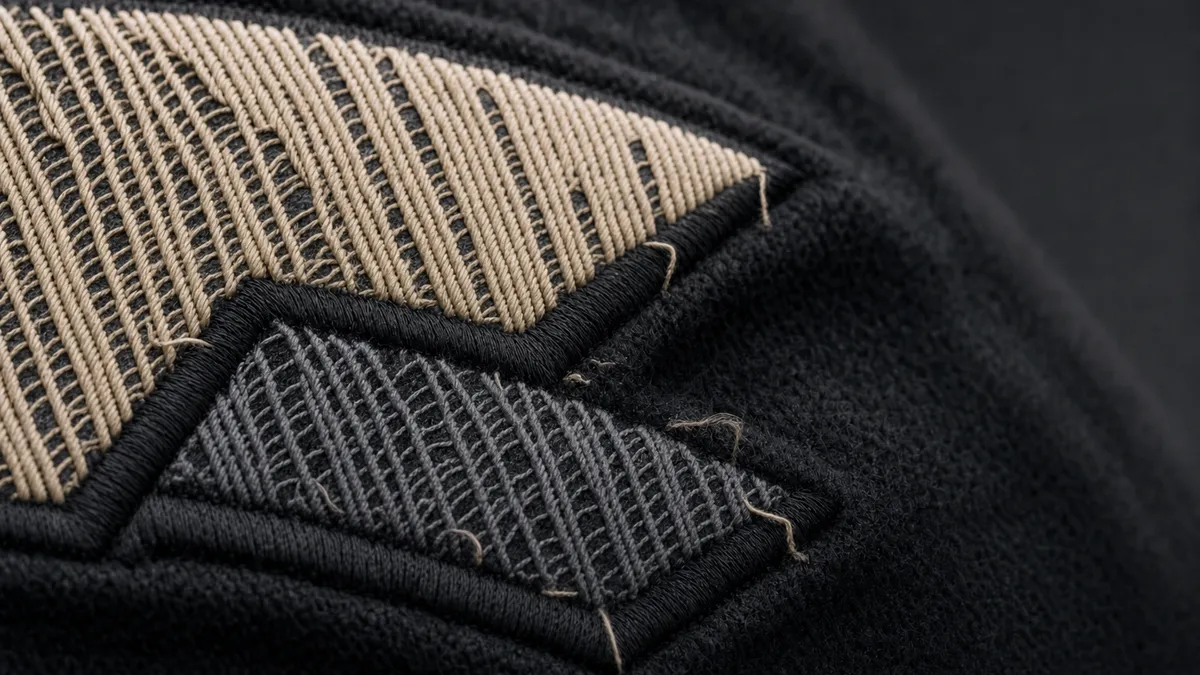 Replica
 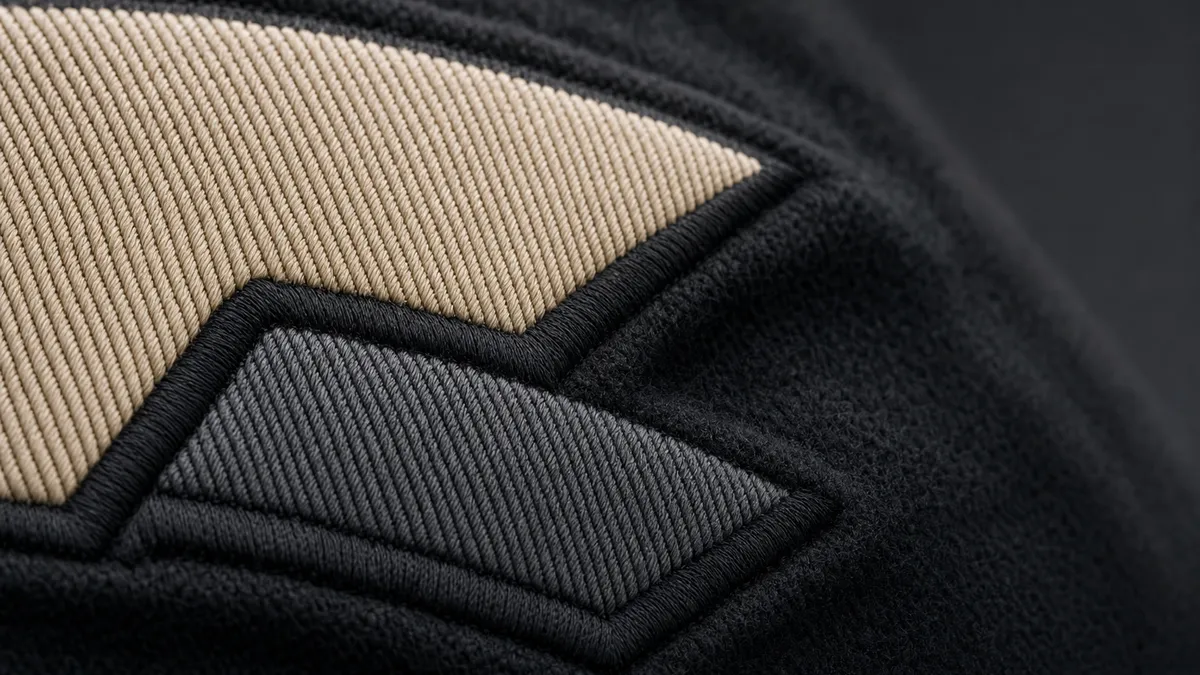 Authentic
 1. RHUDE logo typography
Authentic: The RHUDE wordmark uses the brand font: calibrated letter weight, exact kerning, and an even print or embroidery application.
Fake: Letters run wider or thinner than reference, spacing wanders, the print smears or the embroidery is loose — the letterforms don’t match.
2. Bandana print and graphics
Authentic: The paisley pattern is symmetrical and crisp, fine text in the racing graphics is legible, and color layers register exactly.
Fake: The pattern is shifted or drifting, fine elements blur together, print layers are misregistered, and outlines are muddy.
3. Fabric and weight
Authentic: Heavyweight, dense cotton on the tees and smooth, expensive material with the right drape on the track pieces — a luxury streetwear tier.
Fake: Thin, loose-knit fabric, the cheap plastic shine of low-grade synthetics, and a piece that feels lighter and poorer than reference.
4. Piping and tuxedo stripes
Authentic: The contrast piping on the shorts and the satin Traxedo stripes run uniform in width along the full length, sewn straight with clean corners and joins.
Fake: Tape of variable width, waves and twists along the edge, rough joins at the corners, and a stripe that wanders off the seam.
5. Woven label and care tag
Authentic: A woven neck label with crisp logo weaving is attached straight; the care tag printing is clean and matches documented references for the release.
Fake: Loose weaving, drifting letters, a crookedly sewn label, smeared care-tag printing, or a format that doesn’t match reference.
6. Stitching and construction
Authentic: Straight, dense seams with no skips, symmetrical details, tidy edge finishing, and quality hardware.
Fake: Crooked or sparse stitching, loose threads, asymmetrical pockets and panels, and coarse hardware that snags.
Popular Rhude models
Model-by-model checks — what to look at on each:
Where to inspect
The key zones to photograph and check on this type of item — a schematic, not a product photo.
- 1Neck label and tags
- 2Print and its printing
- 3Stitching and hem
- 4Shoulder and sleeve seam
- 5Fabric and weight
How to photograph your Rhude for a check
Shoot in daylight, avoid glare, keep focus sharp. You need 5 angles:
- 1 Full item (front and back)
- 2 RHUDE logo close-up
- 3 Print or graphic close up and in focus
- 4 Woven neck label and care tag
- 5 Piping, stripes and seams
How to read the result
The AI returns a verdict with a confidence score:
- 75–100% — Authentic: high confidence the item is genuine.
- 60–74% — Likely authentic: probably genuine with minor concerns.
- 40–59% — Uncertain: the photos are not conclusive — retake or add angles.
- 25–39% — Likely fake: several red flags.
- 0–24% — Fake: clear signs of a replica.
Check your Rhude right now
Snap photos of your item and get an AI verdict with a confidence score in about a minute.
FAQ
Does Rhude use serial numbers or authenticity codes?
No. Rhude has no serial numbers, QR codes, or chips to verify against. The verdict comes from the whole picture: the logo typography, the print cleanliness, the fabric quality, the tags, and the construction — cross-referenced against documented references for the same release.
Where should authentic Rhude pieces be made?
Don’t memorize a country of origin as a rule: it can vary by piece and release. The right approach is to compare the tag on your specific item against documented references from the same release. On its own, the country on the tag neither proves nor disproves anything.
Can I authenticate Rhude from the tag alone?
No. Tags are the first thing counterfeiters copy, so the verdict comes from the full set of tells: the RHUDE logo typography, the print cleanliness and symmetry, the fabric weight, the piping, and the seam quality. A tag is useful for cross-referencing, but not as the only proof.
How accurate is checking Rhude from photos with AI?
Accuracy depends on the quality and number of photos. LegitCheck AI cross-references the tells across every angle — logo, print, tags, seams — and returns a verdict with a confidence score, honestly flagging “uncertain” when the photos don’t allow a clear call. It’s a fast screen, not a legally binding appraisal.