Guides · Streetwear
How to Tell if Your Comme des Garçons Is Real or Fake (2026)
Comme des Garçons is Rei Kawakubo’s Japanese house, founded in Tokyo in 1969, and its PLAY line — with the embroidered heart designed by artist Filip Pagowski — is the most mass-market and most counterfeited of them all. The good news: replicas almost always fall apart on the heart embroidery — the stitch density and the eye geometry — as well as on the tag set and the fabric quality. This guide covers the key real-vs-fake tells, the right angles to shoot, and how to check a piece from photos in about a minute.
Real vs fake Comme des Garçons: comparison table
Data current as of July 2026. Replicas evolve, so judge by the combination of signs — never a single one.
| Sign | Authentic | Fake |
|---|---|---|
| Heart-with-eyes embroidery | Dense, even stitches with no fabric showing through, a clean heart outline, eyes equal in size and set symmetrically; the fabric around the embroidery isn’t pulled. | Loose embroidery with gaps, a wobbly or shaky outline, eyes of different sizes or off-center; the fabric puckers and pulls around the heart. |
| White PLAY tag with the red heart | A straight-sewn white tag with clean printing and an accurate shade of red; the tag set matches documented references for the release. | Grainy printing, a red that drifts off reference, a crookedly sewn tag; a tag set that doesn’t match the release or mixes different eras. |
| Care tag and style number | The care tag with the style number and fiber content is sewn in neatly, the font is crisp, and the data agrees with the piece’s other tags. | A smeared or coarse font, a style number and content that don’t agree across the tags, and signs of re-stitching. |
| Fabric, knit, and cut | Dense, even cotton or a tight, uniform knit — the piece holds its shape; a neat, slim-leaning cut; production is, as a rule, Japanese. | Thin, loose, see-through fabric that stretches out; a generic pattern that comes out wider or longer than reference. |
| Stripes and seam matching | On striped models the stripes are a consistent width, the dye is dense, and the pattern matches at the side seams and sleeves. | Stripes of varying width, patchy dye, and a “staircase” at the seams — the pattern isn’t matched. |
| Stitching, hardware, and finishing | Straight dense seams, springy ribbing, neat buttons and a flat placket, and a smooth-running zipper on zip versions. | Wandering stitching, slack ribbing, wobbly buttons, a rippling placket, and a snagging zipper. |
The difference is in the details — drag the slider
Typical differences in workmanship: stitching consistency, edge finishing, detail quality. Left — factory quality, right — common replica flaws.
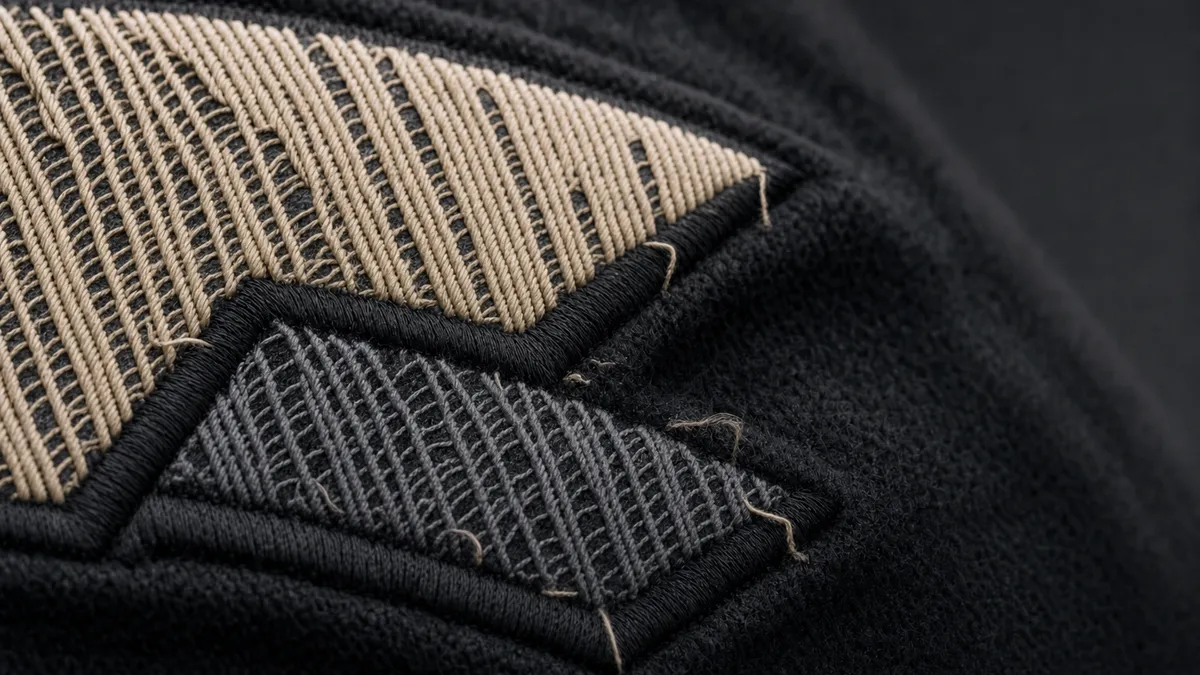 Replica
 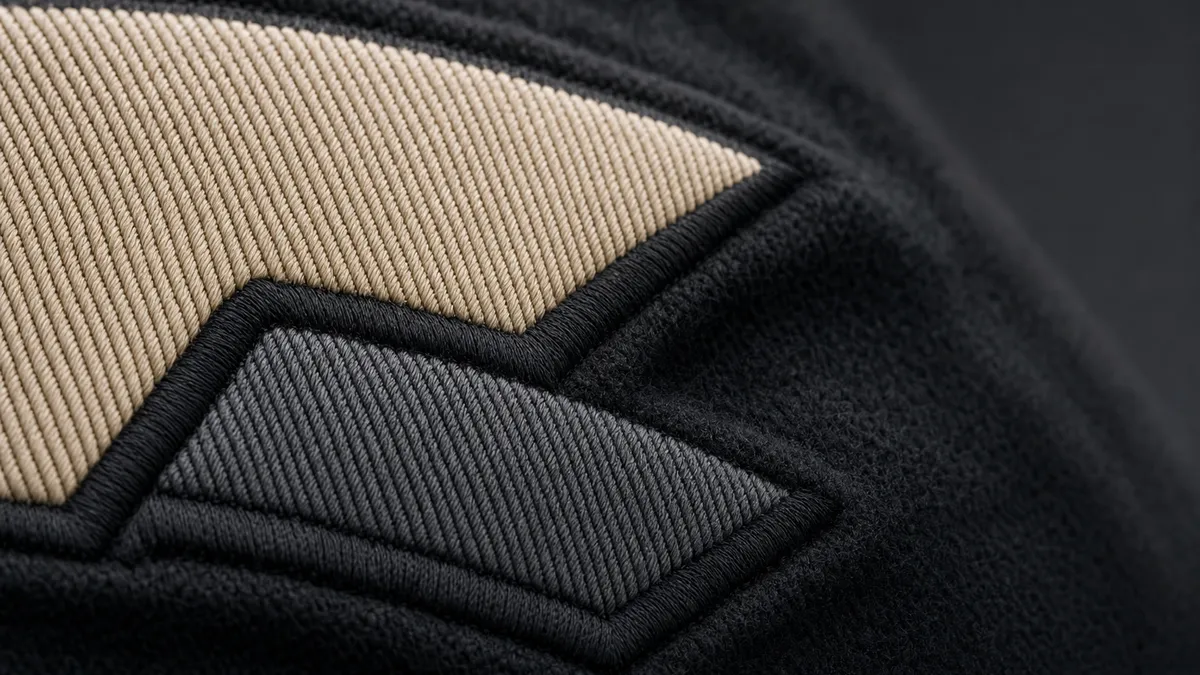 Authentic
 1. Heart-with-eyes embroidery
Authentic: Dense, even stitches with no fabric showing through, a clean heart outline, eyes equal in size and set symmetrically; the fabric around the embroidery isn’t pulled.
Fake: Loose embroidery with gaps, a wobbly or shaky outline, eyes of different sizes or off-center; the fabric puckers and pulls around the heart.
2. White PLAY tag with the red heart
Authentic: A straight-sewn white tag with clean printing and an accurate shade of red; the tag set matches documented references for the release.
Fake: Grainy printing, a red that drifts off reference, a crookedly sewn tag; a tag set that doesn’t match the release or mixes different eras.
3. Care tag and style number
Authentic: The care tag with the style number and fiber content is sewn in neatly, the font is crisp, and the data agrees with the piece’s other tags.
Fake: A smeared or coarse font, a style number and content that don’t agree across the tags, and signs of re-stitching.
4. Fabric, knit, and cut
Authentic: Dense, even cotton or a tight, uniform knit — the piece holds its shape; a neat, slim-leaning cut; production is, as a rule, Japanese.
Fake: Thin, loose, see-through fabric that stretches out; a generic pattern that comes out wider or longer than reference.
5. Stripes and seam matching
Authentic: On striped models the stripes are a consistent width, the dye is dense, and the pattern matches at the side seams and sleeves.
Fake: Stripes of varying width, patchy dye, and a “staircase” at the seams — the pattern isn’t matched.
6. Stitching, hardware, and finishing
Authentic: Straight dense seams, springy ribbing, neat buttons and a flat placket, and a smooth-running zipper on zip versions.
Fake: Wandering stitching, slack ribbing, wobbly buttons, a rippling placket, and a snagging zipper.
Popular Comme des Garçons models
Model-by-model checks — what to look at on each:
Where to inspect
The key zones to photograph and check on this type of item — a schematic, not a product photo.
- 1Neck label and tags
- 2Print and its printing
- 3Stitching and hem
- 4Shoulder and sleeve seam
- 5Fabric and weight
How to photograph your Comme des Garçons for a check
Shoot in daylight, avoid glare, keep focus sharp. You need 5 angles:
- 1 Full item (front)
- 2 Heart close-up and at an angle (stitch relief)
- 3 White PLAY tag with the red heart
- 4 Care tag with the style number
- 5 Seams, cuffs, and stripe matching
How to read the result
The AI returns a verdict with a confidence score:
- 75–100% — Authentic: high confidence the item is genuine.
- 60–74% — Likely authentic: probably genuine with minor concerns.
- 40–59% — Uncertain: the photos are not conclusive — retake or add angles.
- 25–39% — Likely fake: several red flags.
- 0–24% — Fake: clear signs of a replica.
Check your Comme des Garçons right now
Snap photos of your item and get an AI verdict with a confidence score in about a minute.
FAQ
Is the PLAY heart always embroidered? Does a print mean fake?
On most PLAY pieces the heart is embroidered, and the embroidery quality is the main test. But some releases use printed graphics, so a print alone isn’t a verdict: compare the piece against documented photos of that specific release. Loose embroidery with gaps and off-geometry eyes, however, is almost always a replica.
Does a genuine Comme des Garçons piece have to say Made in Japan?
PLAY production is traditionally Japanese, and most originals state Japan. But a single line on a tag proves nothing — it’s the first thing replicas copy. The verdict comes from the whole picture: the embroidery, the tag set, the fabric, the seams, and whether the piece matches its specific release.
How do I check the hologram or security sticker on the tag?
Comme des Garçons security stickers and holograms have changed over time, so there is no single universal template. Compare the sticker and the whole tag set against documented references for the exact release and year the piece belongs to. A missing sticker on a worn piece isn’t a verdict by itself — it may simply have peeled off.
How accurate is checking Comme des Garçons from photos with AI?
Accuracy depends on the quality and number of photos. LegitCheck AI cross-references the tells across every angle — the heart embroidery, tags, fabric, seams — and returns a verdict with a confidence score, honestly flagging “uncertain” when the photos don’t allow a clear call. It’s a fast screen, not a legally binding appraisal.