Reebok · Authentication
Classic Leather: real vs fake
The Classic Leather rests on two things – quality soft leather up top and a soft EVA sole – and both are hard to copy. Reps give themselves away with stiff, glossy leather, a bloated or wrongly shaped EVA midsole, and a badly proportioned sidewall logo. Photograph these zones and LegitCheck AI will compare them and return a verdict with a confidence score.
What to check on the Classic Leather
Model-specific zones – on top of the brand-level signs.
Leather and toe shape
Retail uses soft leather with an even finish, and the toe holds its signature rounded shape without collapsing inward. On fakes the leather is stiff and glossy, the toe reads either too pointed or bloated, and the shoe looks hollow without stuffing.
EVA midsole
The soft EVA midsole has an even profile, tidy edges, and a dense yet springy structure on retail, with a crisply patterned rubber tread. Reps deliver foam that is either too hard or too crumbly, the wrong midsole height, and a mushy, washed-out tread.
Sidewall logo
Judge proportions, line weight, symmetry, and how cleanly it’s applied. The logo differs across Classic Leather releases – both the classic Vector and the older Starcrest appear on re-releases – so compare it to a documented reference for your exact release rather than one “universal” template. A crooked or disproportionate mark is the biggest red flag.
Panel stitching
Stitches are straight and tight with consistent spacing throughout, no skips and no loose threads; the heel and toe overlays sit flush with no gaps. On fakes the stitching is wavy, spacing drifts, and trimmed threads show along overlay edges.
Size tag and box cross-check
The inside tag carries the article number, a US/UK/EU/CM grid, and a barcode; the font is crisp and size ratios are correct. The tag article number should match the box label – a mismatch is a serious flag. Don’t invent code formats: compare with a documented release reference.
Glue line and smell
The leather-to-sole transition is tidy on retail, with no glue buildup or smears along the welt. Reps almost always give away glue traces along the bonding line and a sharp chemical smell that lingers after unboxing.
Where to inspect
The key zones to photograph and check on this type of item – a schematic, not a product photo.
- 1Logo shape and placement
- 2Toe box and upper shape
- 3Heel counter and tab
- 4Midsole and stitching
- 5Tongue and size tag
The difference is in the details – drag the slider
Typical differences in workmanship: stitching consistency, edge finishing, detail quality. Left – factory quality, right – common replica flaws.
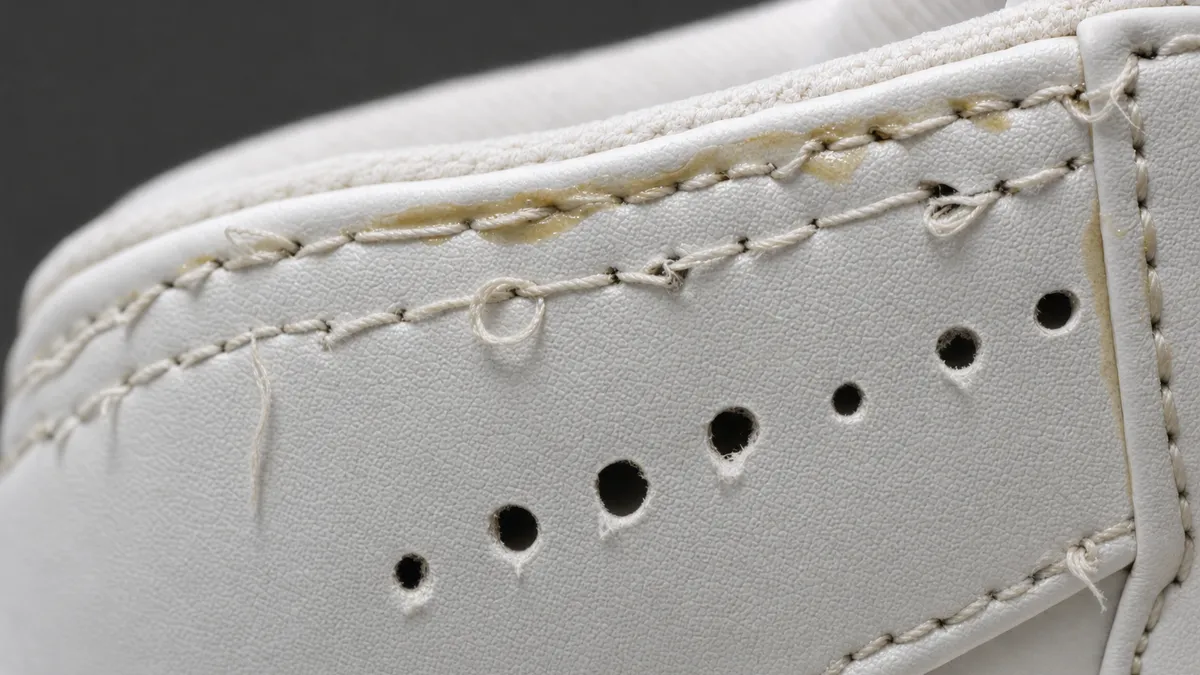 Replica
 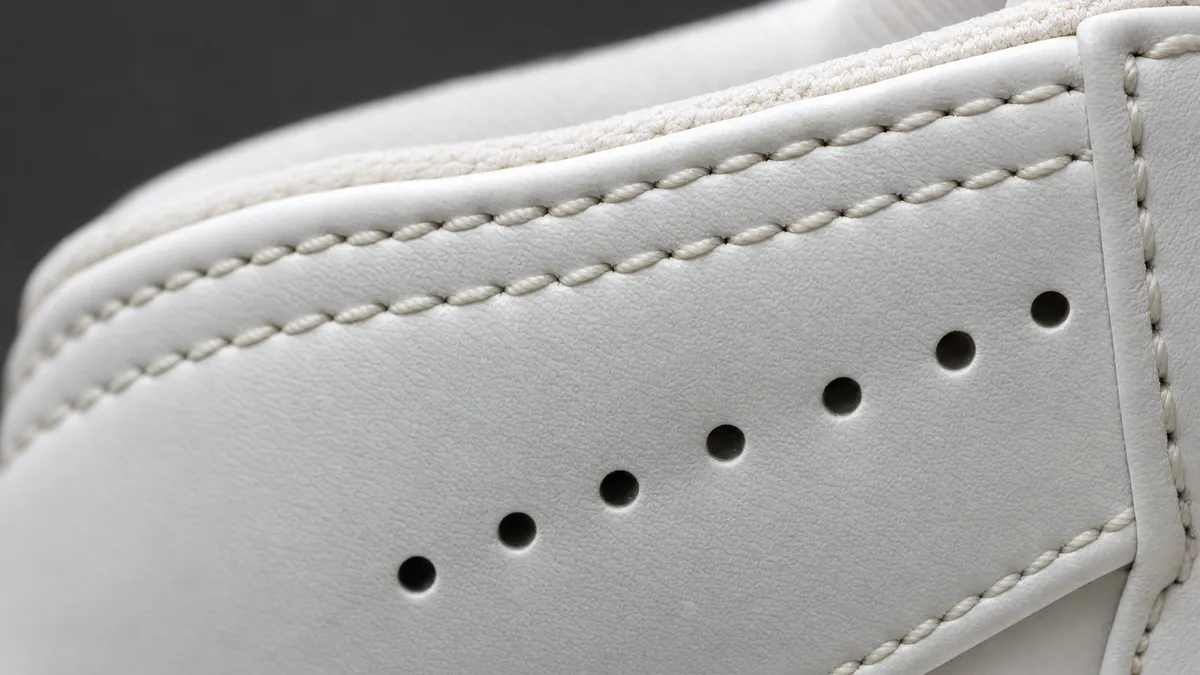 Authentic
 Photo angles for the check
- 1 Overall view
- 2 Logo
- 3 Interior tag
- 4 Outsole
- 5 Box label
Check your Classic Leather right now
Snap photos of your item and get an AI verdict with a confidence score in about a minute.
FAQ
How does the Classic Leather differ from the Club C when authenticating?
The Classic Leather sits taller and softer thanks to its EVA sole and fuller silhouette, while the Club C has a thin low sole and a flatter, court-oriented upper. The check zones are the same – leather, logo, stitching, tag – but the sole profiles need to be compared against different references.
The EVA sole has yellowed – does that mean it’s fake?
Not necessarily. Light EVA yellows over time through oxidation and UV exposure, especially on pairs with storage history. Judge the shape, density, and profile of the sole rather than its color, and weigh the other zones – leather, stitching, and the tag-to-box match.
Can a Classic Leather be authenticated from photos?
Yes. Leather, toe shape, sole, and tag all show clearly. Shoot a side profile plus close-ups of the sole in profile, the logo, and the inside tag – LegitCheck AI compares the zones and returns a verdict with a confidence score.
More Reebok models
Other sneakers brands
Check another brand in this category: