Nike Dunk · Authentication
Dunk Low: real vs fake
The Dunk Low is back among Nike’s most-copied silhouettes, and reps for popular colorways show up before pairs even hit shelves. Most fakes give themselves away with dirty color-block seams, a thick misshapen Swoosh, and heel “Nike” embroidery that wanders off its stitch line. Upload photos to LegitCheck AI and get these zones checked in about a minute.
What to check on the Dunk Low
Model-specific zones – on top of the brand-level signs.
Swoosh shape and thickness
The retail Swoosh has an even curve and a thin tapered tail that ends at the correct point near the heel. Replica Swooshes are often thicker and stubbier, curve too sharply, and the outline stitching wanders in width.
Color-block panel seams
On a real Dunk Low the toe, side, and Swoosh panels meet cleanly with no overlap or paint bleed. Fake seams between panels run crooked, the leather is trimmed sloppily, and the color transition smears.
Heel “Nike” embroidery
The heel carries an embroidered “Nike” with dense, even stitches and uniform letter height. On fakes the letters drift in height, threads poke out, and the whole block sits off-center.
Size tag and style code
Inside the tongue, the size and style-code tag must match the code printed on the box. A mismatch between the tongue tag and the box label is a serious counterfeit red flag.
Midsole profile
The retail midsole is cleanly painted with a straight line between sole and upper and no paint bleed. Fake midsoles are often puffier in shape, and the join between sole and leather is smeared with glue or paint.
Toe box perforations
Toe-box holes are uniform in diameter and laid out in straight, evenly spaced rows. On fakes the perforations vary in size and the rows drift or crowd the mudguard.
Where to inspect
The key zones to photograph and check on this type of item – a schematic, not a product photo.
- 1Logo shape and placement
- 2Toe box and upper shape
- 3Heel counter and tab
- 4Midsole and stitching
- 5Tongue and size tag
The difference is in the details – drag the slider
Typical differences in workmanship: stitching consistency, edge finishing, detail quality. Left – factory quality, right – common replica flaws.
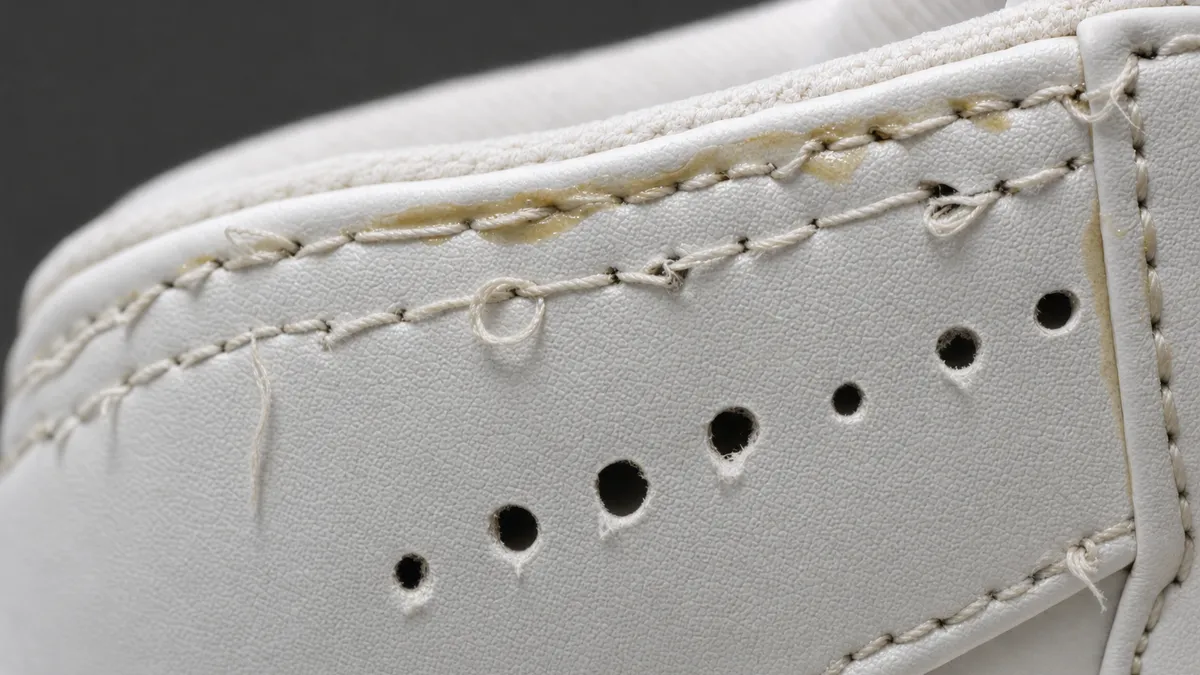 Replica
 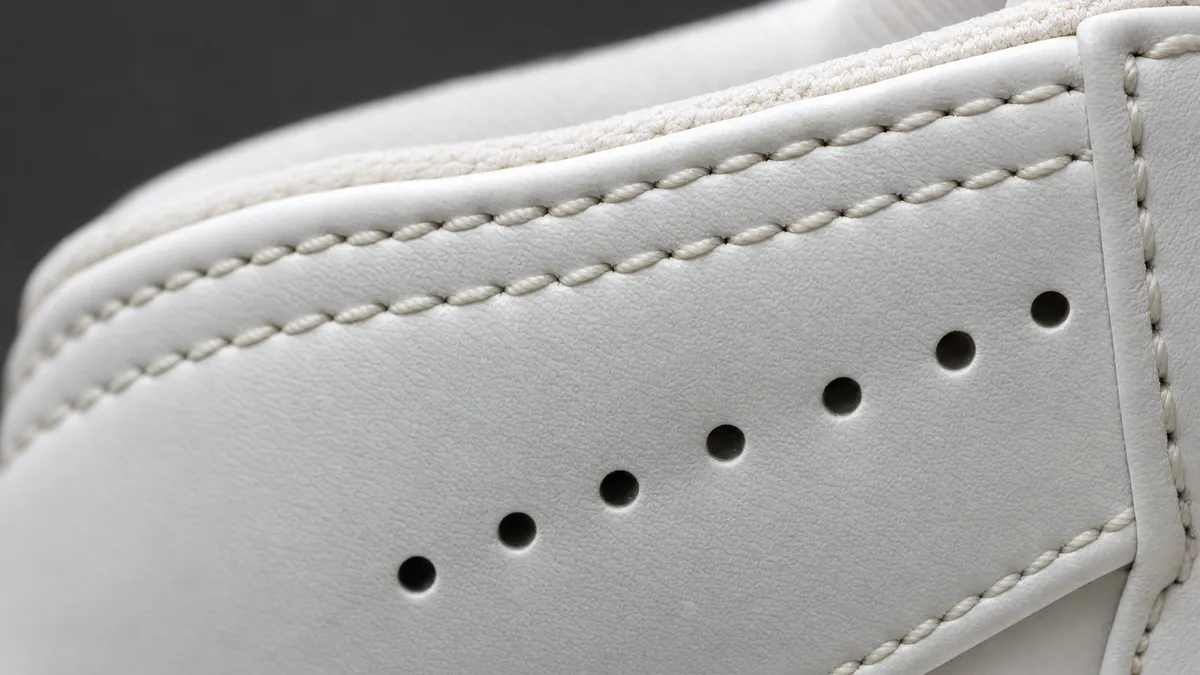 Authentic
 Photo angles for the check
- 1 Overall view
- 2 Logo
- 3 Interior tag
- 4 Outsole
- 5 Box label
Check your Dunk Low right now
Snap photos of your item and get an AI verdict with a confidence score in about a minute.
FAQ
What’s the fastest way to spot a fake Dunk Low?
Start with the Swoosh and the panel seams: the retail Swoosh is thin with a tapered tail, and the color-block seams are clean with no paint bleed. A thick, stubby Swoosh and messy color joins are the most common fake tells.
What should I check on the Dunk Low style code?
The code on the tongue tag must match the box label letter for letter. To verify the code and see which release it belongs to, use our Nike style-code checker.
Can a Dunk Low be authenticated from photos alone?
Yes. Swoosh shape, panel seams, heel embroidery, and perforations all read clearly in photos. Shoot the pair from the side, from the back, and a close-up of the size tag – LegitCheck AI analyzes these zones and returns a confidence score.
More Nike Dunk models
Other sneakers brands
Check another brand in this category: