Tiffany & Co. · Authentication
Lock Pendant: real vs fake
The Lock Pendant is built around a padlock motif with a working-looking shackle – here the hinge cleanliness, body symmetry and hallmark quality matter most. Replicas give away a crude hinge, a crooked body and smeared engraving. LegitCheck AI breaks down the lock, shackle and metal marks from your photos.
What to check on the Lock Pendant
Model-specific zones – on top of the brand-level signs.
Padlock motif and body symmetry
The "lock" body is symmetrical with clean proportions and no skew. Crooked faces, uneven curves, or an off-center layout point to a replica.
Shackle and hinge
The shackle seats into the body evenly, with no visible gap or tilt; the hinge is neatly assembled with no crude solder or metal overflow. A crooked shackle seating or a rough, sloppy hinge is not typical of the original. Smoothness of motion and opening resistance are a hands-on check that doesn't affect a photo-based verdict.
Hallmarks and metal mark
The body or shackle carries "Tiffany & Co." and a purity mark (AU750 or 925), and where present a "©"/"T&CO". Look for font cleanliness and depth without expecting one fixed layout.
Polish and edge transitions
Surfaces are evenly polished with crisp edges and ridges, free of waviness or dull patches. Patchy or "soapy" shine shows up on fakes.
Weight and density
Weight and whether the piece sounds hollow aren't things a photo can show – that's a hands-on test, and not being able to run it doesn't lower the verdict. A noticeably light pendant is worth showing to a jeweler, but lightness alone isn't something the photo check can conclude from.
Where to inspect
The key zones to photograph and check on this type of item – a schematic, not a product photo.
- 1Hallmark and purity
- 2Engraving
- 3Stone and setting
- 4Prongs and finish
- 5Band profile
The difference is in the details – drag the slider
Typical differences in workmanship: stitching consistency, edge finishing, detail quality. Left – factory quality, right – common replica flaws.
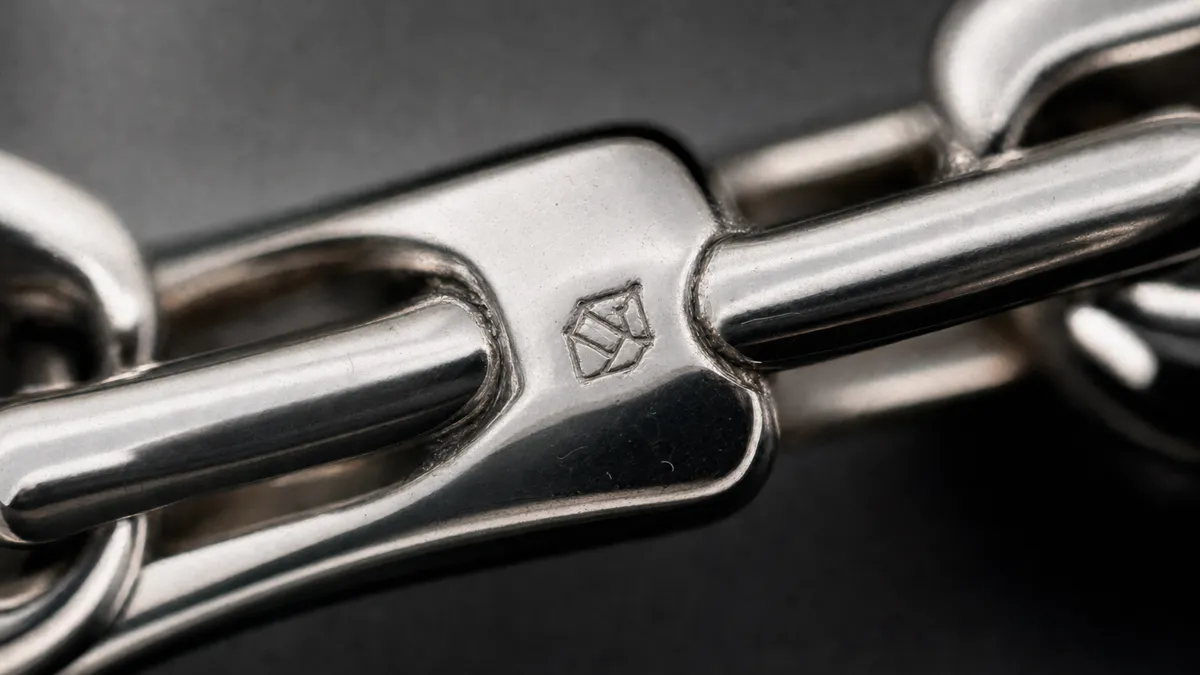 Replica
 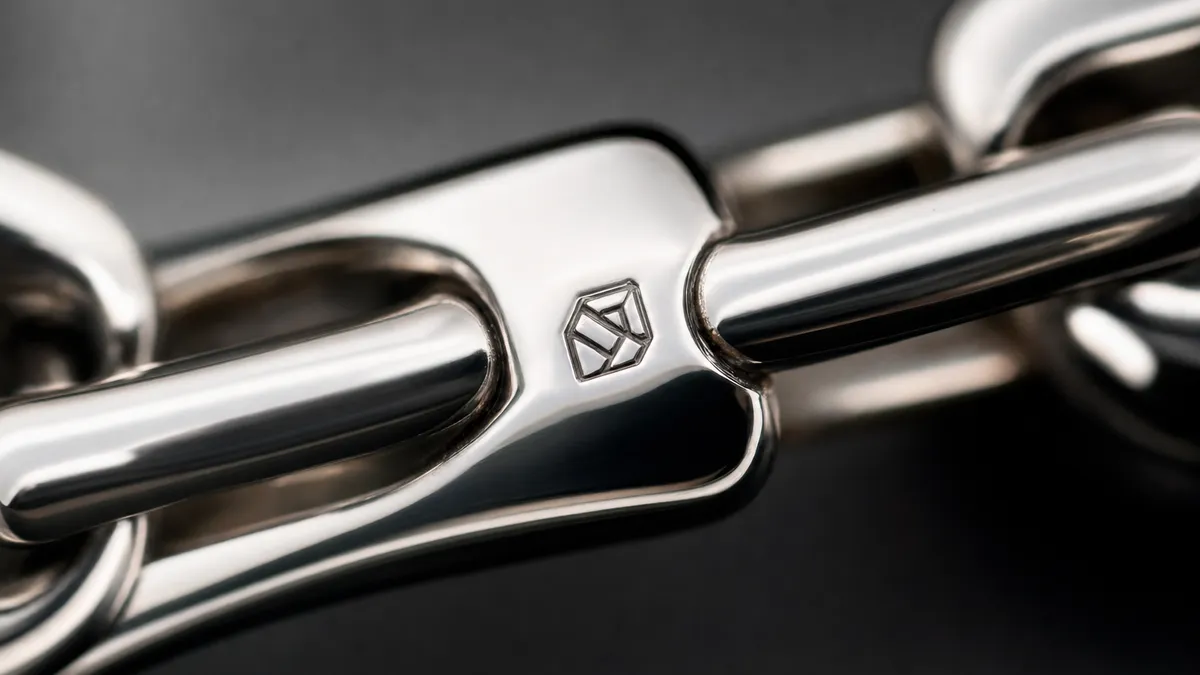 Authentic
 Photo angles for the check
- 1 Overall view
- 2 Logo / tag
- 3 Details & stitching
- 4 Material
Check your Lock Pendant right now
Snap photos of your item and get an AI verdict with a confidence score in about a minute.
FAQ
Should the Lock Pendant shackle actually open?
That isn't something a photo can confirm – instead of hinge "smoothness" (a hands-on test), judge the assembly: the shackle should seat evenly with no visible gap or tilt, and the soldering should be neat with no overflow. A visibly crooked shackle seating or sloppy soldering on the hinge is reason to doubt.
Do the Tiffany box and pouch prove authenticity?
No. The signature packaging is mass-copied. Judge by the body symmetry, hinge quality, hallmarks and the weight of the pendant itself.
More Tiffany & Co. models
Other luxury accessories brands
Check another brand in this category: