Guides · Toys & Figures
How to Tell if Your KAWS Is Real or Fake (2026)
KAWS is one of the most counterfeited art-toy artists: for the popular Open Editions there are a great many replicas in circulation. The good news — Medicom Toy factory vinyl is made to strict standards, so almost every replica falls apart on the stamp under the foot, the proportions of the skull with its XX eyes, and the quality of the paint.
Real vs fake KAWS: comparison table
Data current as of July 2026. Replicas evolve, so judge by the combination of signs — never a single one.
| Sign | Authentic | Fake |
|---|---|---|
| Foot stamp | Cleanly tooled “©KAWS,” the year, and the maker mark (Medicom Toy / OriginalFake / AllRightsReserved, depending on the release); the signature font, even depth, and correct spot on the sole of the foot. | Stamp missing, smudged, or pressed in crooked; the wrong marks or a set that never existed for that release; a crude font, uneven depth, and shifted placement. |
| XX eyes and head | The signature skull with crosses for eyes: exact head proportions, symmetrical crosses, lines of even thickness with a clean, consistent slant. | Head proportions off, crosses of different sizes or slants, wobbly uneven lines, marks shifted off-center. |
| Paint and colorway | An even, dense coat in an official colorway your release actually came in (every drop has its own palette); crisp color boundaries and a shade that matches that specific release. | Bleed, pooling, thin spots, airbrush “dust” outside the lines; a dull or wrong shade; a colorway that release never came in. |
| Vinyl and seams | Tidy even seams where the parts meet, a smooth surface with no dents, flash or casting marks, and consistent sculpt relief across the figure — all of it readable in photos. | Rough or split seams, mold flash, dents and casting flaws, soft wandering relief. |
| Finish and scale | The correct finish for the release — matte, gloss, or chrome/metallized — uniform across the whole figure; the size matches the stated model. | The wrong finish (gloss instead of matte or vice versa), blotchy coverage; under- or oversized versus the original. |
| Box and packaging | The original box with Medicom Toy / OriginalFake branding, correct print, artwork, and barcode; the figure and insert match the release. | A reprinted or mismatched box, signs of resealing, blurry print, the wrong maker logo, a missing barcode. |
The difference is in the details — drag the slider
Typical differences in workmanship: stitching consistency, edge finishing, detail quality. Left — factory quality, right — common replica flaws.
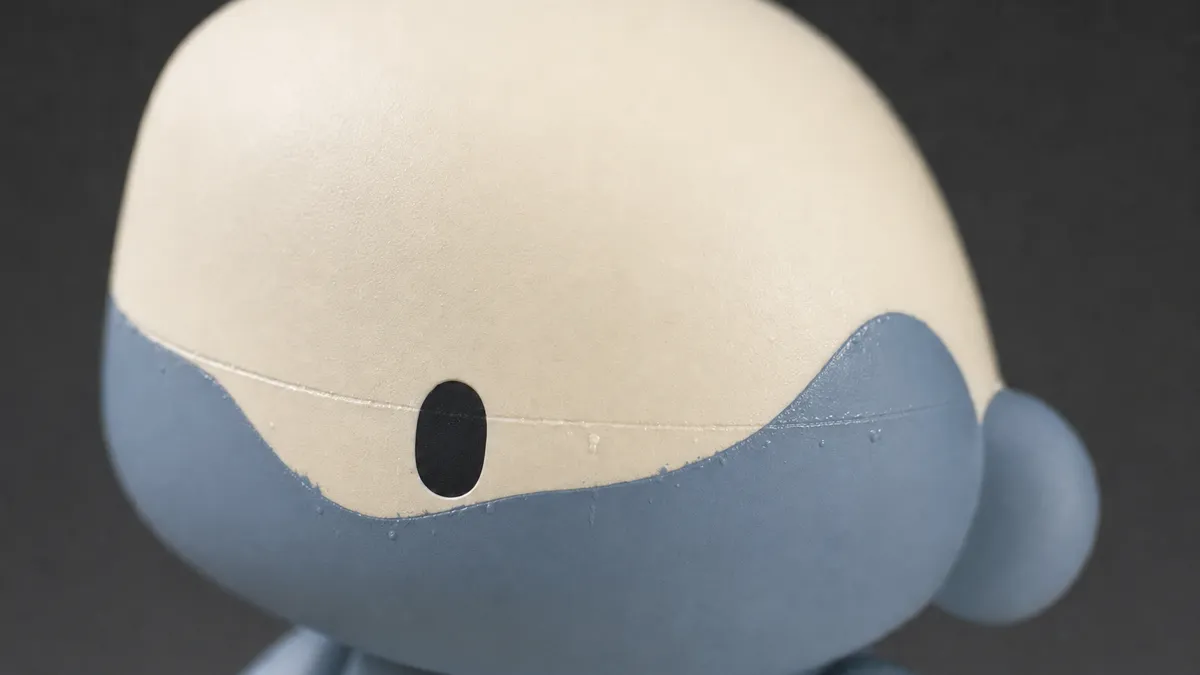 Replica
 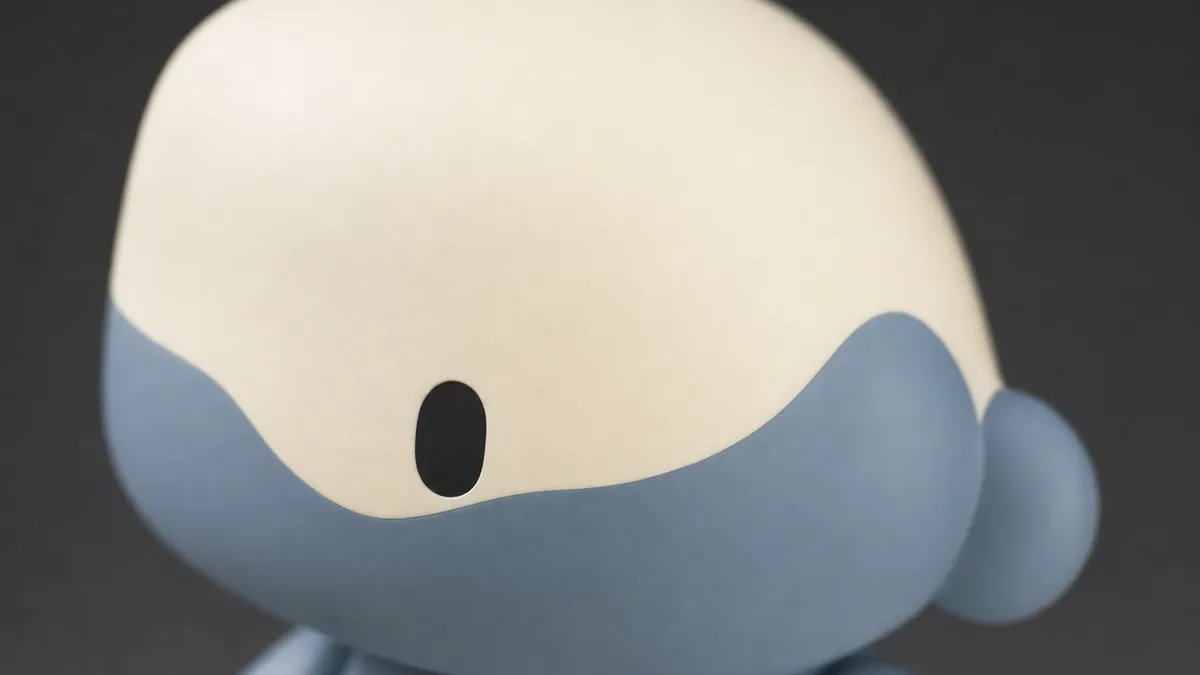 Authentic
 1. Foot stamp
Authentic: Cleanly tooled “©KAWS,” the year, and the maker mark (Medicom Toy / OriginalFake / AllRightsReserved, depending on the release); the signature font, even depth, and correct spot on the sole of the foot.
Fake: Stamp missing, smudged, or pressed in crooked; the wrong marks or a set that never existed for that release; a crude font, uneven depth, and shifted placement.
2. XX eyes and head
Authentic: The signature skull with crosses for eyes: exact head proportions, symmetrical crosses, lines of even thickness with a clean, consistent slant.
Fake: Head proportions off, crosses of different sizes or slants, wobbly uneven lines, marks shifted off-center.
3. Paint and colorway
Authentic: An even, dense coat in an official colorway your release actually came in (every drop has its own palette); crisp color boundaries and a shade that matches that specific release.
Fake: Bleed, pooling, thin spots, airbrush “dust” outside the lines; a dull or wrong shade; a colorway that release never came in.
4. Vinyl and seams
Authentic: Tidy even seams where the parts meet, a smooth surface with no dents, flash or casting marks, and consistent sculpt relief across the figure — all of it readable in photos.
Fake: Rough or split seams, mold flash, dents and casting flaws, soft wandering relief.
5. Finish and scale
Authentic: The correct finish for the release — matte, gloss, or chrome/metallized — uniform across the whole figure; the size matches the stated model.
Fake: The wrong finish (gloss instead of matte or vice versa), blotchy coverage; under- or oversized versus the original.
6. Box and packaging
Authentic: The original box with Medicom Toy / OriginalFake branding, correct print, artwork, and barcode; the figure and insert match the release.
Fake: A reprinted or mismatched box, signs of resealing, blurry print, the wrong maker logo, a missing barcode.
Popular KAWS models
Model-by-model checks — what to look at on each:
Where to inspect
The key zones to photograph and check on this type of item — a schematic, not a product photo.
- 1Box printing
- 2Window and blister
- 3Paint and face
- 4Build and stand
- 5COA and sticker
How to photograph your KAWS for a check
Shoot in daylight, avoid glare, keep focus sharp. You need 5 angles:
- 1 Full figure (silhouette and pose)
- 2 Foot stamp close-up
- 3 Head and XX eyes
- 4 Seams and surface finish
- 5 Box with maker branding
How to read the result
The AI returns a verdict with a confidence score:
- 75–100% — Authentic: high confidence the item is genuine.
- 60–74% — Likely authentic: probably genuine with minor concerns.
- 40–59% — Uncertain: the photos are not conclusive — retake or add angles.
- 25–39% — Likely fake: several red flags.
- 0–24% — Fake: clear signs of a replica.
Check your KAWS right now
Snap photos of your item and get an AI verdict with a confidence score in about a minute.
FAQ
Which KAWS figures get faked the most?
The mass-market Open Editions — Companion, BFF, and the Holiday releases: they’re the most recognizable and in-demand, so there are more replicas of them than anything else. The fastest tells are the foot stamp and the paint quality: replicas almost always reproduce the factory “©KAWS” stamp and maker mark worse than the original.
What should be in the foot stamp?
Typically “©KAWS,” the year of release, and the maker mark. That mark has changed over the eras: early releases can carry OriginalFake, while later ones use Medicom Toy or AllRightsReserved. What matters isn’t one specific word but whether the set, font, and depth match your particular release — the app factors the era into its assessment.
The seller shows the original box — is that enough?
No. A box is easy to reprint or swap from another figure, so on its own it proves nothing. What decides it is the combination: the foot stamp, the head and eye proportions, the paint, and the vinyl quality. The box is a supporting detail, not the main argument.
Can KAWS vinyl be checked from photos?
Yes, if the shots are detailed: a close-up of the foot stamp, the head with its XX eyes, the paint boundaries, and the seams. AI cross-references the tells against known releases, returns a verdict with a confidence score, and flags “uncertain” when there aren’t enough photos — use it as a first filter before you commit. The weight of the vinyl, joint movement and the sound of the plastic cannot be judged from photos, but their absence does not lower the verdict: what decides it is the emboss, the paint boundaries, the relief and the proportions.