Guides · Toys & Figures
How to Tell if Your Bearbrick Is Real or Fake (2026)
Medicom Toy’s Bearbrick figures are among the most counterfeited collectibles out there — the pricier the collab, the more replicas circulate. The good news: Medicom Toy builds to a strict standard — a fixed size by scale, clean print, and, on plastic (ABS) versions, an embossed stamp on the back. Almost every fake gives itself away on these details, and most of them read clearly in a photo.
Real vs fake Bearbrick: comparison table
Data current as of July 2026. Replicas evolve, so judge by the combination of signs — never a single one.
| Sign | Authentic | Fake |
|---|---|---|
| MEDICOM TOY stamp | On plastic (ABS) figures, a neatly embossed “MEDICOM TOY” on the back of the body in the correct font, with even letters and consistent depth. On official wood (Karimoku), porcelain, metal, and carbon versions, as well as flocked and chromed ones, the marking differs or sits buried under the flocking or plating. | On an ABS version the stamp is set in the wrong font, crooked, or too shallow/deep; a mold seam runs through the lettering. For non-standard materials, an unreadable emboss is not evidence on its own — compare against photos of your specific release. |
| Size by scale | Height matches the scale: 100% ≈ 7 cm, 400% ≈ 28 cm, 1000% ≈ 70 cm; the bear’s proportions are held. | The figure is taller or shorter than the stated percentage, with drifting head-to-body proportions. |
| Build and seams | The standard 9 body parts are tightly fitted and sit evenly, the plastic is free of flashing, and there are usually eight points of rotation. | Visible gaps and flashing, skewed parts, crudely fitted connections. How the joints travel and hold cannot be judged from a photo — that is an in-hand check. |
| Print and colorway | The collab graphics are sharp, color registration is tight, and the hues match the official release; the artwork edges are crisp. | A blurry or shifted print, off registration, wrong hues, and paint bleed or halos. |
| Material and finish | The finish matches the release: an even gloss or matte surface on ABS, uniform plating on chromed versions, dense even pile on flocked ones, and factory-correct texture on wood (Karimoku) and porcelain. | Uneven plastic, streaks, a sticky or peeling finish, glue residue, sink marks in the casting, bald patches in the flocking. “The surface is not smooth plastic” means nothing by itself — first confirm what material the release uses. |
| Box and packaging | Packaging depends on the format: 400%/1000% and collabs ship in a box with a window; 100% series figures ship as blind boxes with no window — an opaque foil bag plus an artist card. Print is sharp and the barcode is cleanly printed and matches the series and size. | Faded print, a crooked cut, a cloudy window on a boxed release, typos in the text. A blind box having no window is normal, not a strike against it. |
The difference is in the details — drag the slider
Typical differences in workmanship: stitching consistency, edge finishing, detail quality. Left — factory quality, right — common replica flaws.
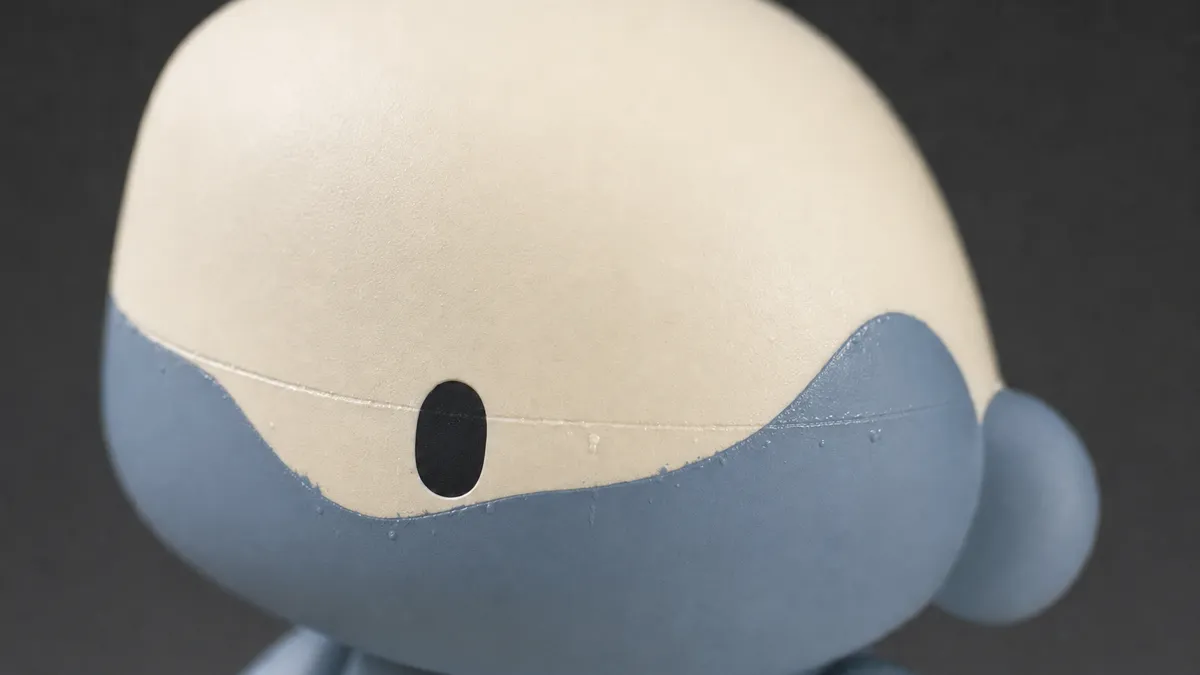 Replica
 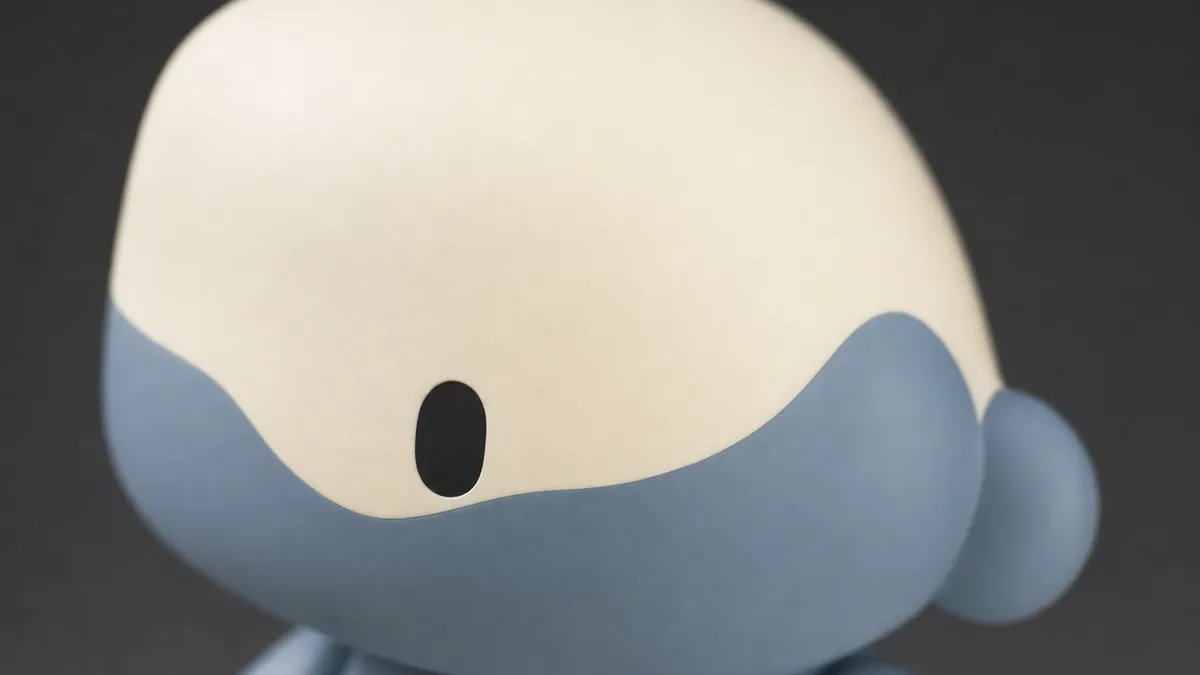 Authentic
 1. MEDICOM TOY stamp
Authentic: On plastic (ABS) figures, a neatly embossed “MEDICOM TOY” on the back of the body in the correct font, with even letters and consistent depth. On official wood (Karimoku), porcelain, metal, and carbon versions, as well as flocked and chromed ones, the marking differs or sits buried under the flocking or plating.
Fake: On an ABS version the stamp is set in the wrong font, crooked, or too shallow/deep; a mold seam runs through the lettering. For non-standard materials, an unreadable emboss is not evidence on its own — compare against photos of your specific release.
2. Size by scale
Authentic: Height matches the scale: 100% ≈ 7 cm, 400% ≈ 28 cm, 1000% ≈ 70 cm; the bear’s proportions are held.
Fake: The figure is taller or shorter than the stated percentage, with drifting head-to-body proportions.
3. Build and seams
Authentic: The standard 9 body parts are tightly fitted and sit evenly, the plastic is free of flashing, and there are usually eight points of rotation.
Fake: Visible gaps and flashing, skewed parts, crudely fitted connections. How the joints travel and hold cannot be judged from a photo — that is an in-hand check.
4. Print and colorway
Authentic: The collab graphics are sharp, color registration is tight, and the hues match the official release; the artwork edges are crisp.
Fake: A blurry or shifted print, off registration, wrong hues, and paint bleed or halos.
5. Material and finish
Authentic: The finish matches the release: an even gloss or matte surface on ABS, uniform plating on chromed versions, dense even pile on flocked ones, and factory-correct texture on wood (Karimoku) and porcelain.
Fake: Uneven plastic, streaks, a sticky or peeling finish, glue residue, sink marks in the casting, bald patches in the flocking. “The surface is not smooth plastic” means nothing by itself — first confirm what material the release uses.
6. Box and packaging
Authentic: Packaging depends on the format: 400%/1000% and collabs ship in a box with a window; 100% series figures ship as blind boxes with no window — an opaque foil bag plus an artist card. Print is sharp and the barcode is cleanly printed and matches the series and size.
Fake: Faded print, a crooked cut, a cloudy window on a boxed release, typos in the text. A blind box having no window is normal, not a strike against it.
Popular Bearbrick models
Model-by-model checks — what to look at on each:
Where to inspect
The key zones to photograph and check on this type of item — a schematic, not a product photo.
- 1Box printing
- 2Window and blister
- 3Paint and face
- 4Build and stand
- 5COA and sticker
How to photograph your Bearbrick for a check
Shoot in daylight, avoid glare, keep focus sharp. You need 5 angles:
- 1 Full figure (front)
- 2 MEDICOM TOY stamp on the back
- 3 Part seams close-up
- 4 Collab print/graphics
- 5 Box or blind box: print, barcode (window on 400%/1000%)
How to read the result
The AI returns a verdict with a confidence score:
- 75–100% — Authentic: high confidence the item is genuine.
- 60–74% — Likely authentic: probably genuine with minor concerns.
- 40–59% — Uncertain: the photos are not conclusive — retake or add angles.
- 25–39% — Likely fake: several red flags.
- 0–24% — Fake: clear signs of a replica.
Check your Bearbrick right now
Snap photos of your item and get an AI verdict with a confidence score in about a minute.
FAQ
Which Bearbricks get faked the most?
Mainly the expensive large sizes and collaborations: 400% and 1000%, along with releases like KAWS Companion, BAPE Shark, and artists such as Basquiat. The higher the price, the more sophisticated the replica — but the fastest tells are the same: the MEDICOM TOY stamp, the correct size by scale, and clean print registration.
Where is the stamp and what should it look like?
On plastic (ABS) Bearbricks, “MEDICOM TOY” is cleanly embossed on the back of the body: even letters, the correct font, consistent depth. On official wood (Karimoku), porcelain, metal, and carbon versions, as well as flocked and chromed ones, the marking differs or is hidden by the texture — compare against photos of your specific release instead of demanding a readable emboss every time.
How do I check a figure by size?
Size follows the scale: 100% ≈ 7 cm, 400% ≈ 28 cm, 1000% ≈ 70 cm. Measure the height and compare it to the stated percentage. A noticeable mismatch is a solid reason to ask questions, though releases with add-on elements (hats, ears, accessories) can measure slightly differently, so weigh body proportions too.
What can’t be checked from photos?
Visible in photos: the emboss and stamp, print registration, color boundaries, relief, proportions, and the print quality of the box or blind box. In-hand only (not from photos): weight and material density, how the joints travel and hold, the sound of the plastic, and scanning the barcode. Missing those in-hand checks does not by itself lower the verdict — it simply leaves part of the picture unverified.
Does the barcode prove authenticity?
No. Check that the barcode is cleanly printed and matches the series and size, but the fact that it scans proves nothing — replicas copy the code verbatim, and there is no public Medicom Toy database to verify it against.
Is a single photo enough for a verdict?
One strong tell — the stamp or the print registration — helps, but a reliable call comes from the combination: stamp + size + build + print + packaging. The app tells you which angles to shoot and will honestly flag “uncertain” if there aren’t enough shots.