Guides · Vintage T-Shirts
How to Spot a Fake Vintage Movie Tee From a Reprint (2026)
Vintage movie merch (Star Wars, Jurassic Park 1993, Terminator 2, The Godfather, plus bootleg-class tees like Scarface) is one of the most faked segments out there. Promo tees are especially valuable: the studio handed them out rather than selling them, so they were made in small numbers and are highly collectible. An original gives itself away by era, not the poster: single-needle hems, thin worn cotton, and a soft screenprint that has aged naturally. It's the construction, the tag, and the print texture where reprints and bootlegs give themselves away most often.
Real vs fake Movie Merchandise: comparison table
Data current as of July 2026. Replicas evolve, so judge by the combination of signs — never a single one.
| Sign | Authentic | Fake |
|---|---|---|
| Single-needle stitching | Sleeve and bottom hems sewn with a single needle — one visible row of stitch; single stitching prevailed until the mid-90s. But the switch was gradual and different at every manufacturer: double stitching by itself does not rule out authenticity — it turns up on late-90s pieces and on genuine 70s-80s vintage too. Judge the hem only alongside the tag, the print and the fabric. | The hem alone is not a fake tell: what matters is the combination — double stitching together with a fresh modern tag, a thick plastisol print and dense retail-weight fabric. |
| Blank tag and copyright line | The blank tag type and the studio copyright line near the print match the release period; tag brands can only be judged in general terms — cross-check them against documented references from those years. | A fresh modern blank-brand tag on "vintage," the wrong tag type, or a copyright line that does not fit the claimed era. |
| Print texture and aging | A thin screenprint soaked into the fabric, with natural uneven cracking and soft fading earned through washes and years. | A thick HD or plastisol print with a dense glossy sheen in macro shots and artificially even, symmetrical "cracking." |
| Fabric and fit | Thin, soft, worn cotton in a boxy cut with even fading; in photos the piece lets light through and falls in soft folds. | A stiff, heavy, bright-white or deep-black modern blank with retail-shelf density that holds its shape and photographs newer than the era. |
| Color registration and back print | Multi-color poster and frame prints with tight layer alignment; a back graphic or slogan cross-checked against documented versions of the release. | Shifted layers, muddy outlines and registration misses; a back print that does not match documented versions (a missing back graphic on its own is normal — some runs shipped without one). |
| Original vs bootleg vs reprint | A genuine period promo/vintage whose construction and print agree on every signal with documented examples. A period bootleg from the same years is also a piece of its era and its own collectible category; for Scarface there is almost no official vintage, the whole market is bootleg. | A modern unofficial copy posing as vintage: a tag that does not fit the era, a thick print with fake crackle and fresh retail-weight fabric. |
The difference is in the details — drag the slider
Typical differences in workmanship: stitching consistency, edge finishing, detail quality. Left — factory quality, right — common replica flaws.
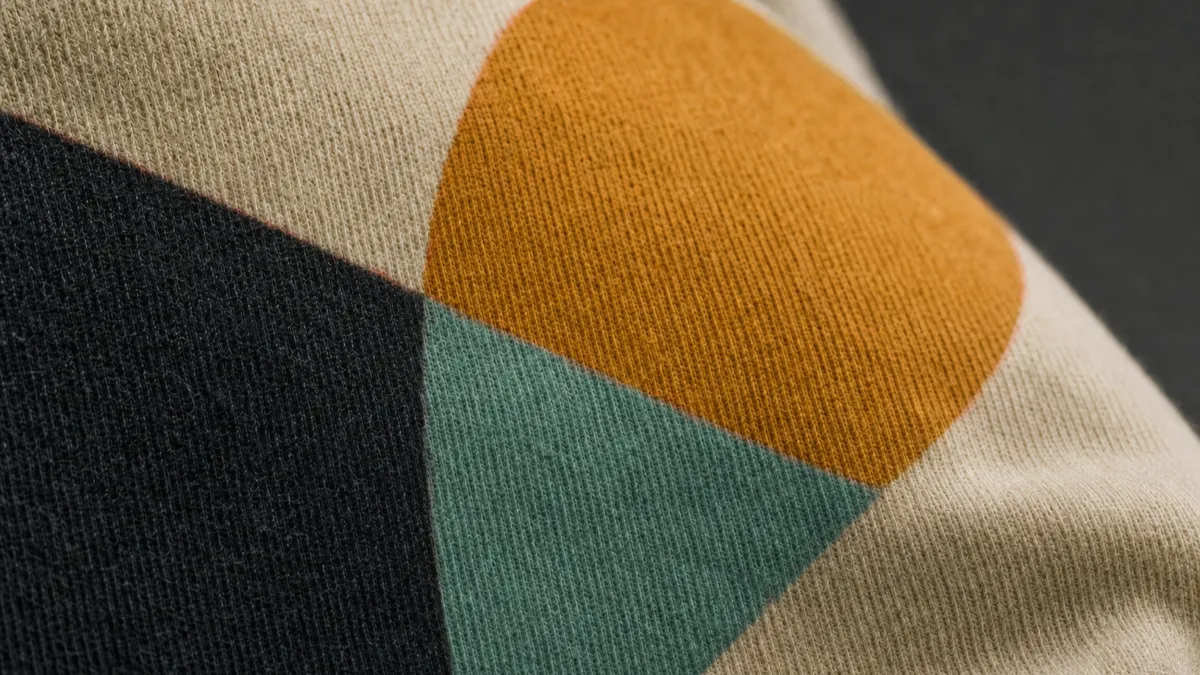 Replica
 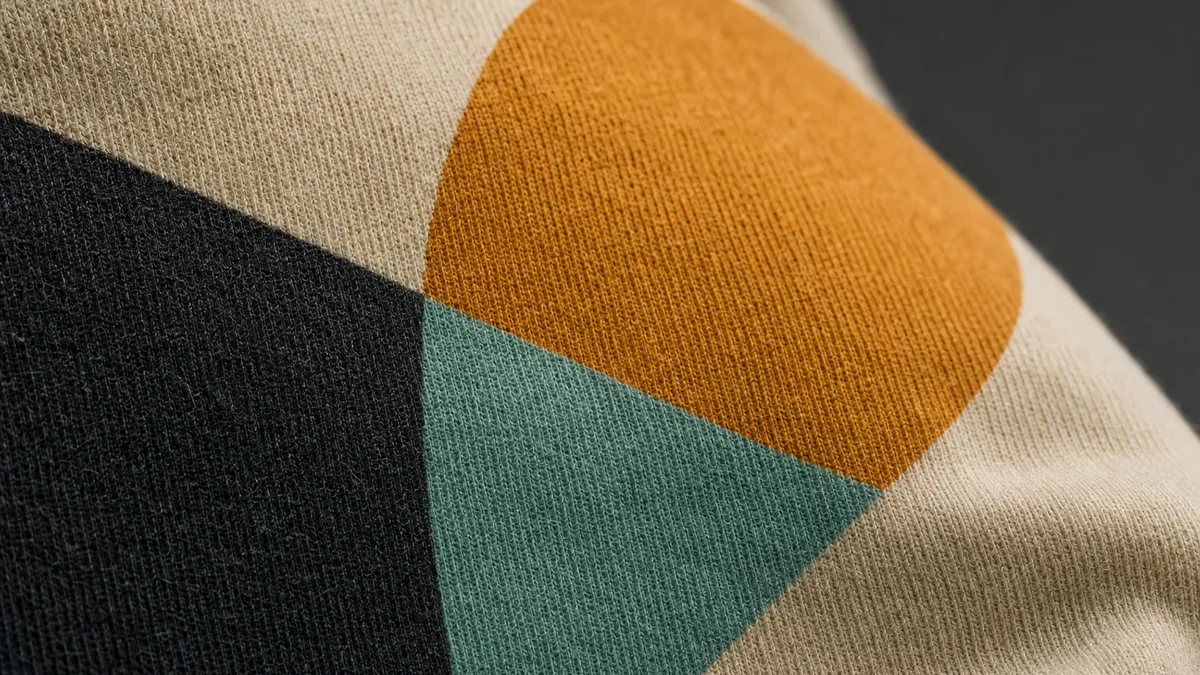 Authentic
 1. Single-needle stitching
Authentic: Sleeve and bottom hems sewn with a single needle — one visible row of stitch; single stitching prevailed until the mid-90s. But the switch was gradual and different at every manufacturer: double stitching by itself does not rule out authenticity — it turns up on late-90s pieces and on genuine 70s-80s vintage too. Judge the hem only alongside the tag, the print and the fabric.
Fake: The hem alone is not a fake tell: what matters is the combination — double stitching together with a fresh modern tag, a thick plastisol print and dense retail-weight fabric.
2. Blank tag and copyright line
Authentic: The blank tag type and the studio copyright line near the print match the release period; tag brands can only be judged in general terms — cross-check them against documented references from those years.
Fake: A fresh modern blank-brand tag on "vintage," the wrong tag type, or a copyright line that does not fit the claimed era.
3. Print texture and aging
Authentic: A thin screenprint soaked into the fabric, with natural uneven cracking and soft fading earned through washes and years.
Fake: A thick HD or plastisol print with a dense glossy sheen in macro shots and artificially even, symmetrical "cracking."
4. Fabric and fit
Authentic: Thin, soft, worn cotton in a boxy cut with even fading; in photos the piece lets light through and falls in soft folds.
Fake: A stiff, heavy, bright-white or deep-black modern blank with retail-shelf density that holds its shape and photographs newer than the era.
5. Color registration and back print
Authentic: Multi-color poster and frame prints with tight layer alignment; a back graphic or slogan cross-checked against documented versions of the release.
Fake: Shifted layers, muddy outlines and registration misses; a back print that does not match documented versions (a missing back graphic on its own is normal — some runs shipped without one).
6. Original vs bootleg vs reprint
Authentic: A genuine period promo/vintage whose construction and print agree on every signal with documented examples. A period bootleg from the same years is also a piece of its era and its own collectible category; for Scarface there is almost no official vintage, the whole market is bootleg.
Fake: A modern unofficial copy posing as vintage: a tag that does not fit the era, a thick print with fake crackle and fresh retail-weight fabric.
Popular Movie Merchandise models
Model-by-model checks — what to look at on each:
Where to inspect
The key zones to photograph and check on this type of item — a schematic, not a product photo.
- 1Neck label and tags
- 2Print and its printing
- 3Stitching and hem
- 4Shoulder and sleeve seam
- 5Fabric and weight
How to photograph your Movie Merchandise for a check
Shoot in daylight, avoid glare, keep focus sharp. You need 5 angles:
- 1 Full tee (front)
- 2 Sleeve and bottom hem close-up
- 3 Neck tag
- 4 Print texture and copyright line
- 5 Back print / slogan
How to read the result
The AI returns a verdict with a confidence score:
- 75–100% — Authentic: high confidence the item is genuine.
- 60–74% — Likely authentic: probably genuine with minor concerns.
- 40–59% — Uncertain: the photos are not conclusive — retake or add angles.
- 25–39% — Likely fake: several red flags.
- 0–24% — Fake: clear signs of a replica.
Check your Movie Merchandise right now
Snap photos of your item and get an AI verdict with a confidence score in about a minute.
FAQ
Does single-stitch guarantee a movie tee is vintage?
It raises the odds but is not a guarantee on its own: stitching can be imitated, and a double hem also shows up on genuine late-90s pieces and even on 70s-80s vintage. Weigh it together with tag era, print aging and fabric weight; the signals should all agree, not just one. And remember that even genuine single-stitch does not separate a promo release from a period bootleg.
Why are promo tees more valuable than store tees?
Promo tees were handed out by the studio and theaters at release rather than sold at retail, so print runs were small. That rarity makes them highly collectible — and exactly why they are most often faked as vintage.
What about Scarface, when there is almost no original vintage?
The Scarface market is mostly bootleg: almost no official mass vintage merch was made for the 1983 film. So the realistic goal isn't 'official vs fake' but to determine whether it's a period 80s-90s bootleg or a modern reprint, judged by stitching, tag and print aging.
What if the tag is cut out or unreadable?
This is very common on genuine vintage: tags were cut off for comfort, and decades of wear rub the print on them away completely. A missing tag is not a sign of a fake — it just removes one source of data. Date the piece from the remaining zones: the hem stitching, the thickness and softness of the screenprint, the character of the cracking, and the cut and fit.
Can I check a vintage movie tee from photos alone?
Yes. Shoot the sleeve and bottom hem close up, the neck tag, and the print texture and copyright line. LegitCheck AI analyzes these zones — stitching, tag era and print aging — and returns a verdict with a confidence score. Still verify exact copyright years against references rather than from memory.